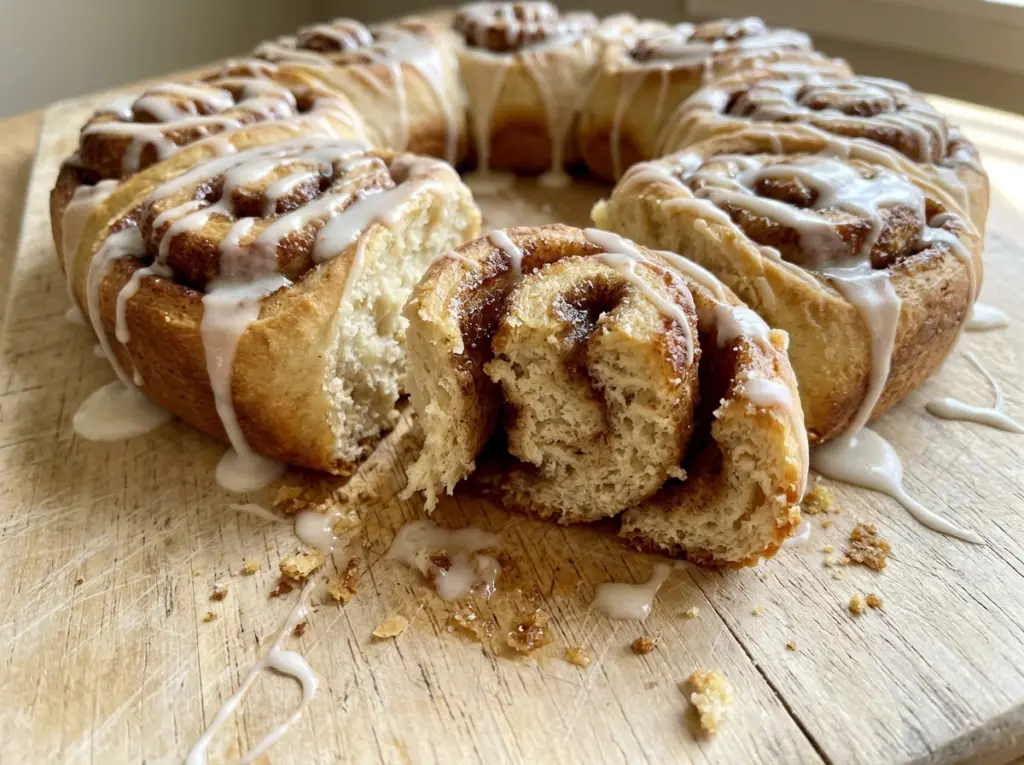
The dough feels different from a wheat-based cinnamon roll dough as soon as you mix it: smooth and thick, but not stretchy. That’s normal here. With a gluten-free blend, the goal is a dough you can press and roll between parchment, then twist into a wreath without fighting a sticky counter. This Gluten Free Cinnamon Roll Wreath bakes up golden, with cinnamon sugar tucked through the center and a simple vanilla icing drizzled over the warm top.
I let the dough rise until it looks visibly puffy, then give it a short chill before shaping. That pause makes the dough easier to handle, and parchment keeps the rectangle neat while you roll it out. Once the log is split lengthwise, the cut sides turn up so the cinnamon layers show through the twist. The finished wreath is soft, fragrant, and ready to pull apart while the icing is still glossy.
Kitchen Note
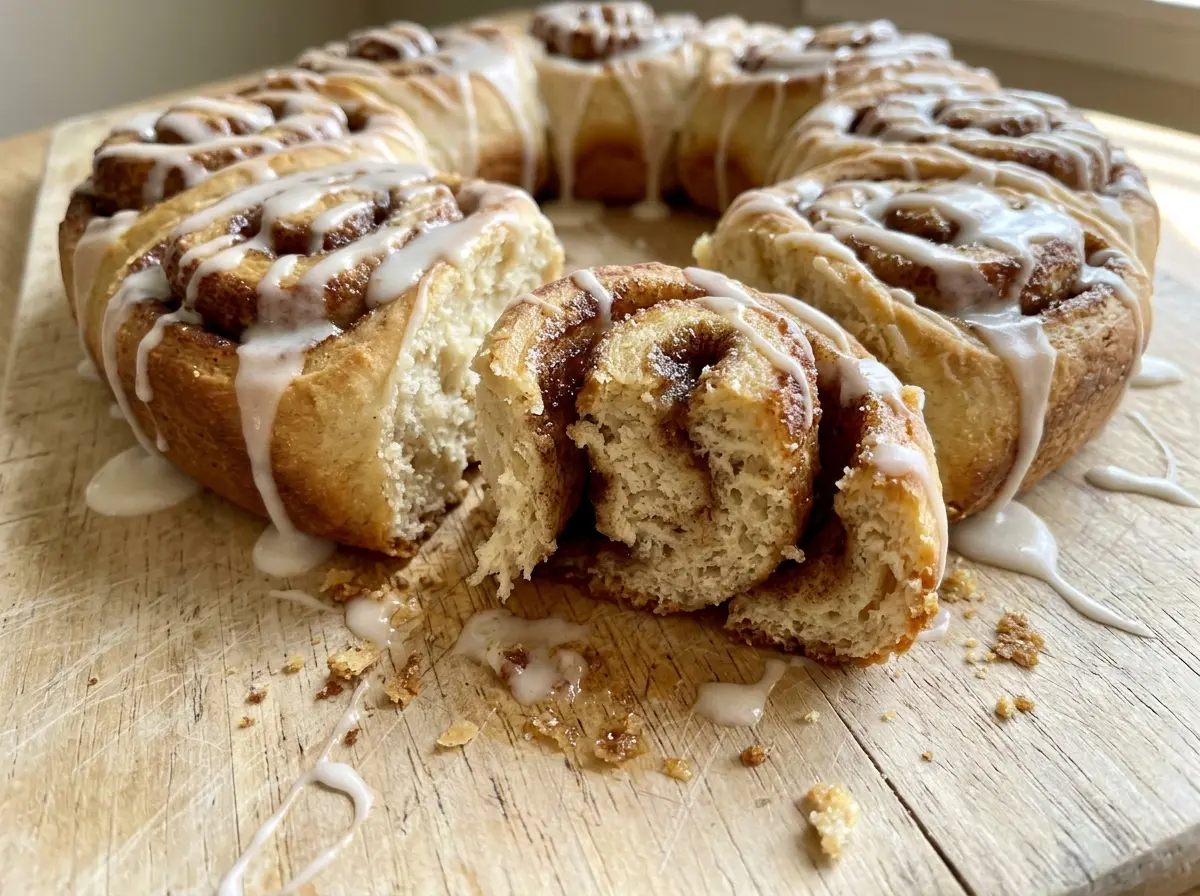
When you twist the two strands, keep the cut sides facing up as much as you can. It leaves the cinnamon-sugar layers exposed, so the wreath looks beautifully swirled instead of hiding its filling.
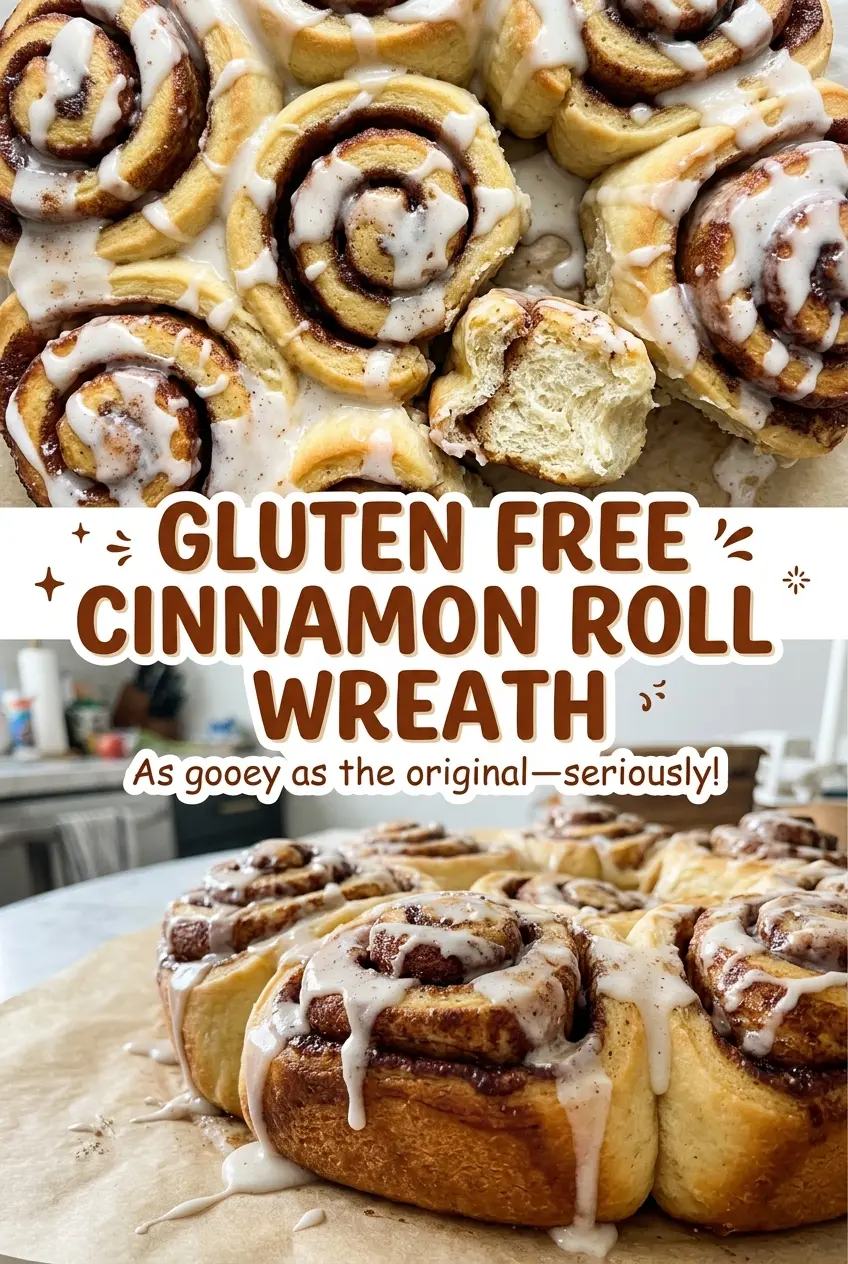
Save this Gluten Free Cinnamon Roll Wreath for a soft, yeasted cinnamon bake with a twisted shape and simple vanilla icing.
Why Gluten-Free Cinnamon Roll Dough Needs a Chill Before You Shape It
Wheat dough stretches because gluten forms an elastic network. This dough relies on a gluten-free flour blend with xanthan gum instead, so it behaves differently: it’s thick and workable, but it won’t pull and stretch in the same way. Trying to handle it like conventional cinnamon roll dough can make shaping feel frustrating, especially if it sticks or tears.
A brief refrigerator rest firms the dough after its first rise, which makes a big difference when you roll it into a rectangle and cut the filled log lengthwise. Parchment does another useful job: it lets you roll without adding extra flour, which could change the dough’s balance and make the baked wreath dry. Roll between the parchment sheets, then use the paper to help keep the dough together as you work. The rectangle doesn’t need perfectly sharp corners; an even thickness matters more than a tidy outline. With the chill and parchment doing the handling work, the dough can be shaped into strands without relying on the stretch you’d expect from wheat dough.
The Flour Blend and Butter Choices That Help This Wreath Hold Together
- Gluten-free all-purpose flour blend with xanthan gum — This is the structure behind a dough that can be rolled, cut, and twisted without gluten. Use a blend that already includes xanthan gum; a plain gluten-free flour or a wheat-based all-purpose flour won’t give the same result. Blend performance varies, so choose one you know measures and bakes reliably.
- Whole milk and active dry yeast — Warm milk helps the yeast get started, while the yeast gives the dough its rise. Check the milk temperature with a thermometer if you’re unsure; milk that’s too hot can interfere with the yeast. Active dry yeast is the type used here, so don’t assume instant yeast will foam in the same way during the initial rest.
- Room-temperature eggs and melted butter — The eggs blend more smoothly when they aren’t cold, and the butter enriches the dough. The butter is divided for a reason: most goes into the dough, while the rest coats the rectangle so the brown sugar and cinnamon stay in place. Keep those portions separate as you prep.
- Light brown sugar and ground cinnamon — Packed brown sugar gives the filling a soft, moist sweetness, and cinnamon provides its familiar warm flavor. Break up any hard brown sugar lumps before sprinkling so the filling covers the dough evenly. Fresh, fragrant cinnamon makes a noticeable difference here.
- Powdered sugar, milk, and vanilla — These make a quick icing that’s smooth enough to drizzle over the warm wreath. Whisk until no dry pockets remain; if you change the milk or sugar, the icing’s thickness will change too, so the listed combination is the most dependable place to start.
From Foamy Yeast to a Twisted, Golden Wreath
Wake Up the Yeast
Stir the warm milk, active dry yeast, and granulated sugar together in a large bowl, then leave the mixture for 5 minutes. Look for foam on top before moving on; that’s the visible sign the yeast has started working. If the surface stays flat, check that the milk was within the specified warm range and that the yeast is fresh. Don’t add the eggs and flour until the yeast mixture has had its full rest.
Mix, Rise, and Chill the Dough
Add the room-temperature eggs, 4 tablespoons of melted butter, gluten-free flour blend, and salt to the yeast mixture. Mix with a stand mixer fitted with the paddle attachment on medium-low for 3 minutes, until the dough looks smooth and thick. Cover the bowl and let the dough rise in a warm place for 45–60 minutes, until visibly puffy. Refrigerate it for 20 minutes before shaping so it’s easier to handle.
Fill and Twist the Wreath
Line a large rimmed baking sheet with parchment paper, then roll the dough between two sheets of parchment into a 12-by-16-inch rectangle. Brush it with the remaining melted butter and sprinkle the brown sugar and cinnamon evenly across the surface. Roll from a long side into a 16-inch log, transfer it to the lined sheet, and cut the log lengthwise into two strands. Turn the cut sides up, twist the strands together, join the ends into a wreath, then cover loosely and let it rise for 25–35 minutes, until slightly puffy.
Bake Until the Center Is Set, Then Ice
Bake at 350°F for 25–30 minutes, until the wreath is golden and an instant-read thermometer inserted into the center reads 190°F. The center temperature is the clearest check because the twisted shape can brown unevenly on top. Let the wreath cool on the baking sheet for 15 minutes. Whisk the powdered sugar, milk, and vanilla until smooth, then drizzle the icing over the warm wreath.
Two Simple Ways to Change the Wreath’s Finish
Shape It as a Long Cinnamon Twist
Use the same filled log and lengthwise cut, but leave the twisted strands in a straight line instead of joining their ends. You’ll get the same cinnamon layers in a pull-apart twist rather than a ring, with no change to the ingredients. Watch the center as it bakes and use the same 190°F internal-temperature cue for doneness.
Leave Off the Vanilla Icing
Skip the powdered sugar, milk, and vanilla topping for a less sweet finish that puts the brown sugar and cinnamon front and center. The wreath will still have its soft dough and spiced filling, but it won’t have the glossy icing layer. This is the easiest change if you prefer a simpler-looking bake.
Storage and Reheating
- Refrigerator: Keep the cooled wreath covered in an airtight container for 3–4 days. The crumb will firm up in the refrigerator, and the icing may turn a little tacky.
- Freezer: Freeze the cooled wreath tightly wrapped, then sealed in a freezer-safe bag or container, for up to 2 months. The icing may look less smooth after thawing, but the cinnamon bread remains usable.
- Reheating: Warm a portion in the microwave in short 10-second bursts until just warm. Long heating can dry out gluten-free bread, so stop as soon as it’s no longer cold.
Questions That Come Up When Making This Cinnamon Roll Wreath
Gluten Free Cinnamon Roll Wreath
Ingredients
Equipment
Method
- Stir the warm milk, yeast, and granulated sugar together in a large bowl.
- Let the mixture stand for 5 minutes, until foamy.
- Add the eggs, 4 tablespoons melted butter, flour, and salt.
- Mix with a stand mixer fitted with the paddle attachment on medium-low for 3 minutes, until smooth and thick.
- Cover the bowl and let the dough rise in a warm place for 45–60 minutes, until visibly puffy.
- Refrigerate the dough for 20 minutes to make it easier to shape.
- Line a large rimmed baking sheet with parchment paper.
- Roll the dough between two sheets of parchment into a 12x16-inch rectangle.
- Brush the dough with the remaining 2 tablespoons melted butter.
- Sprinkle the brown sugar and cinnamon evenly over the dough.
- Roll the dough up from a long side into a 16-inch log.
- Transfer the log to the prepared baking sheet.
- Cut the log lengthwise into two strands.
- Turn the cut sides up and twist the strands together.
- Join the ends to form a wreath.
- Cover loosely and let rise for 25–35 minutes, until slightly puffy.
- Bake at 350°F for 25–30 minutes, until golden and the center reaches 190°F on an instant-read thermometer.
- Cool on the baking sheet for 15 minutes.
- Whisk the powdered sugar, milk, and vanilla until smooth.
- Drizzle the icing over the warm wreath.