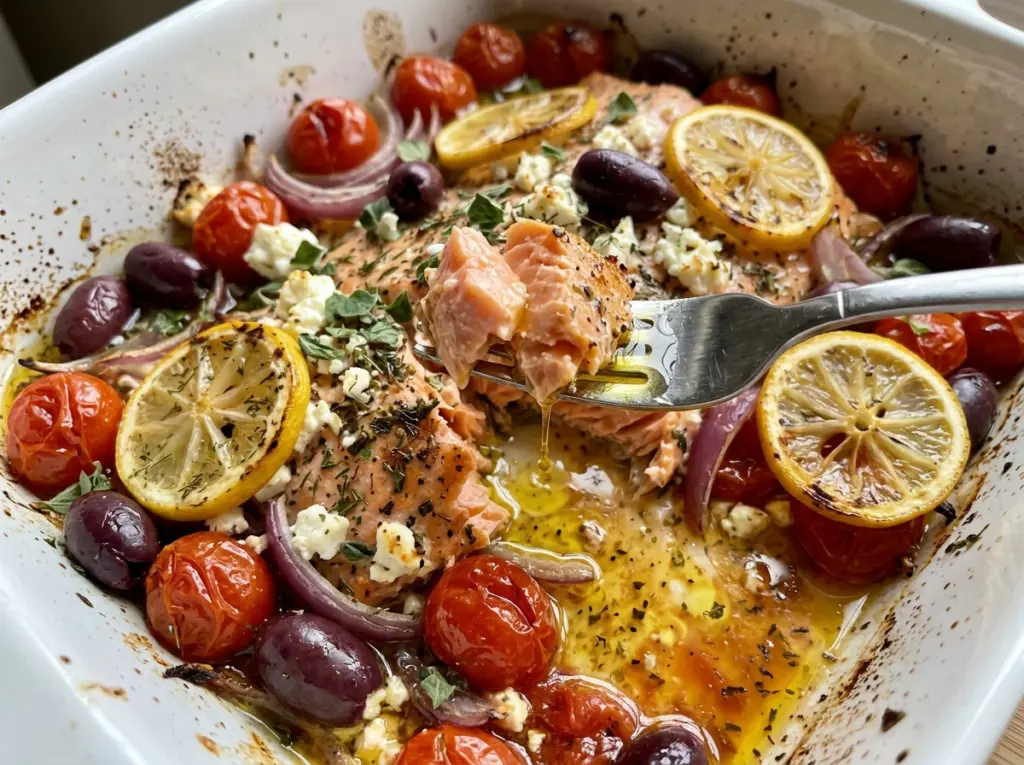
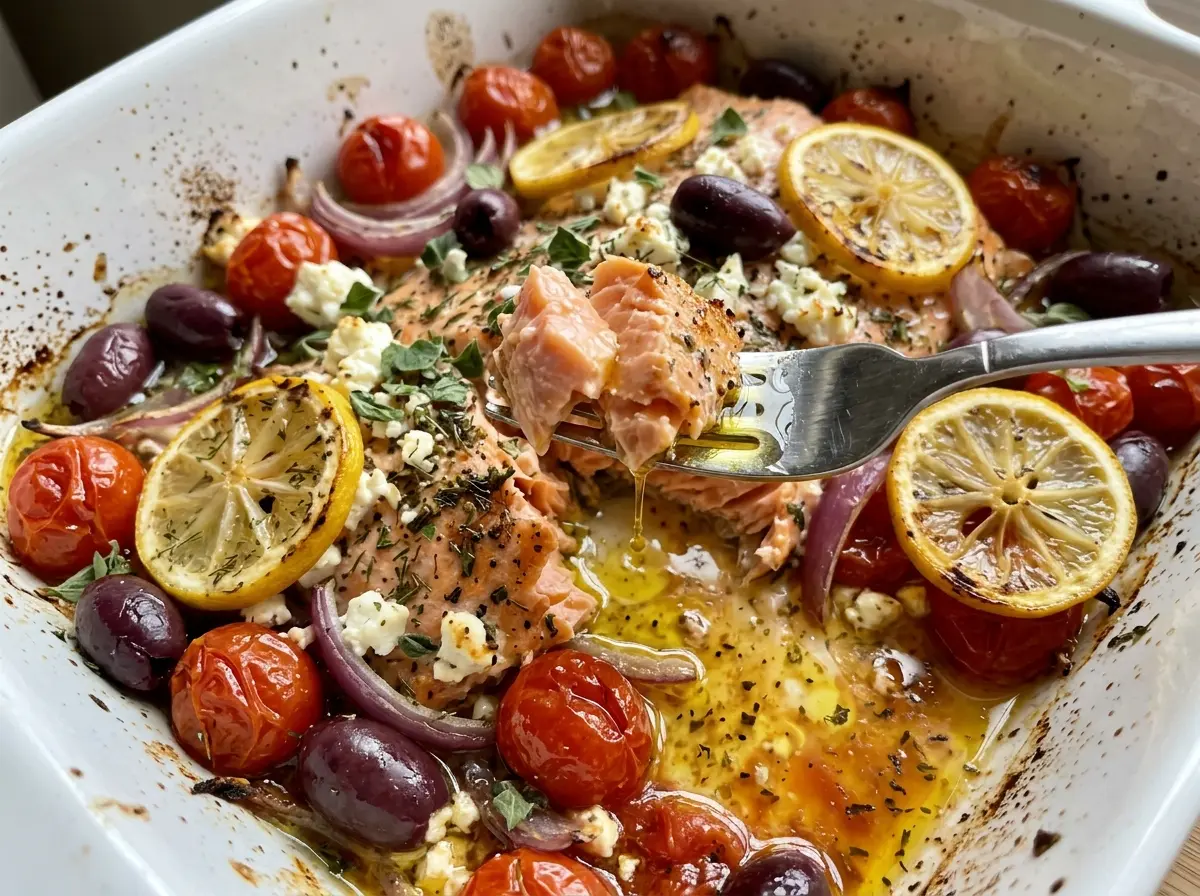
At 400°F, the cherry tomatoes soften while the feta turns tender on top of the salmon. The pan fills with lemon and garlic as everything cooks together, and there’s no separate sauce to stir or side dish to juggle. That’s what I like about Greek Salmon: it brings the bright, salty flavors of lemon, Kalamata olives, and feta into one baking dish.
The salmon stays the center of the meal, while the tomatoes and olives cook alongside it and the parsley goes on at the end. I use skin-on fillets and a parchment-lined dish, then let the thickest part of the fish—not the clock alone—tell me when it’s ready. The result is tender salmon with briny bites and a fresh finish of parsley.
Kitchen Note
Zest the lemon before you cut and juice it. A whole lemon is much easier to hold steady against the grater, and you’ll get the fragrant outer zest without scraping into the bitter white pith.
Save Greek Salmon for a night when you want lemony fish, briny olives, and feta from one baking dish.
Why the tomatoes and olives belong beside the salmon
It’s easy to think of the tomatoes and olives as a topping, but keeping them around the fillets gives each part of the dish room to cook on its own. The salmon gets the lemon-garlic brush and a layer of feta; the tomatoes and olives stay exposed in the baking dish. As the tomatoes soften, their juices mingle with the olive oil and lemon already in the pan, making a bright, savory pool around the fish.
The placement also helps avoid burying the salmon under a heavy layer of toppings. A thick mound can make it harder to see and check the center of a fillet, while scattered vegetables are easy to move aside. You get distinct bites of tender fish, soft tomato, briny olive, and feta rather than one blended topping. When you serve it, bring a little of the pan’s tomato and lemon juice along with each portion.
What the lemon, olives, and feta each bring to Greek salmon
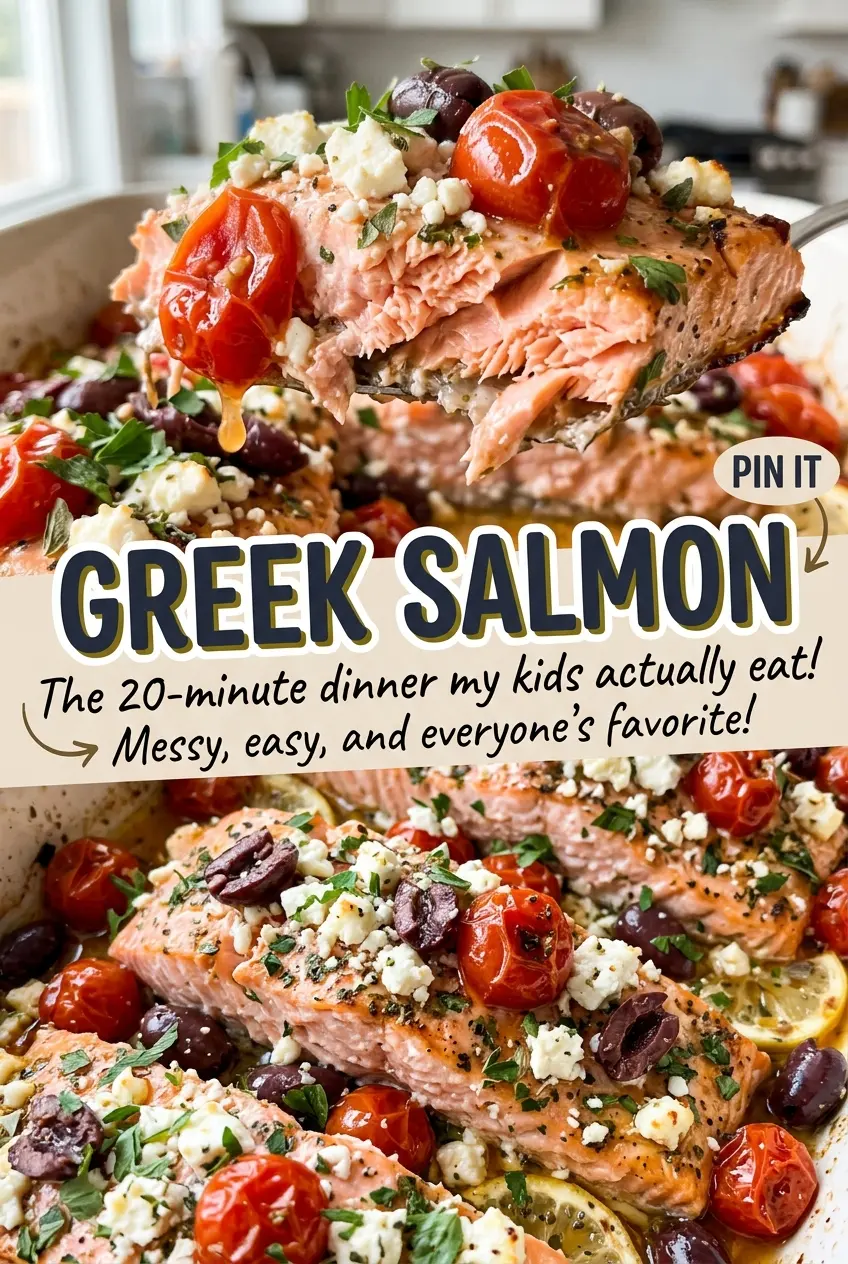
- Salmon — Skin-on fillets hold together well when you lift them from the baking dish. Look for pieces of similar thickness so they cook at a similar pace. Skinless salmon works too, though it’s more delicate to transfer; steelhead trout is a close swap with a slightly different flavor.
- Lemon — Fresh lemon gives you both juice for brightness and zest for a fragrant citrus note. Bottled juice can stand in for the juice, but it can’t replace the zest, so the finished dish will taste less aromatic.
- Olive oil — A regular extra-virgin olive oil brings a gentle fruity note, but there’s no need to use a prized finishing oil here. A neutral cooking oil will work if that’s what you have; you’ll just lose some of the olive oil’s character.
- Garlic — Fresh minced garlic spreads its flavor through the oil and lemon. Garlic powder can fill in when needed; mix it into the lemon-oil mixture so it’s evenly distributed rather than sprinkling it directly onto the fish.
- Dried oregano — Dried oregano is concentrated and savory, which suits the olives and feta. Finely chopped fresh oregano can replace it, though its flavor is greener and less intense.
- Cherry tomatoes — Choose tomatoes that feel firm and have unbroken skins; they’ll soften in the oven without turning to mush immediately. Grape tomatoes are a practical swap. Halve them so their cut sides can cook in the pan juices.
- Kalamata olives — Their deep, fruity brininess gives the dish much of its Greek-inspired character. Black olives are a milder substitute; drain and halve them just as you would the Kalamatas.
- Feta — Feta brings a salty, tangy contrast and stays pleasantly crumbly rather than becoming a smooth sauce. Crumbled goat cheese can replace it for a creamier, less briny finish.
- Fresh parsley — Parsley adds a clean, green note at the end. Finely chopped chives work as a substitute and bring a mild onion flavor; add them after the salmon rests.
From lemon-garlic brush to tender flakes
Line the dish and mix the lemon dressing
Heat the oven to 400°F and line a 9×13-inch baking dish with parchment paper. In a small bowl, whisk together the olive oil, lemon zest and juice, minced garlic, dried oregano, kosher salt, and black pepper. Whisk until the oil and juice look combined and the garlic is spread throughout. If the zest or garlic settles while you work, give the mixture another quick stir before brushing.
Coat each salmon fillet
Set the skin-on fillets in the prepared baking dish and brush the lemon mixture over them. Work it across the tops so each piece gets some zest, garlic, and oregano rather than leaving most of the seasoning in the bowl. A thin, even coating is what you’re after; don’t scrape or press hard enough to break up the fillets. Keep the fish in a single layer.
Scatter the tomatoes, olives, and feta
Place the halved cherry tomatoes and Kalamata olives around the salmon, not in a pile over the fillets. Sprinkle the crumbled feta over both the fish and the vegetables. Some feta will soften on the salmon while other crumbles settle among the tomatoes and olives. Spread everything across the dish so you can see the fish and check its thickest section as it bakes.
Bake, rest, and finish with parsley
Bake for 12 to 16 minutes, until the thickest part of the salmon reaches 145°F and flakes easily with a fork. Fillet thickness affects timing, so start checking toward the shorter end of the range rather than relying on appearance alone. Rest the salmon for 3 minutes, then sprinkle the chopped fresh parsley over the top before serving. The fish should flake into moist sections, not fall apart into dry crumbs.
Three ways to change the olives, herbs, or feta
Use green olives for a sharper bite
Replace the Kalamata olives with the same amount of pitted green olives, halved. They’re sharper and less fruity, so the dish tastes brighter and more assertively briny.
Make it dairy-free with plant-based feta
Use an equal amount of dairy-free feta-style crumbles in place of the feta and add them at the same point. They keep the salty, tangy note, though the texture may stay firmer and the flavor can be milder than dairy feta.
Finish with dill instead of parsley
Swap the parsley for chopped fresh dill and sprinkle it on after the rest. Dill leans into the lemon and gives the salmon a more distinctly herbal finish without changing how the fish bakes.
Storage and Reheating
- Refrigerator: Refrigerate leftovers within 2 hours and keep them in an airtight container for 3 to 4 days. The salmon firms up as it chills, and the tomatoes soften further.
- Freezer: Freeze portions in an airtight container for up to 2 months for best quality. The fish remains usable, but the tomatoes will be softer after thawing and the feta may turn crumbly.
- Reheating: Cover and warm in a 300°F oven until the center reaches 165°F. Avoid a long microwave session; it can leave the salmon dry and tough.
Questions that come up when making Greek salmon
Greek Salmon
Ingredients
Equipment
Method
- Heat the oven to 400°F.
- Line a 9x13-inch baking dish with parchment paper.
- Whisk the olive oil, lemon zest and juice, garlic, oregano, salt, and pepper in a small bowl.
- Brush the mixture over the salmon fillets.
- Set the salmon in the prepared dish.
- Scatter the tomatoes and olives around it.
- Sprinkle the feta over the salmon and vegetables.
- Bake for 12 to 16 minutes, until the thickest part of the salmon reaches 145°F and flakes easily with a fork.
- Rest for 3 minutes.
- Sprinkle with the parsley before serving.


