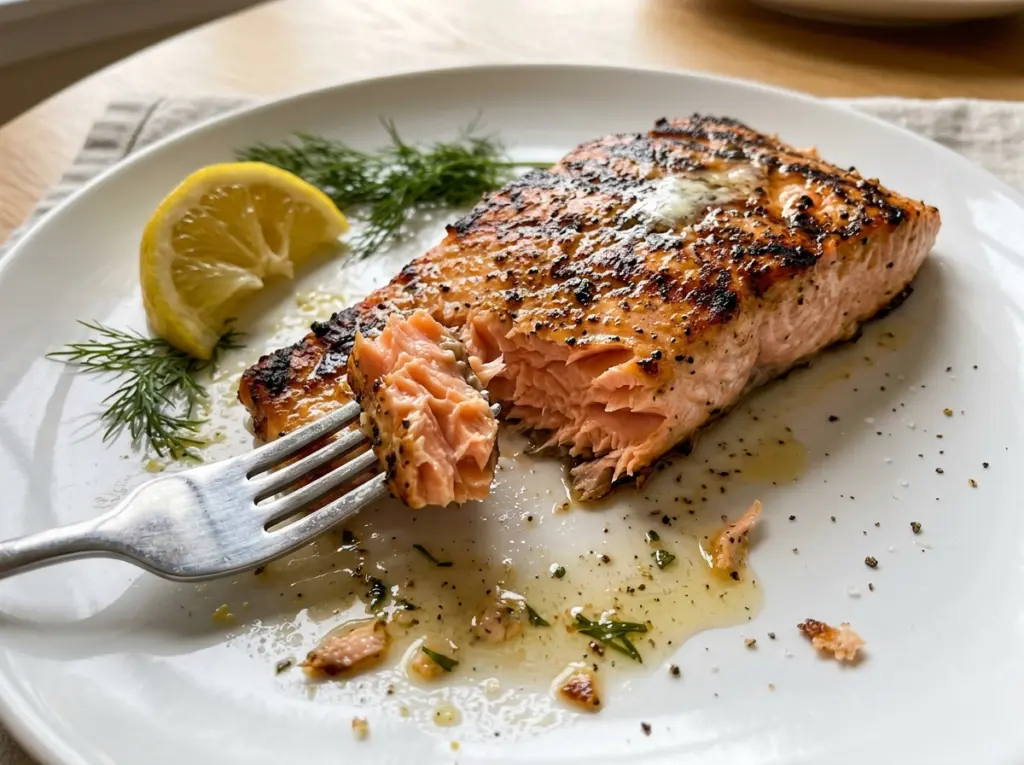
The first few minutes on the grill are where salmon can feel fragile: the flesh is still soft, and trying to move it too soon can tear a good fillet apart. I keep the skin on and let the fish cook skin-side down with the lid closed. For these grilled salmon fillets, that simple setup means the fish can cook through without needing to be flipped.
The fillets are about an inch thick, so the grill’s heat and the thermometer both matter more than watching the clock alone. At medium-high heat, they take 8–12 minutes, but I check the thickest part for 145°F and look for flesh that’s opaque and flakes easily. A brief rest on the platter keeps the finish calm and gives me a moment to bring the lemon wedges to the table.
Olive oil helps prepare both the grates and the salmon, while kosher salt and black pepper keep the seasoning direct. The result is tender fish with a clean lemon finish, ready to serve while it’s still warm.
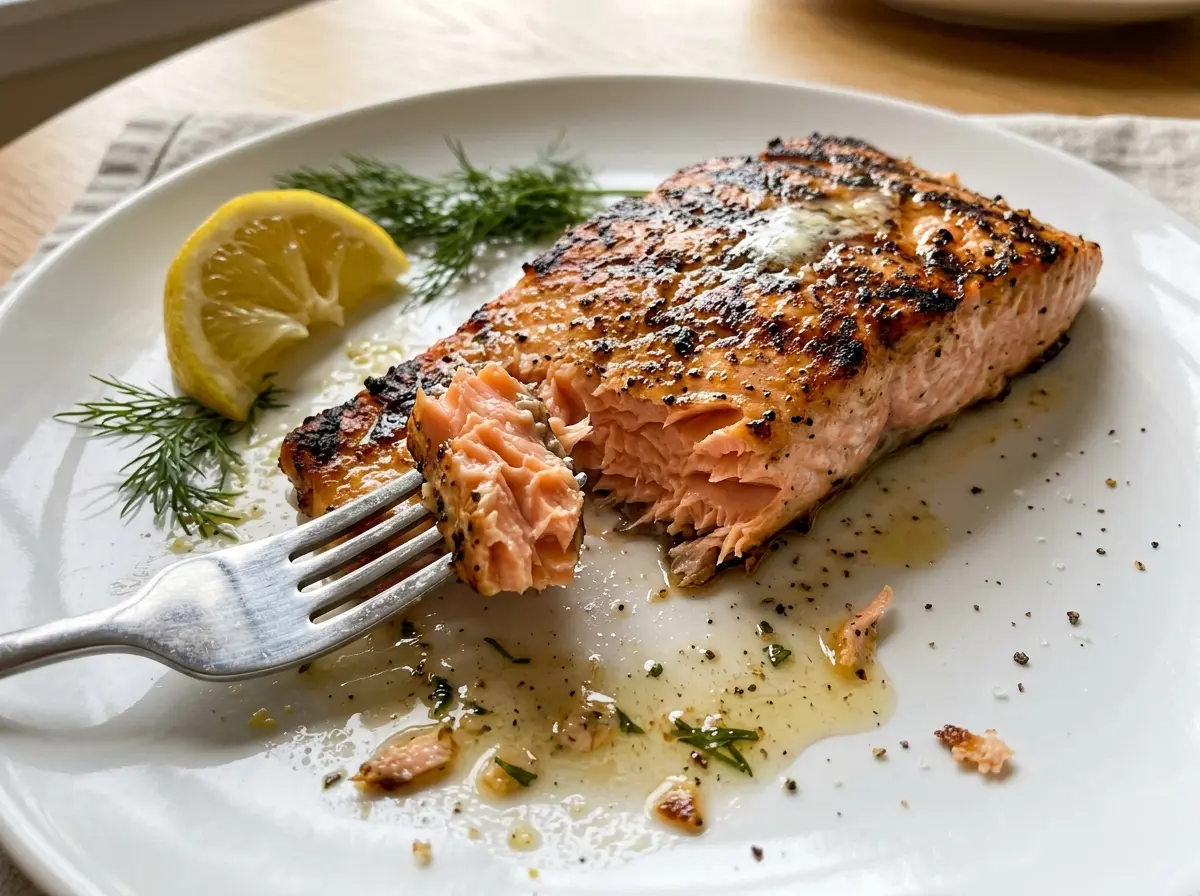
Kitchen Note
Give the salmon its full 2-minute rest on the platter before serving. It’s a short pause, but the flakes settle and the fillets are easier to lift neatly.
Save this grilled salmon for an easy, no-flip dinner: skin-side down, a quick rest, and lemon wedges at the table.
Why the Skin Goes Down First—and Why the Lid Stays Closed
Salmon flesh is delicate, and the grill grate is an unforgiving place to handle it repeatedly. Keeping the skin against the grates gives the fillet a sturdier surface at the point of contact. It also helps the fish hold together as the flesh cooks and firms. That’s useful even if you don’t plan to eat the skin.
Closing the lid changes the heat around the fish: the underside gets direct heat from the grates while the enclosed grill cooks the top as well. The exposed flesh can turn opaque without needing you to flip the fillet and risk breaking it. Leaving the lid closed also keeps the grill closer to its medium-high temperature, rather than letting heat escape each time you check. If you’re used to turning salmon halfway through, this approach is simpler: set it skin-side down and let the grill do the work.
There’s no need to chase a charred exterior. The useful cues are straightforward: opaque flesh, flakes that separate easily, and a thermometer reading from the thickest part. Those signs tell you more than grill marks do.
What the Skin, Oil, and Lemon Each Bring to Grilled Salmon
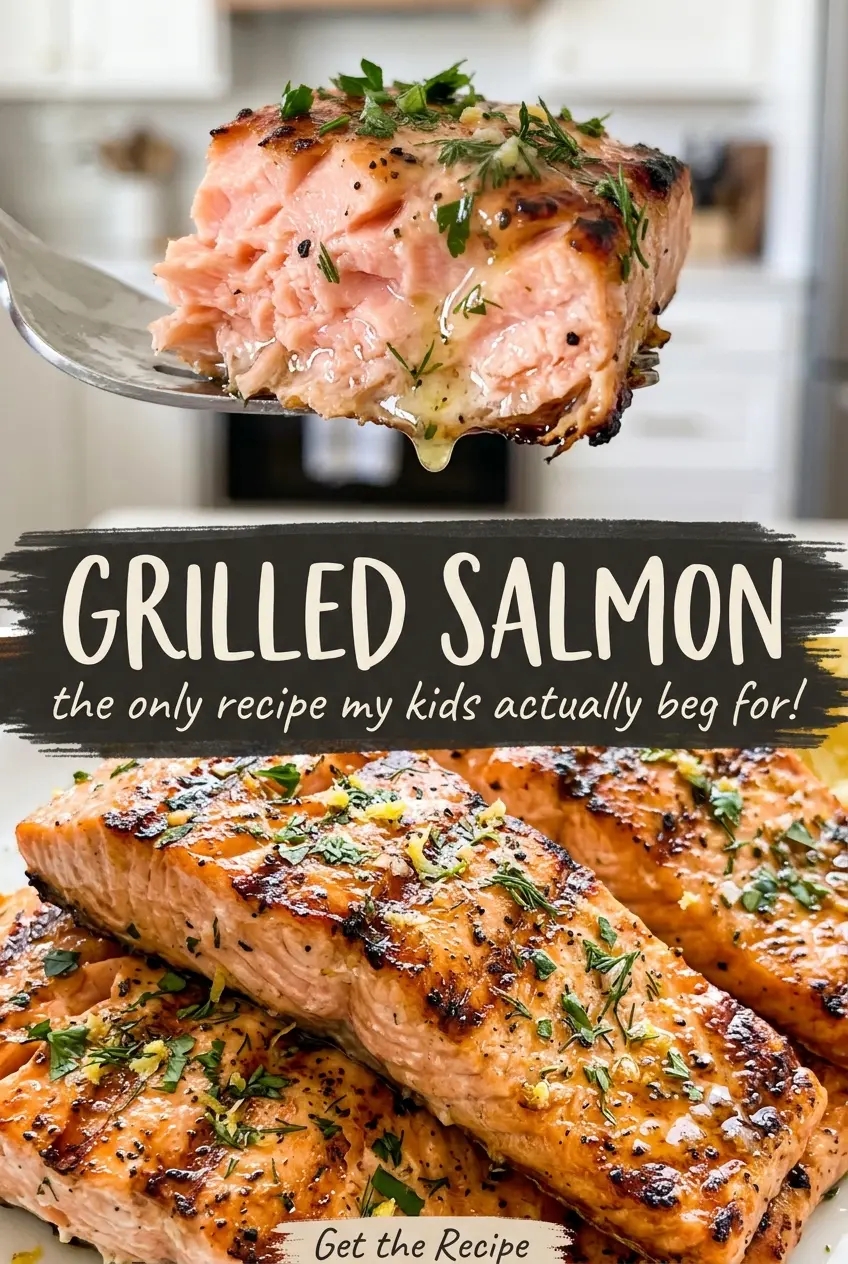
- Skin-on salmon — Choose fillets close to the specified 6-ounce size and about 1 inch thick so the cooking window fits the fish. The skin helps the fillet stay intact on the grill; skinless pieces are more delicate and aren’t the best match for this direct-grill method.
- Olive oil — The oil is divided between the grill grates and the fish, so each has a thin coating where it needs one. There’s no need to use an expensive finishing oil here; a standard olive oil works for brushing and grilling.
- Kosher salt — Its coarser grains are easy to distribute over the fillets. Fine table salt packs more densely by volume, so it isn’t a reliable one-for-one swap at the same measure; use kosher salt for the intended seasoning.
- Black pepper — It adds a mild, sharp contrast to the rich salmon without taking over. Freshly ground pepper gives a more pronounced aroma, while pre-ground black pepper is perfectly serviceable for an uncomplicated seasoning.
- Fresh lemon — Cutting a lemon into wedges gives you a fresh squeeze at the table, which tastes brighter than bottled lemon juice. Keep the wedges alongside the fish so each serving can be finished to taste.
Grilling the Fillets Without Breaking or Drying Them Out
Bring the Grill to Medium-High Heat
Heat a clean grill to 400–450°F before the salmon goes on. A clean cooking surface matters because stuck-on residue can cling to the fish as it cooks. The temperature range gives the fillets enough heat to cook through within the stated window without relying on a long, slow grill. Have the grill ready before you oil the grates and season the fish.
Oil the Grates, Then Season the Salmon
Use 1 tablespoon of olive oil to lightly oil the grill grates. Brush the salmon with the remaining tablespoon, then season all over with the kosher salt and black pepper. Keep the oil coating light rather than letting it pool on the fish. This split use gives the grill surface and the fillets their own thin layer.
Cook Skin-Side Down With the Lid Closed
Set the fillets on the grill skin-side down, close the lid, and cook for 8–12 minutes. The timing is a window, not a doneness test by itself, because grills and individual pieces can vary. Look for flesh that has turned opaque and flakes easily, then check the thickest part of a fillet for 145°F. Avoid judging doneness from the thinner edge alone.
Rest Briefly and Serve With Lemon
Transfer the cooked salmon to a platter and let it rest for 2 minutes. Keep the fillets intact while moving them, since hot salmon flakes readily. Serve with the lemon wedges so the fresh juice can be squeezed over the fish at the table. The finished flesh should separate into moist flakes rather than look translucent in the center.
Two Small Changes to the Way You Serve Grilled Salmon
Flake It for a Shared Platter
After the brief rest, break the cooked salmon into large flakes and arrange them on the platter with the lemon wedges. This changes the presentation without changing the seasoning or cooking method, and it makes the fish easy to portion at the table. Handle it gently so the flakes stay generous rather than crumbling.
Make the Lemon More Pronounced
Instead of leaving each wedge untouched on the plate, squeeze the lemon over the fillets just before serving. The same lemon gives the salmon a brighter, more even finish, while serving the wedges whole lets everyone choose how much juice to add. This is a serving adjustment, not a reason to add lemon to the grill.
Storage and Reheating
- Refrigerator: Store leftover salmon in a covered container and refrigerate promptly. It keeps for 3–4 days; the flesh will be firmer and less juicy after chilling.
- Freezer: Freeze cooked portions tightly wrapped or in an airtight container for up to 2–3 months. Thaw in the refrigerator for a gentler texture.
- Reheating: Warm portions covered in the microwave at reduced power in short intervals, stopping when the center reaches 165°F. High power for too long dries the edges before the center warms through.
Questions That Come Up at the Grill
Grilled Salmon
Ingredients
Equipment
Method
- Heat a clean grill to medium-high, about 400–450°F.
- Use 1 tablespoon olive oil to lightly oil the grill grates.
- Brush the salmon with the remaining oil and season it all over with the salt and pepper.
- Place the salmon skin-side down on the grill, close the lid, and cook for 8–12 minutes, until opaque and flaky and the thickest part reaches 145°F.
- Transfer the salmon to a platter.
- Rest for 2 minutes.
- Serve with the lemon wedges.


