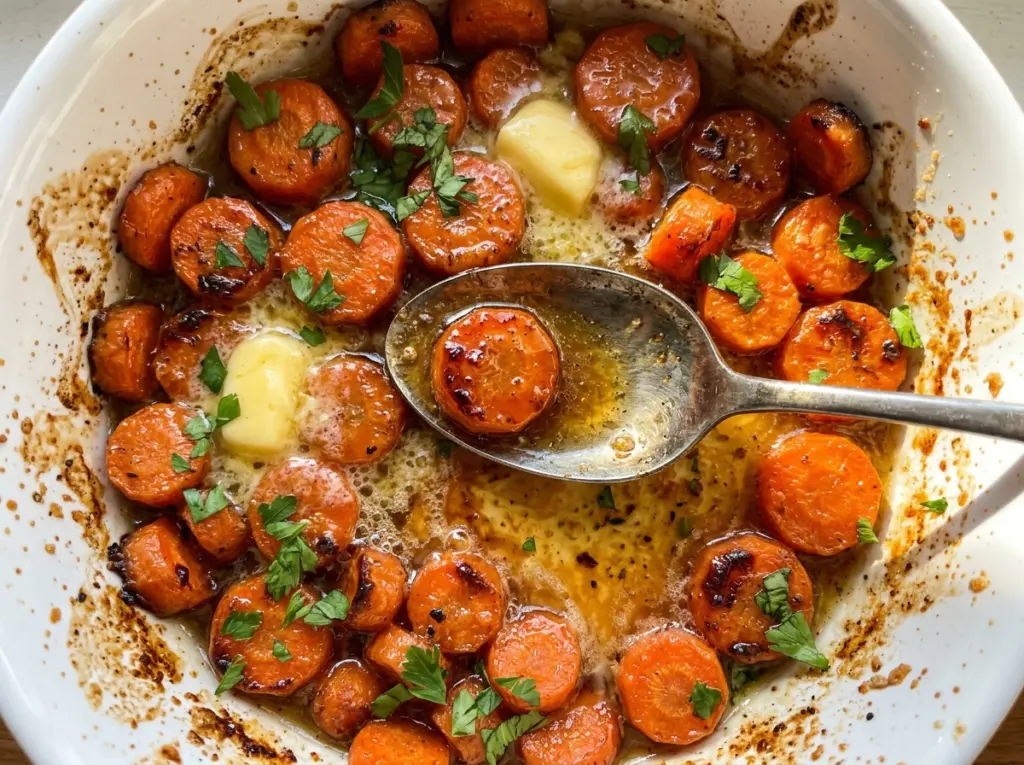
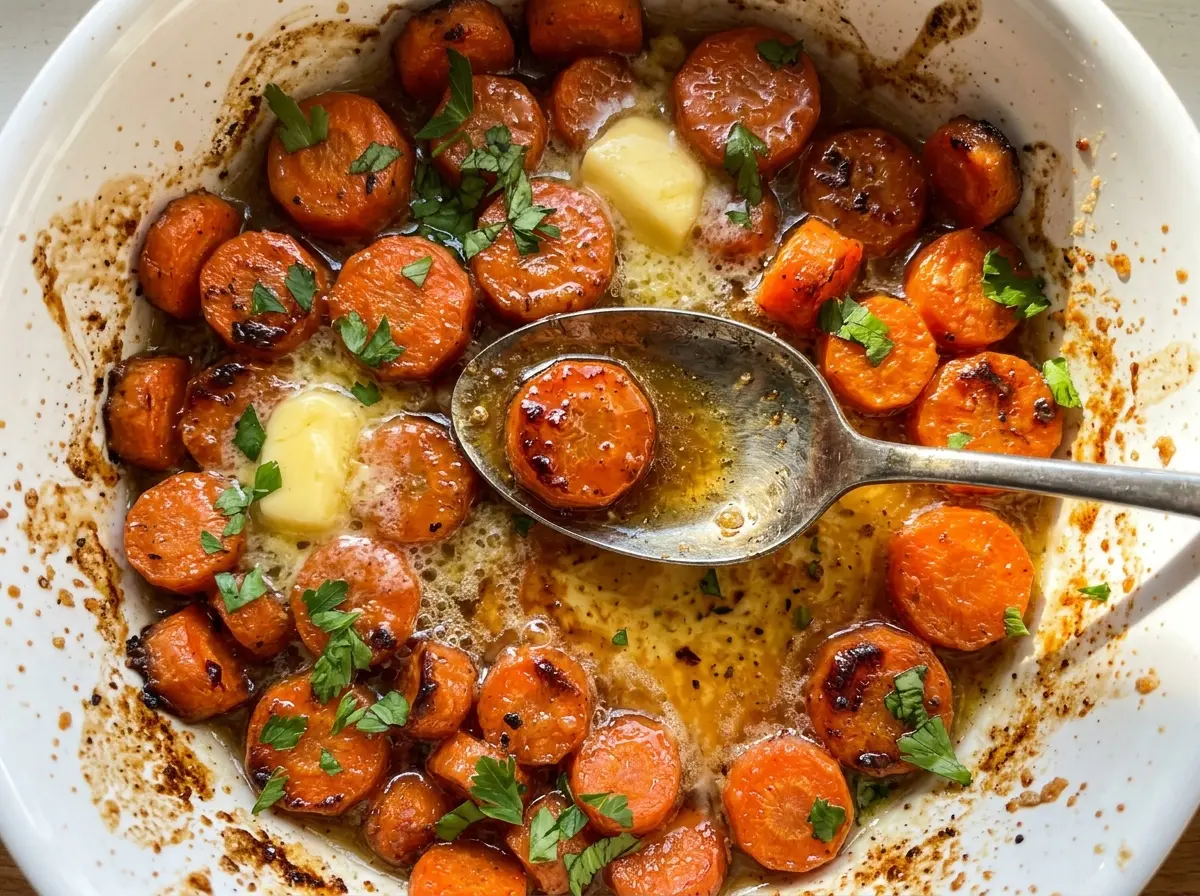
When the carrots come out of the oven, the edges should be browned and the centers tender—not pale and wet from sitting too close together on the pan. That’s the difference between a tray of roasted carrots and carrots that have mostly steamed. For these honey butter roasted carrots, I keep the pieces close in size and leave room around them so the honey-butter coating can turn glossy as the carrots roast.
The coating takes just a moment to mix: melted unsalted butter, honey, kosher salt, and black pepper. Toss the carrots in the bowl until every side is slick, then spread them in one layer on a parchment-lined rimmed baking sheet. I turn them halfway through so the edges brown on more than one side. They’re a straightforward side dish, but those browned edges and the sweet, buttery coating make each bite worth getting right.
Kitchen Note
Keep the carrot sticks close to a half-inch thick, even if a few are a little shorter or longer. When they’re cut to a similar thickness, they soften at about the same rate instead of leaving you with tender tips and firm centers.
Save these honey butter roasted carrots for a side with tender centers, browned edges, and a simple honey-butter coating.
Why These Carrots Need Space on the Pan
Carrots release moisture as they roast. If the sticks are crowded or piled over one another, that moisture collects between them, and the carrots soften before their edges have a chance to brown. A single layer gives hot oven air access to the sides of each piece and keeps the honey-butter coating from pooling beneath a heap of carrots.
Use a large rimmed baking sheet and spread the pieces out before they go into the oven. If they’re touching here and there, that’s different from having them packed tightly together; aim for open patches of parchment between most pieces. A rimmed pan also helps contain the butter and honey as they heat. The goal isn’t to dry the carrots out. It’s to give their natural moisture room to escape while the outside turns browned and tender rather than limp and pale.
This is especially useful when the carrots vary in size. A larger stick takes longer to soften, while a thinner one may brown sooner. Even cuts help, but leaving space around them gives the batch a better chance of roasting evenly. If the pan looks crowded after you’ve added the carrots, spread them out before roasting instead of expecting extra time to fix the lack of space.
What the Carrots, Honey, and Butter Each Bring
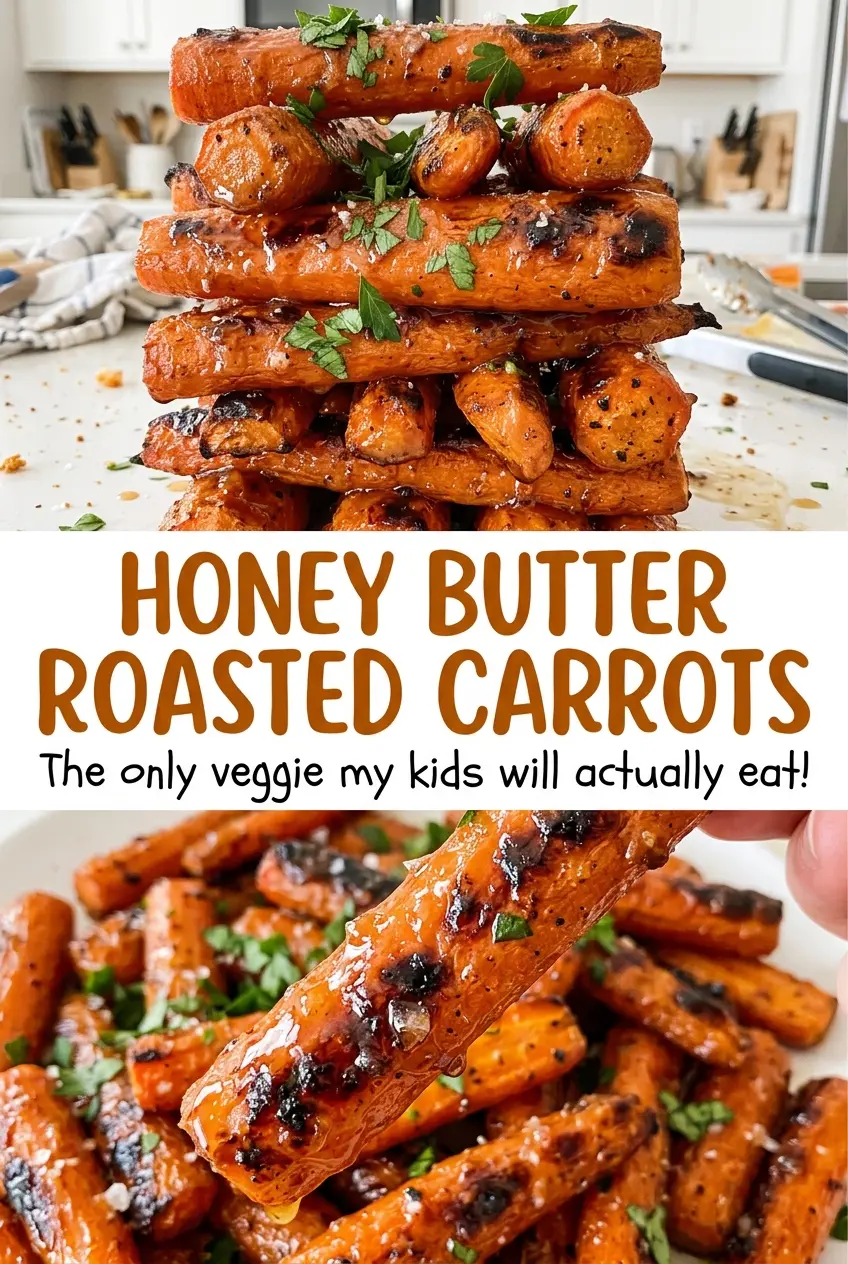
- Carrots — Whole carrots let you peel and cut the pieces to a consistent thickness, which matters more here than buying a particular variety. Choose firm carrots without soft spots; very large carrots may have wider centers that take longer to turn tender. Peeling gives the finished sticks a clean surface for the coating to cling to.
- Unsalted butter — Butter carries the honey and seasonings across the carrots and lends the coating a rounded, rich taste. Unsalted butter also lets you control the salt level. If you need a dairy-free version, use a dairy-free plant butter that’s suitable for melting; the coating will be a little less buttery in flavor, but the carrots will still roast well.
- Honey — Honey gives the coating its sweetness and helps the edges brown in the oven. A mild honey lets the carrot flavor come through, while a strongly flavored honey will be more noticeable. Maple syrup works as a one-for-one replacement if you want a warmer, less floral sweetness.
- Black pepper — Pepper keeps the coating from tasting one-note sweet. Freshly ground pepper has a brighter aroma, but standard ground black pepper works just fine for this side.
- Kosher salt — Salt brings the carrots’ sweetness into balance. Kosher salt is the version this seasoning amount is built around; if you use salted butter instead, the finished dish will taste saltier unless you reduce the added salt.
Coating and Roasting the Carrots Until the Edges Brown
Get the Oven and Pan Ready
Heat the oven to 425°F and line a large rimmed baking sheet with parchment paper. Starting with a hot oven helps the carrots roast rather than slowly warm through. Use a pan large enough to hold the pieces in one layer; a smaller pan that forces them together works against browning. Keep the prepared pan nearby while you toss the carrots so the coated pieces can go straight onto it.
Make the Honey-Butter Coating
Melt the butter in a large bowl, then stir in the honey, kosher salt, and black pepper. Stir until the honey is blended through the melted butter and the seasoning is dispersed rather than sitting in one spot. Add the peeled, cut carrots and toss until all the surfaces look coated. If a few pieces still look dry, keep tossing them in the bowl before you spread everything onto the pan.
Roast, Turn, and Check for Tenderness
Spread the coated carrots in a single layer on the lined baking sheet. Roast for 25 to 30 minutes, turning them halfway through, until they’re tender and browned at the edges. The cut ends should look caramelized, and a fork should slide into the thickest pieces without a hard, crunchy center. Start checking near the shorter end of the time range, since the exact size of the sticks affects how quickly they soften. If the edges are still pale and the carrots aren’t tender, continue roasting until both cues are there.
Three Easy Ways to Adapt the Honey-Butter Coating
Use Maple Syrup Instead of Honey
Swap the honey for an equal amount of maple syrup in the butter mixture. The coating will taste more toasty and less floral, while still clinging to the carrots and browning as they roast. Keep an eye on the edges as they cook, since the shade of the syrup can make browning look a little different.
Make the Carrots Dairy-Free
Replace the unsalted butter one-for-one with dairy-free plant butter that melts smoothly. The honey still supplies sweetness and helps the carrots brown, though the finished coating won’t have quite the same buttery richness. Check the flavor of the plant butter before adding it, since some varieties are salted.
Try a Mix of Carrot Colors
Use orange carrots alongside purple, yellow, or red carrots while keeping the total quantity and cut size the same. The coating stays familiar, but the mix brings different colors to the serving dish. Check that every piece is close to the same thickness so the different varieties roast at a similar pace.
Storage and Reheating
- Refrigerator: Store leftovers in a covered container for 3 to 4 days. They’ll soften as they sit, so the edges won’t stay as browned as they were right out of the oven.
- Freezer: Freeze cooled carrots in an airtight container for up to 2 months. They’re safe to freeze, but thawed carrots will be softer, so expect less definition and browning at the edges.
- Reheating: Warm them in a 350°F oven until heated through. Avoid reheating at high heat for a long stretch; the honey coating can darken before the centers warm.
Questions That Come Up When Roasting Honey Butter Carrots
Honey Butter Roasted Carrots
Ingredients
Equipment
Method
- Heat the oven to 425°F.
- Line a large rimmed baking sheet with parchment paper.
- Melt the butter in a large bowl.
- Stir in the honey, salt, and pepper.
- Add the carrots and toss until evenly coated.
- Spread the carrots in a single layer on the baking sheet.
- Roast for 25 to 30 minutes, turning the carrots halfway through, until tender and browned at the edges.


