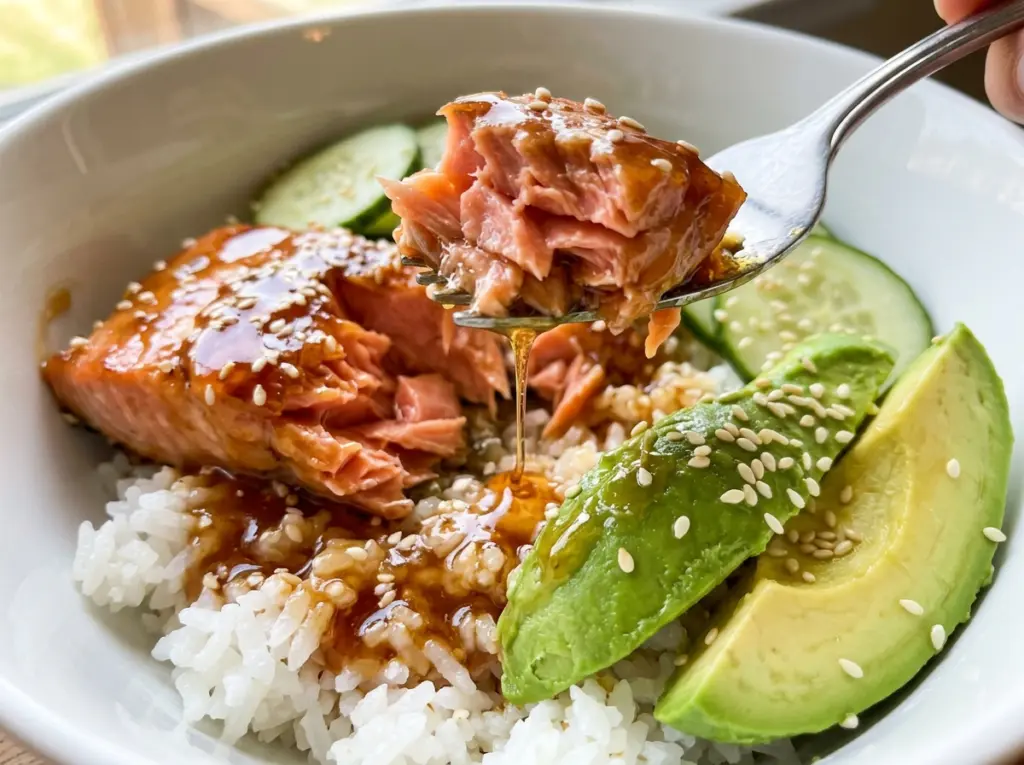
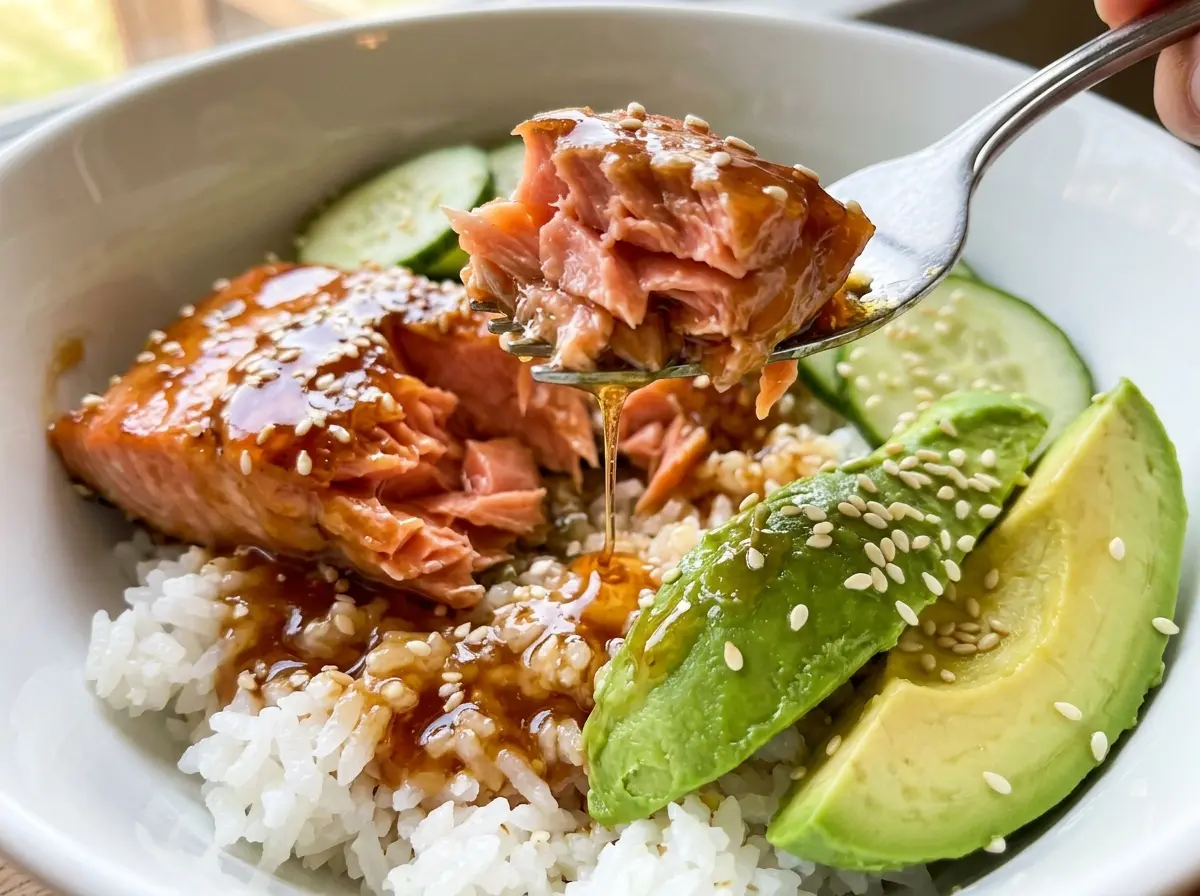
The honey in this glaze bubbles at the edges of the salmon, turning glossy as the fish finishes baking. I brush it on partway through instead of coating the salmon from the start, so the honey gets time to cling without spending the whole bake in the oven.
There’s a useful balance in the sauce: honey brings sweetness, while low-sodium soy sauce and rice vinegar keep it from tasting flat or cloying. Fresh ginger and garlic give it a little warmth, and toasted sesame oil adds a nutty note without taking over.
Jasmine rice makes a soft, fragrant base for the salmon, crisp cucumber, creamy avocado, and scallions. Each bowl gets a little of the clean, reserved glaze at the end, plus sesame seeds for a delicate crunch. The recipe makes four bowls with plenty of contrast in every bite.
Kitchen Note
Set the two tablespoons of glaze aside in a clean bowl before you brush anything onto the salmon. That keeps the finishing drizzle separate from the glaze that touches the fish as it bakes.
Save this Honey Glazed Salmon Bowl for the glossy honey-soy finish, fragrant jasmine rice, and cool cucumber and avocado in every bowl.
Why the Honey Goes on After the Salmon Starts Baking
Honey makes this glaze cling beautifully, but it also browns faster than the salmon cooks through. Putting it on only after the fish has already started baking gives the portions a head start; the glaze then has time to coat the surface and turn glossy without sitting in the oven for the entire cook.
The order matters even more because salmon portions aren’t always exactly the same thickness. A thinner piece may finish sooner than a thick one, and a sugary coating can make it harder to judge the fish by color alone. Check the thickest part with an instant-read thermometer rather than relying on a deeply browned top. The glaze should look shiny and set against the fish, not dark and scorched.
The sauce is meant to be a light coating, not a thick candy shell. Simmering it briefly gives the honey, soy, vinegar, sesame oil, ginger, and garlic a chance to come together; it thickens slightly as it cooks and clings more once brushed over the warm salmon.
How the Rice, Salmon, and Glaze Keep Each Other in Balance

- Jasmine rice — Its gentle fragrance and soft, separate grains make an easy base for the sweet-savory glaze. Rinsing it until the water runs mostly clear removes loose surface starch, which helps keep the cooked grains from turning sticky. Another rice variety may need different water and timing, so jasmine is the dependable choice for this method.
- Honey and low-sodium soy sauce — Honey gives the glaze its sheen and sweetness; soy sauce adds savory depth. Low-sodium soy sauce keeps the mixture from tasting overly salty as it reduces. For a gluten-free bowl, tamari can replace the soy sauce in the same amount, though the finished sauce may taste a little different depending on the brand.
- Rice vinegar and toasted sesame oil — Rice vinegar cuts through the honey with a gentle tang, while toasted sesame oil gives the sauce its rounded, nutty aroma. The oil’s toasted character is worth keeping; plain cooking oil won’t bring the same flavor. If you leave it out, the glaze will still work, but it’ll lose that sesame note.
- Fresh ginger and garlic — Finely grating both lets them blend into the glaze instead of leaving large, sharp pieces in each bite. Fresh ginger has a livelier, juicier quality than dried ginger, and freshly grated garlic melts into the short simmer. Use the fresh ingredients here for the clearest, most balanced sauce.
- Skinless salmon — Skinless portions are easy to serve straight into the bowls and let the glaze coat the fish all around the exposed surfaces. Choose fillets that look moist and firm, with portions of similar thickness when possible; thickness affects how quickly they cook. Salmon is the centerpiece, so freshness matters more here than it does for the pantry ingredients.
- Cucumber, avocado, scallions, and sesame seeds — English cucumber brings a cool crunch, avocado adds a soft, buttery contrast, and scallions keep the bowl tasting fresh. Thin slices are easier to eat alongside the rice and salmon. Sesame seeds are a small finishing touch; fresh, fragrant seeds add more than ones that have been sitting open in the cupboard.
Build the Bowl Around a Short Simmer and a Two-Stage Bake
Rinse the Rice, Then Let It Rest Covered
Rinse the jasmine rice in a fine-mesh strainer under cold water until the water runs mostly clear, then drain it well. Combine it with the water and kosher salt in a 2-quart saucepan and bring it to a boil over high heat. Cover, reduce the heat to low, and cook for 15 minutes; then take the pan off the heat and let the rice stand, covered, for 10 minutes. Keep the lid on during the rest so the steam can finish the grains evenly.
Simmer the Glaze Just Until It Thickens Slightly
While the rice cooks, combine the honey, low-sodium soy sauce, rice vinegar, toasted sesame oil, grated ginger, and grated garlic in a small saucepan. Bring the mixture to a simmer over medium heat and stir for 2 to 3 minutes, until it looks slightly thickened. It won’t turn into a heavy syrup, so don’t keep cooking it in search of a firm, candy-like texture. Set aside two tablespoons in a clean bowl, then reserve the rest for brushing the salmon.
Brush the Salmon Partway Through Baking
Heat the oven to 425°F and line a rimmed baking sheet with parchment paper. Arrange the skinless salmon portions on the sheet and bake for 7 minutes before brushing them with the remaining glaze. Return the pan to the oven for 4 to 7 minutes more, checking the thickest part of a portion with an instant-read thermometer. Take the salmon out when that spot reaches 145°F; a very dark glaze is a sign it has spent too long in the heat.
Finish Each Bowl with the Reserved Drizzle
Divide the cooked rice among four bowls and top each with a salmon portion, thinly sliced cucumber, sliced avocado, and scallions. Drizzle each bowl with some of the glaze you set aside, then sprinkle on the sesame seeds. Keep the finishing glaze for the bowls rather than brushing it on the fish; it gives the assembled dish a fresh, bright hit of sauce. The cucumber and avocado are at their best when they still look crisp and freshly cut.
Three Ways to Adapt the Bowl Without Losing Its Balance
Make the Glaze Gluten-Free
Use tamari in place of the low-sodium soy sauce, keeping the same amount. It keeps the glaze savory and works well with the honey and rice vinegar, though its flavor can be a little fuller or saltier than the soy sauce in the original bowl.
Make It a Lower-Carb Salmon Plate
Leave out the jasmine rice and arrange the salmon with the cucumber, avocado, and scallions instead. The plate will be lighter and less filling, with the glaze carrying more of the sweet-savory flavor since there’s no rice underneath to absorb it.
Make the Ginger Less Prominent
For a milder, sweeter-tasting glaze, leave out the fresh ginger and keep the garlic. You’ll lose the ginger’s warm bite, but the honey, soy sauce, and vinegar still make a balanced sauce for the salmon and rice.
Storage and Reheating
- Refrigerator: Store leftover salmon and rice in airtight containers for up to 3 days. Keep cucumber and avocado separate; they lose their fresh texture once dressed or packed with warm ingredients.
- Freezer: Cooked salmon and rice can be frozen separately in airtight containers for up to 2 months. The salmon may be a little drier and the rice softer after thawing; cucumber and avocado don’t freeze well for these bowls.
- Reheating: Warm the salmon and rice covered in the microwave until they reach 165°F, then add the cold toppings. Reheating the cucumber and avocado along with the fish will make them soft and watery.
Questions That Come Up When Making Honey Glazed Salmon Bowls
Honey Glazed Salmon Bowl
Ingredients
Equipment
Method
- Rinse the rice in a fine-mesh strainer under cold water until the water runs mostly clear, then drain well.
- Combine the rice, water, and salt in a 2-quart saucepan and bring to a boil over high heat.
- Cover, reduce the heat to low, and cook for 15 minutes.
- Remove from the heat and let stand, covered, for 10 minutes.
- While the rice cooks, combine the honey, soy sauce, rice vinegar, sesame oil, ginger, and garlic in a small saucepan and bring to a simmer over medium heat.
- Simmer for 2 to 3 minutes, stirring, until slightly thickened.
- Set aside 2 tablespoons in a clean bowl.
- Heat the oven to 425°F and line a rimmed baking sheet with parchment paper.
- Arrange the salmon on the baking sheet and bake for 7 minutes.
- Brush the portions with the remaining glaze and bake for 4 to 7 minutes more, until the thickest part reaches 145°F.
- Divide the rice among 4 bowls and top with the salmon, cucumber, avocado, and scallions.
- Drizzle each bowl with some of the reserved glaze and sprinkle with sesame seeds.


