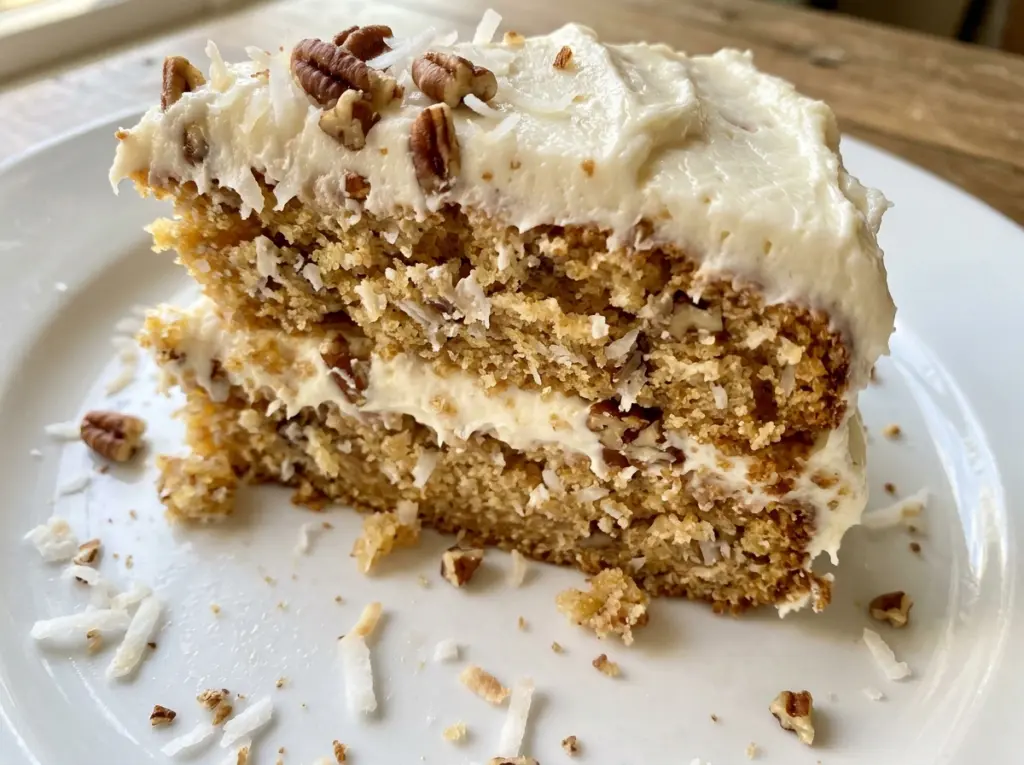
When the three pans come out of the oven, the tops should spring back lightly under a fingertip, while a toothpick still picks up a few moist crumbs. That little bit of give is what keeps the layers tender instead of dry. I watch for those cues closely with this Italian Cream Cheese Cake because the layers are thin enough to overbake quickly.
Separating the eggs gives the batter a lift that’s especially welcome with coconut and pecans folded through it. The whites are beaten on their own, then folded in gently at the end, so the cake has a soft crumb with little chewy and crunchy bites throughout. A smooth cream cheese frosting ties those layers together without burying their texture.
Kitchen Note
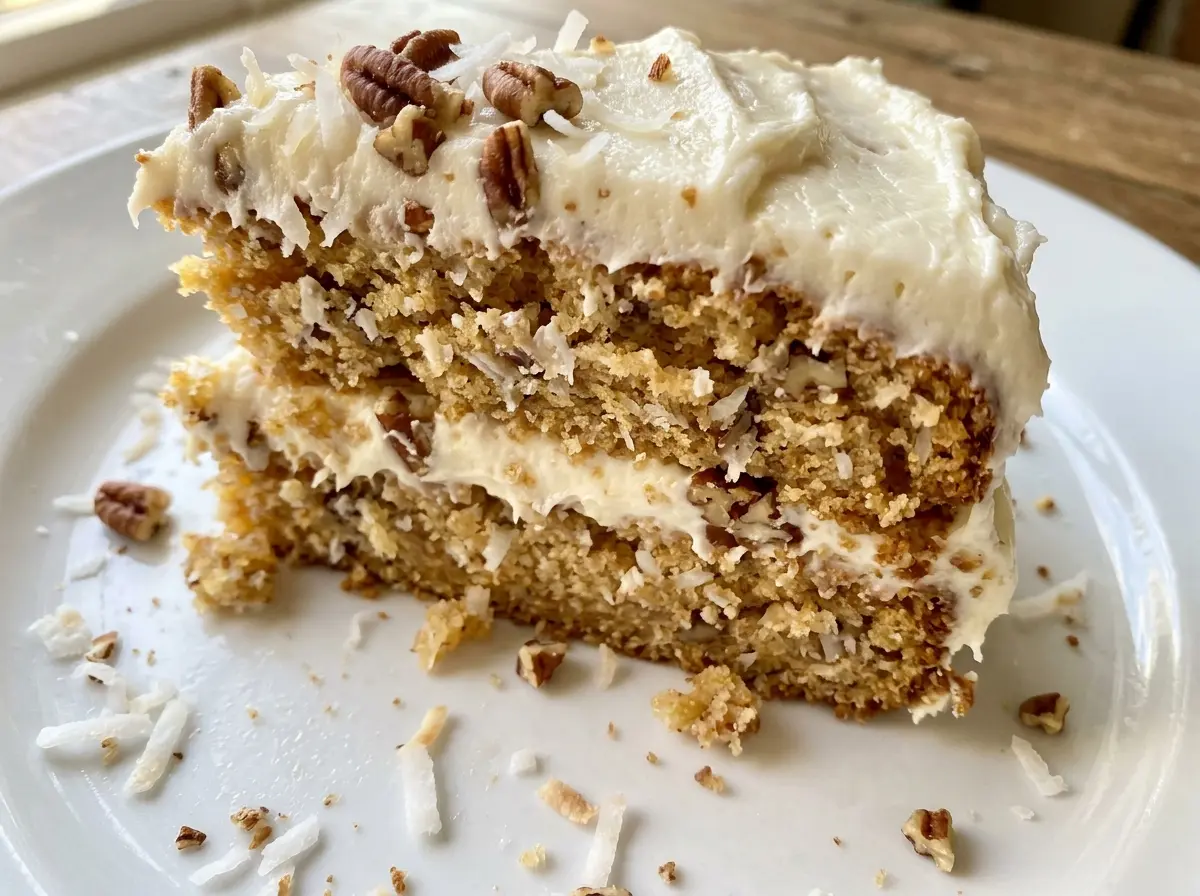
Let the layers cool completely before you frost them. Even a slightly warm cake can soften the cream cheese frosting and make the stack shift as you spread it.
Save this Italian Cream Cheese Cake for its tender coconut-pecan layers and tangy cream cheese frosting.
Why This Cake Uses Both Butter and Shortening
Butter and shortening each earn their place in these layers. Butter brings the rich flavor you want in a celebration cake, while shortening helps the crumb stay tender and soft. Using both gives you a better balance than relying on either one alone: all butter can make a cake feel heavier, while shortening by itself won’t bring the same buttery taste.
The creaming step matters, too. Beating the butter and shortening until creamy, then adding the sugar gradually and mixing until light and fluffy, builds air into the batter before the flour goes in. That’s why it’s worth giving the mixture the full three minutes rather than stopping when the sugar first disappears. Once the flour is added, though, keep mixing only until the batter comes together; extra beating at that point can make the layers tougher.
What the Coconut, Buttermilk, and Pecans Bring to Each Layer
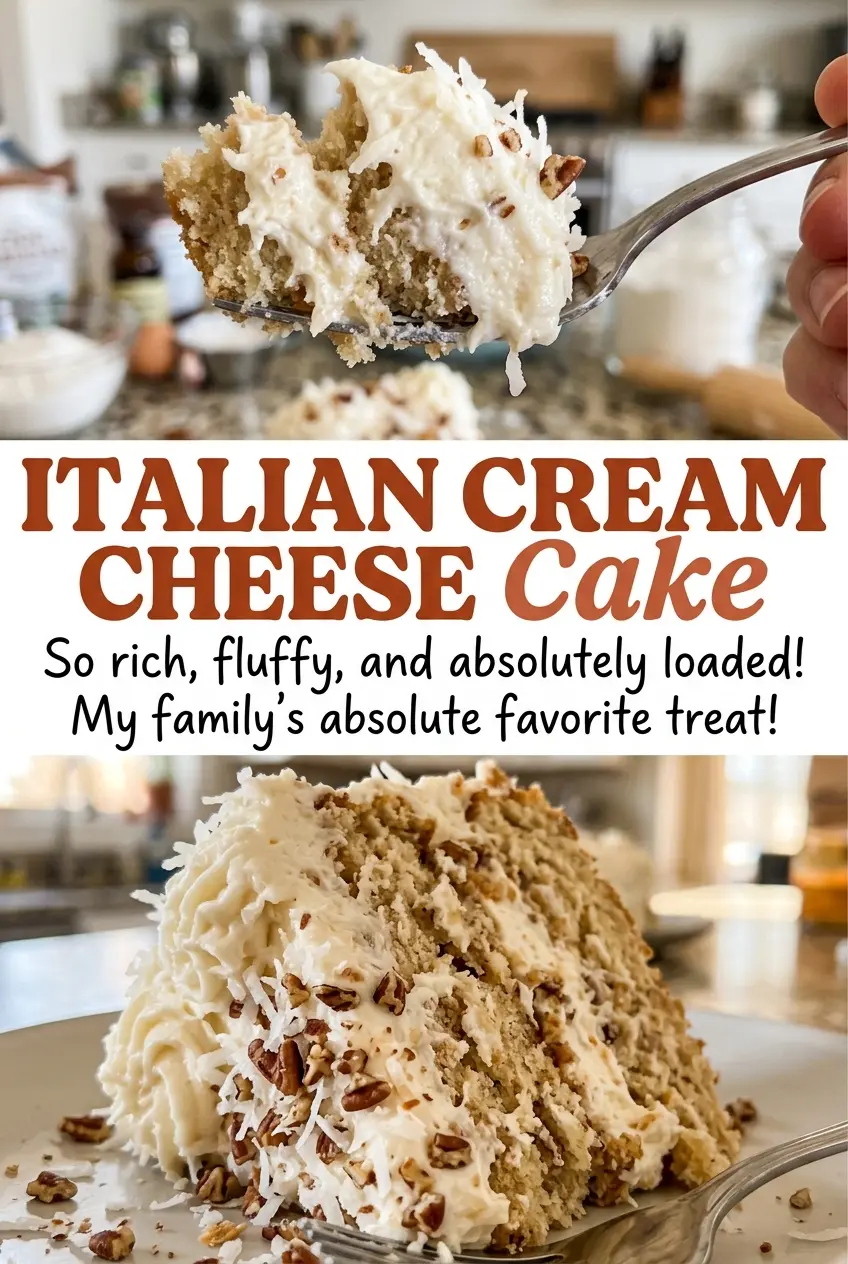
- Buttermilk and baking soda — The buttermilk’s acidity works with the baking soda to help the cake rise and gives the crumb a gentle tang. Use real buttermilk here; a thinner milk substitute can change the batter’s consistency and won’t provide quite the same result.
- Sweetened shredded coconut — It adds sweetness and a soft, chewy texture that runs through every slice. Sweetened shredded coconut is the intended choice; unsweetened coconut will make the cake less sweet and can feel drier.
- Pecans — Chopped pecans bring a toasty crunch against the tender crumb. Fresh pecans matter more than an expensive brand: taste one before baking, since stale nuts can turn bitter.
- Eggs — The yolks enrich the batter, and the separately whipped whites help lighten it. Separate them carefully; even a little yolk in the whites can make it harder to whip them to stiff peaks.
- Cream cheese — Choose a block of cream cheese rather than a tub-style spread for frosting that holds its shape more reliably. Softening it before mixing helps it blend smoothly with the butter.
- All-purpose flour — It gives the layers enough structure to hold the coconut and pecans. Measure it without packing it tightly into the cup; too much flour can leave the cake dry.
How to Keep the Layers Light from Mixing Bowl to Cake Stand
Build a fluffy base before the flour goes in
Whisk the flour, baking soda, and salt together in a medium bowl so the leavener is distributed. In a large bowl, beat the softened butter and shortening until creamy, then add the granulated sugar gradually. The mixture should look lighter and fluffy after about three minutes, not greasy or separated. Beat in the egg yolks one at a time, mixing well after each addition.
Alternate the dry ingredients and buttermilk
With the mixer on low, add the flour mixture in three additions and the buttermilk in two, beginning and ending with flour. Let each addition mostly mix in before adding the next, and stop as soon as no dry flour remains. Beat in the vanilla, then fold in the coconut and pecans. This order keeps the batter from becoming overworked while still spreading the mix-ins evenly.
Fold in the whites without knocking out the lift
In a clean bowl, beat the egg whites on medium-high until stiff peaks form, which takes about three to five minutes. Add them to the batter in three additions, folding gently until no large streaks remain. Don’t stir vigorously to chase every faint streak; the goal is an evenly combined batter that still looks airy. Divide it evenly among the prepared pans so the layers bake at a similar rate.
Bake until the tops spring back, then cool
Bake at 350°F for 25 to 30 minutes. The tops should spring back lightly when touched, and a toothpick inserted in the center should come out with a few moist crumbs rather than wet batter. Cool the cakes in their pans for 10 minutes, then turn them onto wire racks and remove the parchment. Give them about an hour to cool completely before frosting.
Make the frosting smooth and stack the cake
Beat the softened cream cheese with the remaining softened butter until smooth, about two minutes. Add the powdered sugar gradually on low speed, then beat for one to two minutes until fluffy. Place one layer on a serving plate and spread frosting across the top; stack the next layers and frost the top and sides. If the frosting looks lumpy, the cream cheese or butter likely wasn’t soft enough to blend evenly.
Easy Changes That Still Suit This Coconut-Pecan Cake
Use walnuts in place of pecans
Swap in chopped walnuts volume for volume. They keep the nutty crunch, with a slightly earthier taste and a softer bite than pecans.
Make a gluten-free version
Replace the all-purpose flour with a cup-for-cup gluten-free baking blend intended for cakes, following the blend’s 1:1 substitution directions. The crumb may be a little more delicate, so handle the layers gently when turning them out and stacking them.
Storage and Reheating
- Refrigerator: Cover the frosted cake and refrigerate it for up to 4 days. The chilled crumb and frosting will be firmer than when freshly assembled.
- Freezer: Freeze unfrosted layers, wrapped tightly, for up to 2 months. Thaw them in the refrigerator before frosting.
- Reheating: No reheating is needed. Let slices lose some of their chill before serving, and return the cake to the refrigerator within 2 hours.
Questions That Come Up While Making Italian Cream Cheese Cake
Italian Cream Cheese Cake
Ingredients
Equipment
Method
- Preheat the oven to 350°F.
- Grease three 9-inch round cake pans and line the bottoms with parchment paper.
- In a medium bowl, whisk together the flour, baking soda, and salt.
- In a large bowl, beat 1/2 cup of the butter with the shortening until creamy.
- Gradually beat in the granulated sugar until light and fluffy, about 3 minutes.
- Beat in the egg yolks one at a time, mixing well after each addition.
- In a clean bowl, beat the egg whites with an electric mixer on medium-high until stiff peaks form, about 3 to 5 minutes, then set aside.
- With the mixer on low, add the flour mixture in 3 additions, alternating with the buttermilk in 2 additions and beginning and ending with the flour; mix just until combined.
- Beat in the vanilla.
- Fold in the coconut and pecans.
- Gently fold in the egg whites in 3 additions until no large streaks remain.
- Divide the batter evenly among the prepared pans.
- Bake for 25 to 30 minutes, until the tops spring back lightly when touched and a toothpick inserted in the centers comes out with a few moist crumbs.
- Cool the cakes in the pans for 10 minutes.
- Turn them out onto wire racks, remove the parchment, and cool completely, about 1 hour.
- Beat the cream cheese with the remaining 1/2 cup butter until smooth, about 2 minutes.
- Add the powdered sugar gradually on low speed, then beat until fluffy, about 1 to 2 minutes.
- Set one cake layer on a serving plate and spread frosting over the top.
- Stack the remaining layers, frosting the top and sides of the cake.


