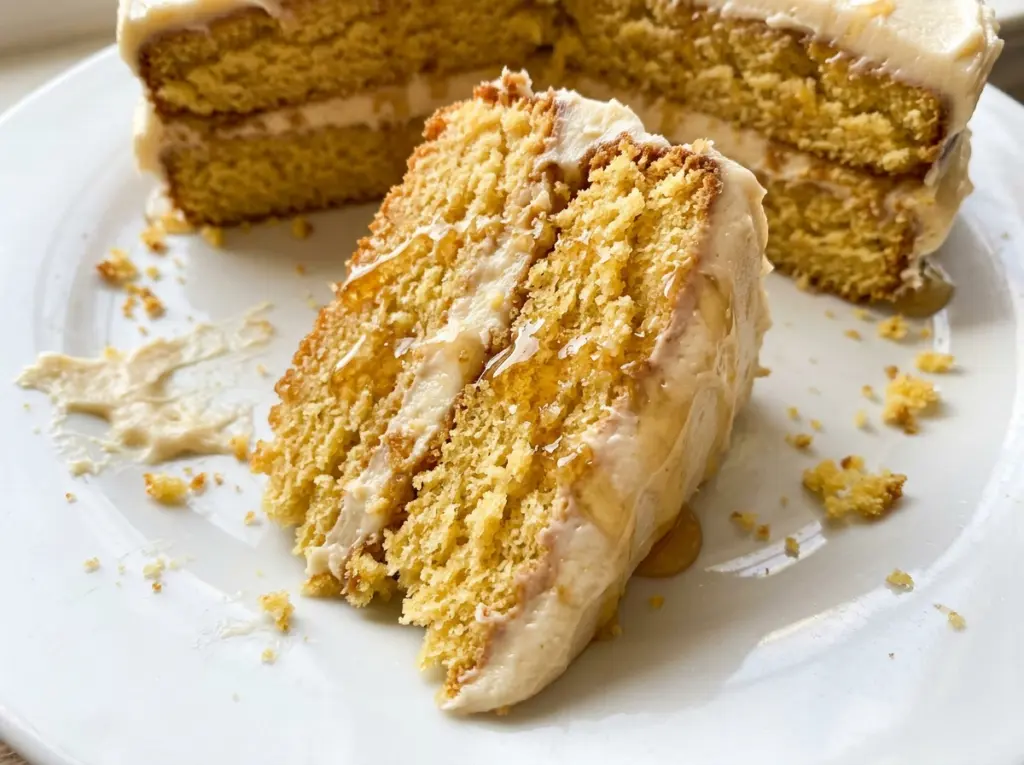
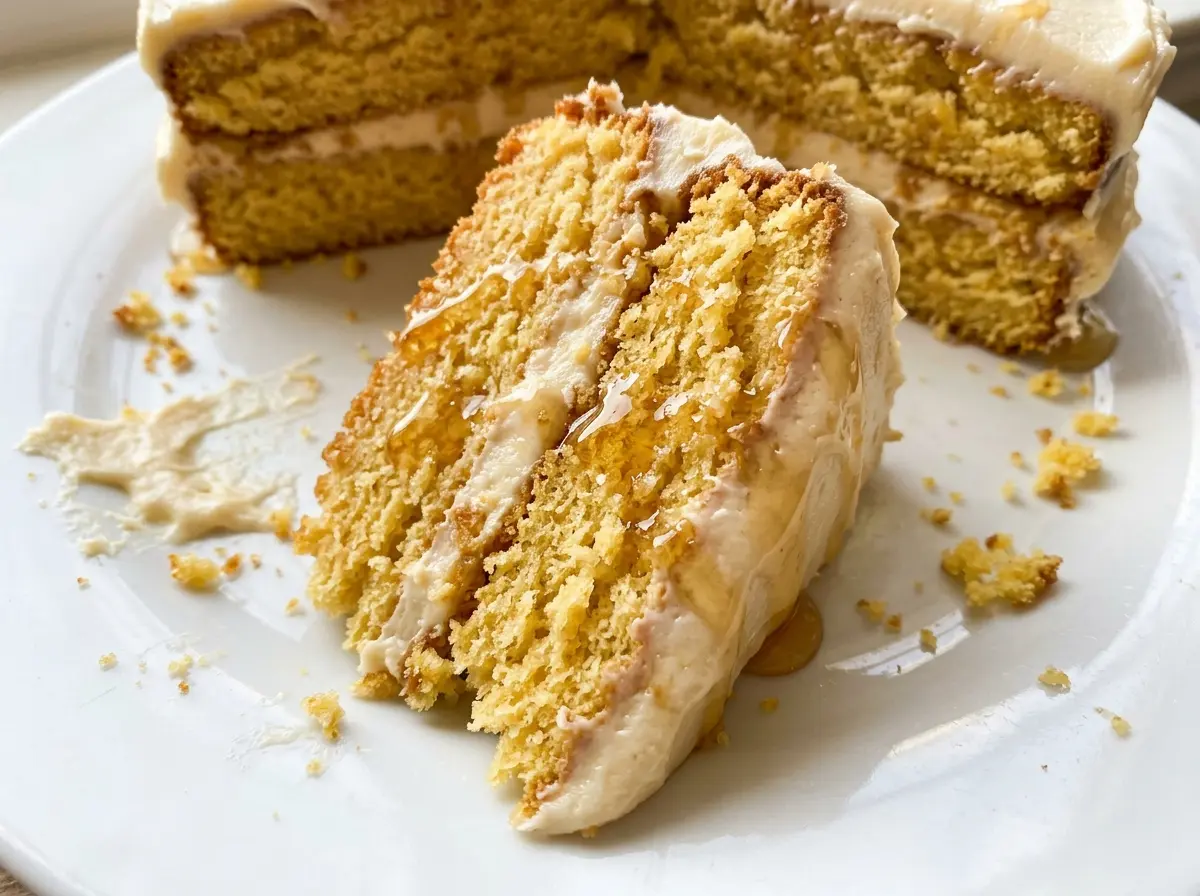
The batter has a faintly sandy look before it goes into the pans, but that settles into a tender crumb as the cakes bake. This layered cornbread cake lands between a classic yellow cake and sweet cornbread: soft enough for a proper slice, with cornmeal flavor that doesn’t get lost under the frosting.
I like the contrast of the lightly grainy cake and the smooth honey butter frosting. The honey gives the topping a warm, rounded sweetness, while the two layers keep each slice balanced instead of frosting-heavy. It’s a good cake to make when you want something familiar with a little more character than plain vanilla.
Kitchen Note
Look for a few moist crumbs on the toothpick, not wet batter. I take the cakes out at that point because the extra minutes it takes to chase a completely clean toothpick can dry the crumb.
Save this layered cornbread cake for a bake that pairs a tender cornmeal crumb with honey butter frosting in every slice.
Why Two Layers Give Cornbread Cake a Better Crumb
It might seem easier to pour all the batter into one deeper pan, but splitting it between two 8-inch pans gives the center less distance to bake through. That matters in a cake with cornmeal: you want the middle set without leaving the edges in the oven long enough to dry out. The two layers also make room for frosting between the cakes, so the honey butter isn’t only sitting on top.
Use round pans that are at least 2 inches deep, and divide the batter evenly so the layers finish baking at about the same time. A quick visual check helps if one pan sits closer to a hot spot: the tops should be golden, and neither cake should still look shiny in the middle. Let them rest in their pans before turning them out; warm cake is easier to break, especially around the edges. The parchment rounds help release the bottoms cleanly, leaving the layers ready to cool flat on a rack.
Once the layers are stacked, the height also makes the cake easier to portion neatly. You get a clear stripe of frosting between the rounds instead of one tall, dense center.
Fine Cornmeal, Buttermilk, and the Ingredients That Shape Each Bite
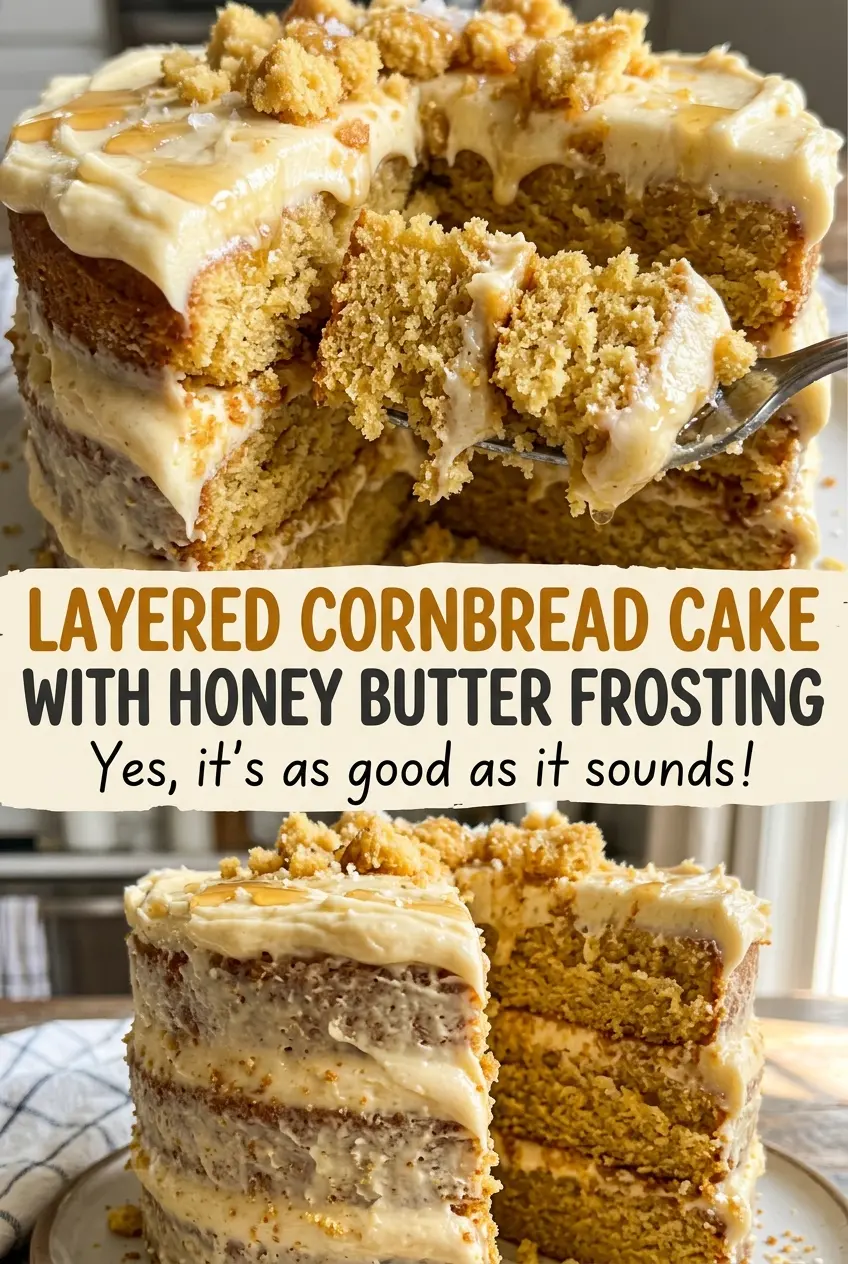
- Fine yellow cornmeal — The fine grind gives the cake a gentle cornbread character without leaving hard, gritty bits in each bite. If you only have fine white cornmeal, use it in the same amount; the crumb will be less golden and the corn flavor a little milder. Coarse cornmeal won’t soften as evenly here.
- All-purpose flour — Flour supplies the structure that keeps these layers sliceable, while the cornmeal contributes the distinct grain. For a gluten-free version, use a cup-for-cup gluten-free baking blend that includes xanthan gum; details are below.
- Buttermilk — Its tang balances the sugar, and its acidity works alongside the baking soda. Room-temperature buttermilk blends more smoothly into the eggs and oil. If you need a stand-in, milk acidified with lemon juice can work, though it won’t bring the same cultured tang or body.
- Canola oil — A neutral oil keeps the cake’s corn flavor in front and gives the crumb a soft texture after cooling. Another neutral cooking oil, such as vegetable oil, is an easy one-for-one swap; strongly flavored oils would change the taste.
- Eggs — They help hold the layers together and give the batter structure. Bring them to room temperature as listed so they combine readily with the other wet ingredients; I wouldn’t replace them in this cake because a liquid-only swap won’t provide the same support.
- Unsalted butter and honey — Softened butter makes the frosting creamy, while honey brings floral sweetness that granulated sugar alone can’t provide. A mild honey keeps the frosting balanced. The heavy cream loosens the mixture to a spreadable consistency, so add it with the honey rather than trying to fix the texture with extra liquid later.
Mixing and Stacking the Cake Without Overworking It
Prepare the Pans and Dry Mix
Heat the oven to 350°F. Coat two 8-inch round pans that are at least 2 inches deep with nonstick cooking spray, then line the bottoms with parchment rounds. In a medium bowl, whisk the flour, fine cornmeal, baking powder, baking soda, and table salt until evenly distributed. Breaking up any little pockets now helps the leaveners spread throughout the batter.
Bring the Wet Ingredients Together
In a large bowl, whisk the granulated sugar and room-temperature eggs until combined. Whisk in the canola oil, vanilla, and buttermilk; the mixture should look cohesive rather than separated. Add the dry mixture and whisk just until no dry streaks remain. Stop there, because continued mixing after the flour disappears can make the crumb tougher.
Bake and Cool the Layers
Divide the batter evenly between the prepared pans and bake for 28 to 33 minutes. The tops should be golden when the cakes are ready, and the toothpick cue in the Kitchen Note is a better guide than waiting for the cake to look deeply browned. Cool the cakes in their pans for 10 minutes, then turn them out onto a wire rack. Remove the parchment and let the layers cool completely before frosting.
Beat the Frosting and Stack
Beat the softened butter with an electric mixer on medium speed for 2 minutes, until creamy. Add the powdered sugar 1 cup at a time, beating on low until each addition is incorporated; starting low keeps the sugar from puffing out of the bowl. Add the honey and heavy cream, then beat on medium for 1 to 2 minutes until the frosting is smooth and spreadable. Set one cooled layer on a serving plate, spread frosting over its top, add the second layer, and cover the top and sides with the remaining frosting.
Two Easy Ways to Adapt the Cake
Make It Gluten-Free
Replace the all-purpose flour with the same amount of a cup-for-cup gluten-free baking blend that contains xanthan gum. The cake may have a slightly more delicate crumb, so let each layer cool completely before handling or stacking it.
Give the Frosting a Maple Twist
Use pure maple syrup in place of the honey for a warmer, woodsy sweetness. The frosting will be a little softer, so beat it only until smooth and spreadable before covering the cake.
Storage and Reheating
- Refrigerator: Cover the frosted cake and refrigerate it for up to 4 days. The butter frosting firms in the cold, and the crumb feels denser until it warms slightly.
- Freezer: Freeze slices individually, wrapped well and placed in an airtight container, for up to 2 months. Thaw them in the refrigerator.
- Reheating: Skip the microwave, which can melt the frosting before the cake warms evenly. Let a slice sit at room temperature until the frosting softens and the crumb is no longer chilled.
Questions That Come Up When Making Cornbread Cake
Layered Cornbread Cake with Honey Butter Frosting
Ingredients
Equipment
Method
- Heat the oven to 350°F.
- Coat two 8-inch round cake pans, at least 2 inches deep, with nonstick cooking spray and line the bottoms with parchment rounds.
- In a medium bowl, whisk together the flour, cornmeal, baking powder, baking soda, and salt.
- In a large bowl, whisk the granulated sugar and eggs until combined, then whisk in the canola oil, vanilla, and buttermilk.
- Add the flour mixture to the wet ingredients and whisk just until no dry streaks remain.
- Divide the batter evenly between the prepared pans and bake for 28 to 33 minutes, until the tops are golden and a toothpick inserted in the centers comes out with a few moist crumbs.
- Cool the cakes in the pans for 10 minutes, then turn them out onto a wire rack, remove the parchment, and cool completely.
- In a large bowl, beat the butter with an electric mixer on medium speed for 2 minutes, until creamy.
- Beat in the powdered sugar, 1 cup at a time, on low speed until incorporated.
- Add the honey and heavy cream and beat on medium speed for 1 to 2 minutes, until smooth and spreadable.
- Set one cooled cake layer on a serving plate and spread an even layer of frosting over the top.
- Place the second cake layer on top and spread the remaining frosting over the top and sides.