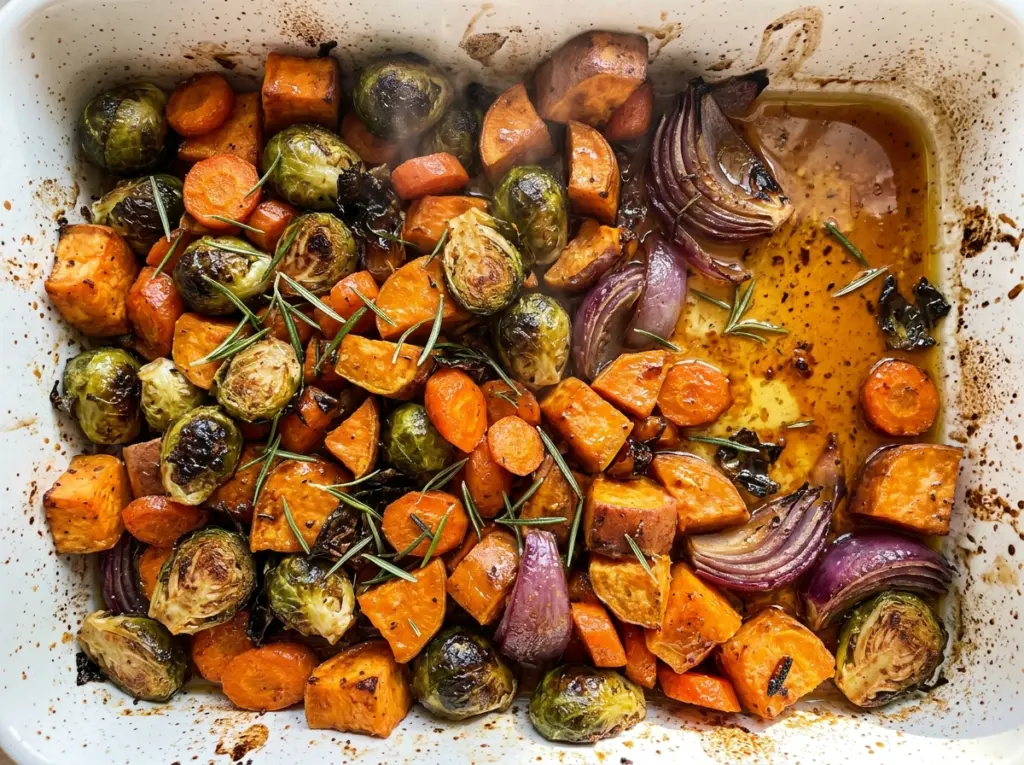
The edges of the Brussels sprouts turn dark and crisp while the sweet potatoes soften into tender, golden cubes. That mix of textures is what makes Maple Roasted Thanksgiving Veggies feel right at home on a holiday table, but I make them whenever a tray of colorful vegetables sounds good. Using two pans gives the vegetables room to roast instead of crowding together and steaming.
I like the way the sweet maple coating catches on the browned edges without hiding the vegetables underneath. The timing does the work: the vegetables roast first, then the maple syrup and thyme go on for the final stretch. By the time they come out, the carrots are tender, the onion has mellowed, and the sprouts have those savory, browned edges worth reaching for.
Kitchen Note
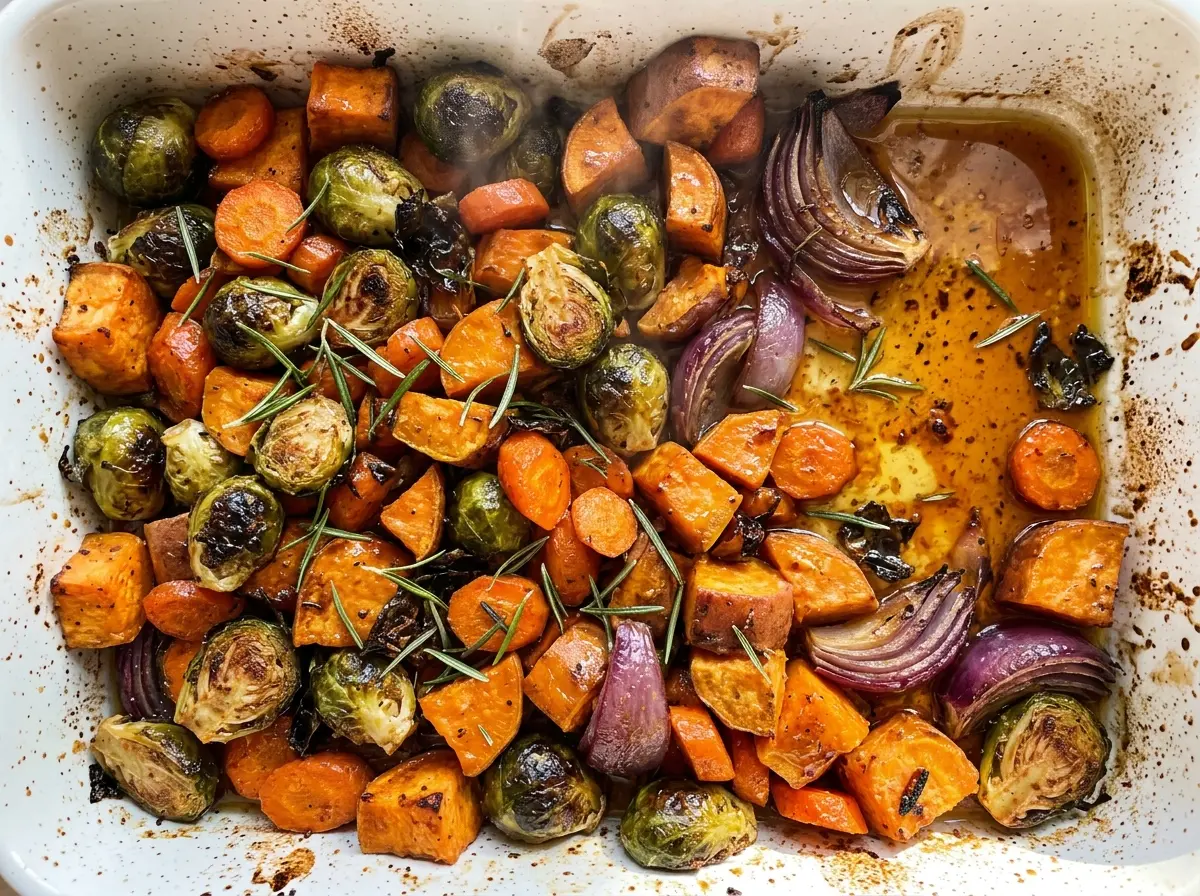
Keep the cuts close to the sizes listed: sweet potatoes in 3/4-inch cubes and carrots in 1/2-inch-thick diagonal pieces. Those dimensions help the different vegetables finish together instead of leaving you with crisp carrots and overly soft sweet potatoes.
Save these Maple Roasted Thanksgiving Veggies for a colorful side with browned edges, tender centers, and a light maple-thyme coating.
Why the Maple Goes on After the Vegetables Have Started Roasting
Maple syrup brings sweetness, but it also contains sugars that darken quickly in a hot oven. If it goes onto raw vegetables at the beginning, it has a longer stretch of heat to brown before the thickest pieces are tender. That can leave you with very dark spots and centers that still need time.
Roasting the vegetables first gives them a head start on softening and browning. The syrup and thyme join for the final 10 to 15 minutes, enough time to cling to the vegetables and turn glossy without taking over the whole tray. Toss everything well after adding them, especially the sprouts and onion wedges, so the maple isn’t sitting in one sweet puddle on the pan. You want a thin coating over the mix, with the vegetables still in a single layer so their edges can brown.
What the Maple, Thyme, and Vegetable Mix Each Bring
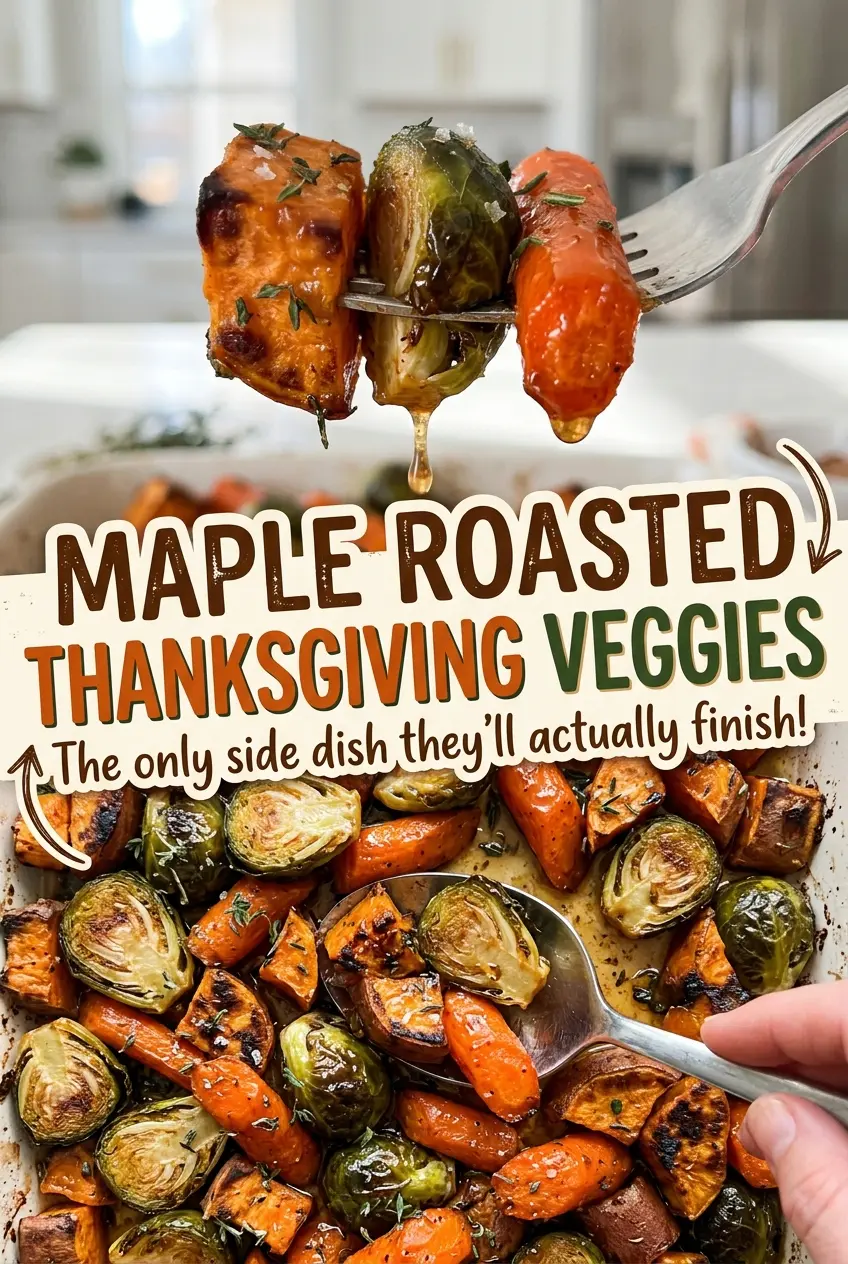
- Brussels sprouts bring a gently bitter, cabbage-like flavor that balances the maple. Choose firm sprouts with compact leaves; very large ones can be halved again so they roast more evenly. If you need a swap, use cauliflower florets cut into similarly sized pieces, knowing they’ll taste milder and a little less earthy.
- Sweet potatoes and carrots give the tray its tender, sweet center. Look for firm sweet potatoes without soft spots and carrots that feel crisp. Butternut squash can replace the sweet potatoes; peel it and cut it into the same 3/4-inch cubes so it has a similar chance to soften on schedule.
- Red onion adds savory sweetness as its cut edges brown. Choose a firm onion, and keep the wedges intact enough to turn on the pan. Yellow onion works in the same 1-inch wedges, though its flavor is a little sharper.
- Pure maple syrup and fresh thyme give the vegetables their defining finish. Pure maple syrup has a cleaner, more woodsy taste than pancake syrup, so this is one place to skip the imitation bottle; an inexpensive pure maple syrup is fine. Fresh thyme leaves taste bright and herbal, while dried thyme is more concentrated—use 1 teaspoon dried in place of the tablespoon of fresh leaves.
- Olive oil helps coat the vegetables and encourages browning. A basic everyday olive oil is all you need here; if you’d rather use another neutral oil, avocado oil works as a one-for-one swap.
Roast First, Then Coat the Vegetables in Maple
Spread and Season Across Both Pans
Heat the oven to 425°F with racks in the upper and lower thirds. Divide the Brussels sprouts, sweet potatoes, carrots, and red onion between two 18×13-inch rimmed baking sheets, arranging them in a single layer. Drizzle the olive oil over the vegetables, add the salt and pepper, and toss everything directly on the pans. If pieces are piled over one another, they’ll soften in trapped steam instead of developing browned edges.
Give the Vegetables Their First Roast
Roast the pans for 15 minutes, then switch their positions between the racks and stir the vegetables. The rack swap helps the two pans cook more evenly, and stirring exposes new sides to the hot metal. Use a spatula to turn the vegetables rather than pressing down on them; you want to redistribute them, not mash the softer pieces. The vegetables won’t be fully finished yet, and that’s the point.
Add the Maple and Thyme for the Finish
Drizzle the maple syrup over the vegetables, sprinkle on the thyme leaves, and toss to coat. Return the pans to the oven for another 10 to 15 minutes. Start checking near the beginning of that window: the vegetables should be tender when pierced, with browned edges and a light sheen from the syrup. If the edges are already deeply browned but a piece still feels firm, take the pans out when the vegetables are tender rather than waiting for every corner to darken further.
Three Simple Ways to Change the Thanksgiving Vegetable Tray
Make It Less Sweet
Leave out the maple syrup for a lower-sugar, more savory tray. The vegetables will lose the glossy glaze and taste more directly of their roasted edges and thyme, but they’ll still brown as they roast.
Trade Sweet Potatoes for Butternut Squash
Peel the squash and cut it into 3/4-inch cubes, then use it in place of the sweet potatoes. It keeps the tray’s warm color but has a slightly milder, less earthy sweetness.
Give the Herbs a Rosemary Edge
Use finely chopped fresh rosemary instead of thyme for a stronger, piney note that stands up to the maple. Start with less rosemary than thyme, since its flavor is more assertive, and toss it on with the syrup.
Storage and Reheating
- Refrigerator: Store leftovers in an airtight container for 3 to 4 days. The vegetables soften as they sit, and the browned edges won’t stay crisp.
- Freezer: Freeze in an airtight container for up to 2 months. The vegetables will be softer after thawing, so freezing is best when texture matters less than saving leftovers.
- Reheating: Spread the vegetables on a baking sheet and warm them in a 425°F oven until hot throughout. Avoid covering them, which traps steam and softens the edges further.
Questions About Maple Roasted Thanksgiving Veggies
Maple Roasted Thanksgiving Veggies
Ingredients
Equipment
Method
- Preheat the oven to 425°F and set racks in the upper and lower thirds.
- Divide the Brussels sprouts, sweet potatoes, carrots, and red onion between two 18x13-inch rimmed baking sheets, spreading them in a single layer.
- Drizzle with olive oil, sprinkle with kosher salt and black pepper, and toss on the pans to coat.
- Roast for 15 minutes, then switch the pans between racks and stir the vegetables.
- Drizzle the pure maple syrup over the vegetables, sprinkle with fresh thyme leaves, and toss to coat.
- Roast for 10 to 15 minutes more, until the vegetables are tender and browned at the edges.


