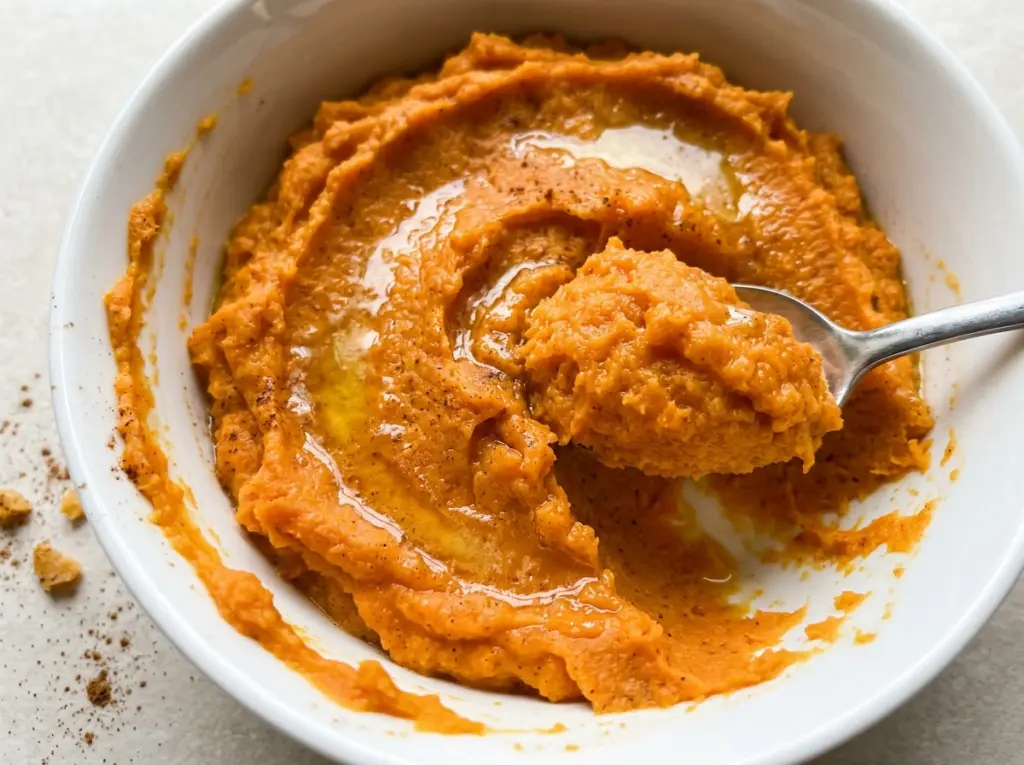
The first forkful tells you whether the sweet potatoes were drained well: the mash should feel plush, not loose or watery. I like this version because it gets its creaminess from a little butter and whole milk, not a long list of add-ins. The sweet potatoes still taste like themselves, with black pepper keeping the sweetness in check.
For mashed sweet potatoes, the small details make a plain pot of potatoes worth serving. Even cubes cook at a similar pace, and a steady simmer softens them without breaking them apart in a hard boil. Once they’re tender, the hot potatoes take up the butter and milk as you mash, turning into a smooth, simple side dish.
Kitchen Note
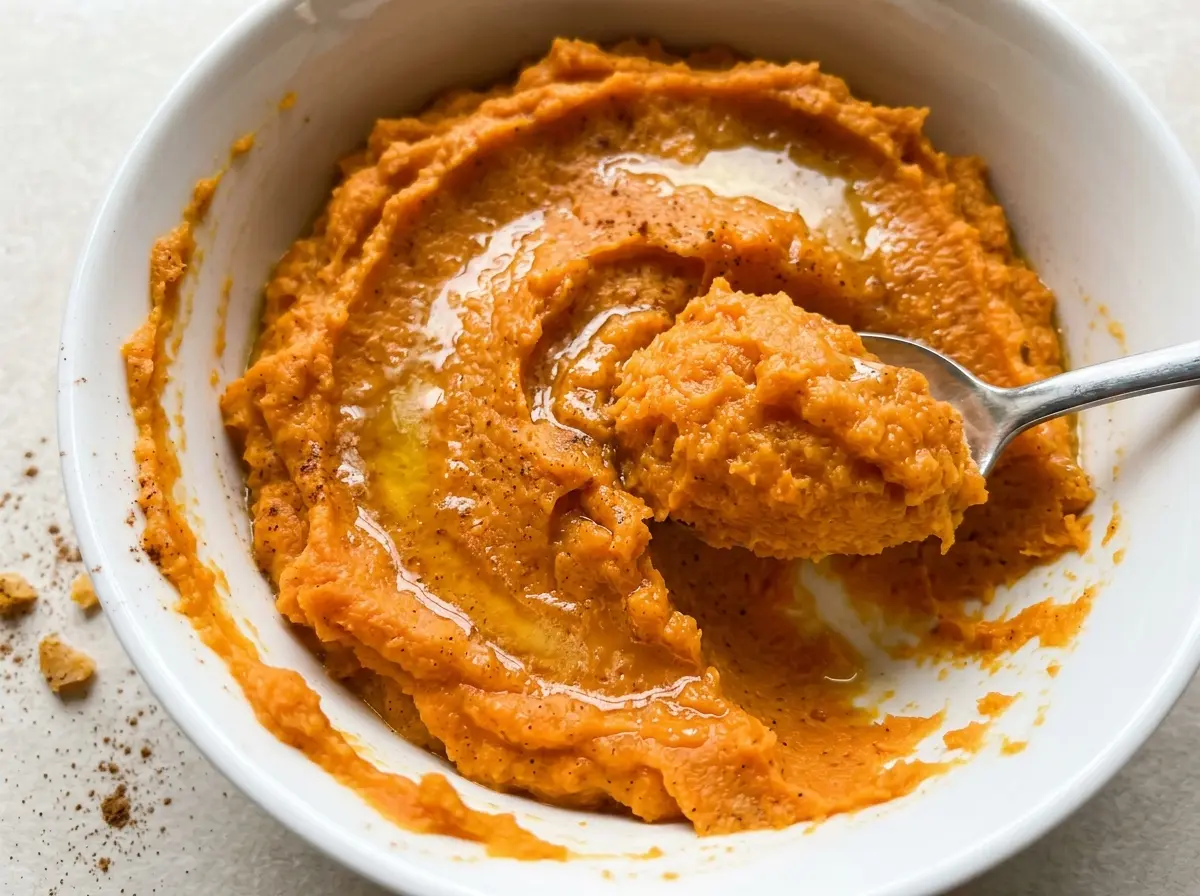
I mash in the same pot the potatoes were cooked in. They go back while still hot, so the butter softens quickly as I work instead of leaving little firm streaks through the mash.
Save these mashed sweet potatoes for a smooth, buttery side dish with a little black pepper to balance their natural sweetness.
The Watery Mash Problem Starts Before the Butter Goes In
When mashed sweet potatoes turn loose, adding more butter usually isn’t the fix. Water clinging to the cooked cubes thins the milk and butter, so the finished mash can taste diluted even when it looks smooth. That’s why the draining step deserves your attention before you reach for the masher.
Drain the potatoes well before returning them to the pot. You want the cooking water to run off rather than follow the cubes into the mash. The potatoes will still be hot and soft, but they shouldn’t be sitting in a puddle when the butter and milk go in. This is especially useful with sweet potatoes because their tender flesh breaks down readily as you mash; any extra water gets mixed through quickly.
Keep the balance in mind as you work: the butter brings richness, the milk makes the mash easy to smooth out, and the potatoes provide the body. A thorough drain lets those ingredients do their jobs without the water from the pot getting in the way.
What the Sweet Potatoes, Butter, and Milk Bring to the Mash

- Sweet potatoes — Choose firm roots without soft or damaged spots; a basic grocery-store sweet potato works well, so there’s no need to seek out a specialty variety. Orange-fleshed sweet potatoes give the mash its familiar sweetness and color. White-fleshed sweet potatoes can stand in, though the result will be paler and milder. Peeling away the skin gives you the smoother texture this version is built around.
- Unsalted butter — Butter gives the mash a rounded, rich finish, and an ordinary supermarket brand is fine here. Unsalted butter lets you control the seasoning separately. Salted butter also works; taste before adding the kosher salt so the final mash doesn’t get too salty.
- Whole milk — Whole milk loosens the potatoes while keeping the mash creamy. Two-percent milk works as a substitute, but the result will be a little less rich. Use plain milk rather than a flavored or sweetened alternative, which would pull the mash in a different direction.
- Black pepper — Pepper cuts through the sweet, buttery taste with a gentle bite. Freshly ground pepper has a brighter aroma, but pre-ground pepper is perfectly serviceable for this straightforward side.
From Cold Water to a Smooth, Buttery Mash
Start the Cubes in Cold Water
Peel the sweet potatoes and cut them into 1-inch cubes. Put them in a 6-quart pot and add 8 cups of cold water. Starting with cold water gives the pieces time to heat together instead of exposing the outside to boiling water first. Keep the cubes close in size so they soften at a similar pace.
Simmer Until a Fork Slides In Easily
Bring the pot to a boil over high heat, then lower the heat to maintain a steady simmer. Cook for 15 to 20 minutes, checking whether the sweet potatoes are easily pierced with a fork. The simmer should be steady rather than forceful; a rolling boil can knock the softening pieces around. If the fork still meets a firm center, they need more time within that cooking window.
Drain, Season, and Mash While Hot
Drain the sweet potatoes well and return them to the pot. Add the butter, whole milk, kosher salt, and black pepper. Mash until smooth, working through any larger pieces rather than leaving firm chunks in the finished bowl. The potatoes should look creamy and evenly seasoned, with no pools of liquid around the edges.
Three Ways to Change the Texture or Make These Sweet Potatoes Dairy-Free
Make Them Dairy-Free
Replace the butter with an unsalted plant-based butter and use plain, unsweetened oat milk instead of whole milk. The mash will be a little less rich, and the oat milk adds a faint grain-like note, so choose one without vanilla or added sweetener.
Turn Up the Pepper
For a more savory finish, add extra black pepper a little at a time while mashing and taste as you go. It makes the natural sweetness less prominent without changing the creamy texture or adding another flavor.
Leave a Few Soft Lumps
For a more rustic bowl, stop mashing while a few small soft pieces remain instead of working all the way to a smooth finish. You’ll get a more varied texture, though the butter and milk won’t be quite as evenly blended through every bite.
Storage and Reheating
- Refrigerator: Refrigerate leftovers within 2 hours and keep them covered for 3 to 4 days. The mash will firm up as it chills.
- Freezer: Freeze in an airtight container for up to 2 months. Thaw overnight in the refrigerator; the texture may be slightly less smooth after freezing.
- Reheating: Warm gently in a covered saucepan over low heat or in the microwave, stirring until hot throughout. If the mash seems stiff, stir in a small splash of milk; high heat can dry the edges before the center warms.
Questions That Come Up When Making Mashed Sweet Potatoes
Mashed Sweet Potatoes
Ingredients
Equipment
Method
- Put the sweet potatoes in a 6-quart pot and add the cold water.
- Bring to a boil over high heat.
- Reduce the heat to maintain a steady simmer and cook for 15 to 20 minutes, until the sweet potatoes are easily pierced with a fork.
- Drain well and return the sweet potatoes to the pot.
- Add the butter, milk, salt, and black pepper.
- Mash until smooth.


