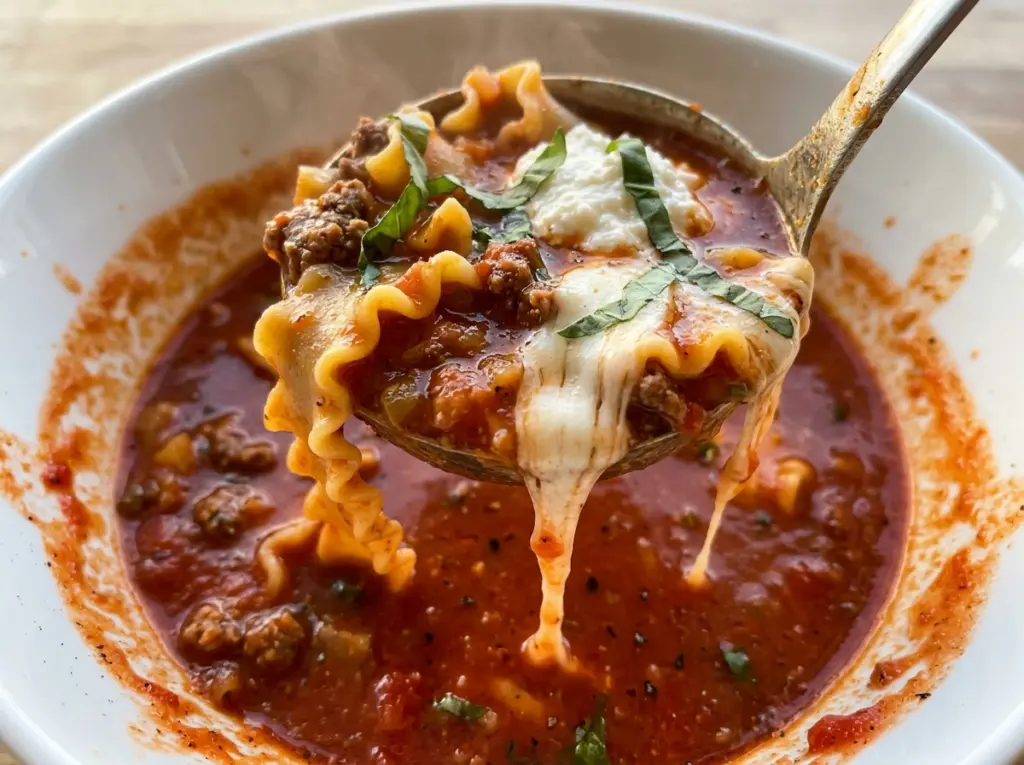
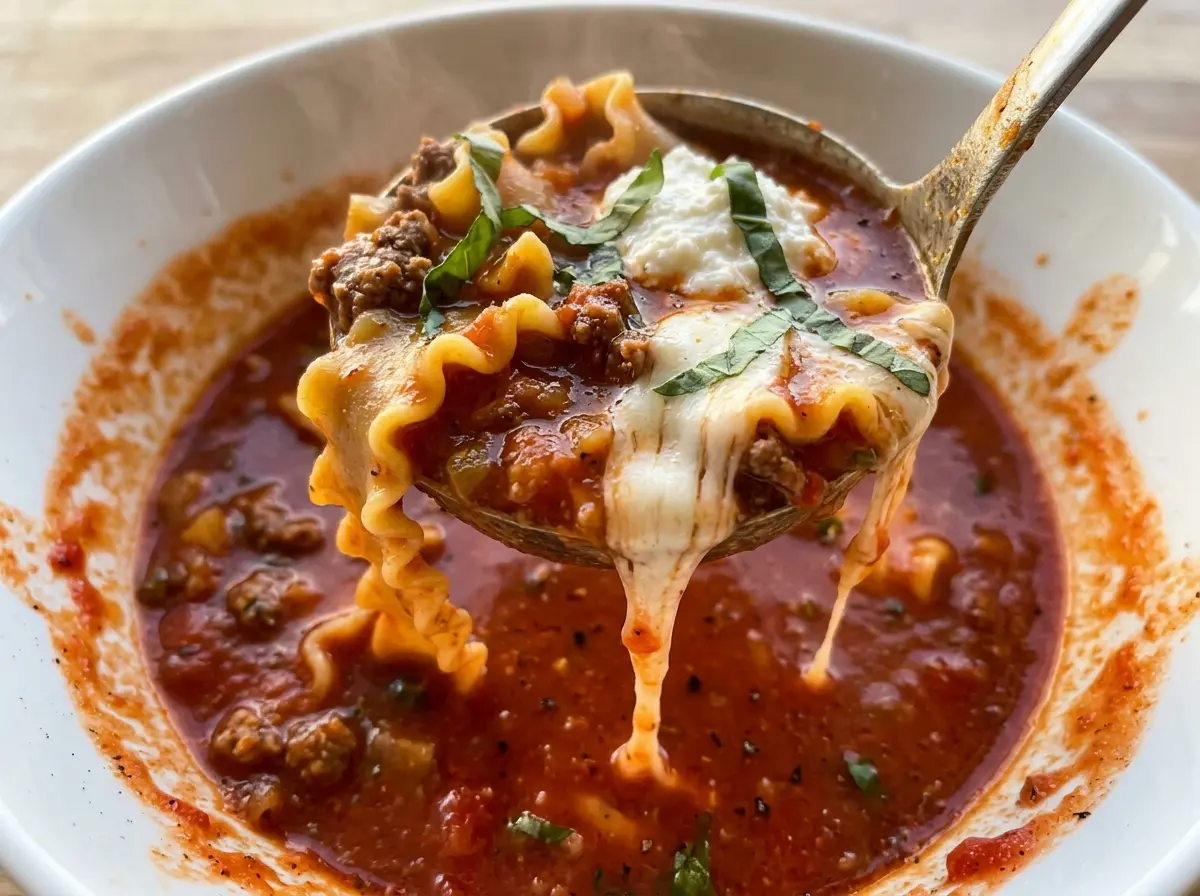
The broken lasagna noodles soften right in the tomato broth, and the whole pot starts to feel like the cozy middle of a lasagna without the layering or extra dishes. That’s what makes this one pot lasagna soup such a practical dinner: browned beef, tomato, broth, and pasta all come together in one pot, then each bowl gets its own creamy spoonful of cheese.
I use 90% lean beef so the soup gets plenty of savory flavor without a heavy layer of grease. The noodles cook directly in the broth, which saves a separate pot and gives the liquid a little body as they turn tender. A quick mix of ricotta, mozzarella, and Parmesan goes on top at the end, so every serving has that familiar lasagna-style cheese finish.
Kitchen Note
Keep stirring as the broken noodles simmer. They can settle against the bottom of the pot, and a few quick stirs help them cook evenly without sticking.
Save this One Pot Lasagna Soup for a cozy dinner with tender noodles, rich tomato broth, and a creamy three-cheese topping.
Why the Noodles Change the Soup as They Cook
In a traditional lasagna, pasta is cooked separately and drained. Here, the broken noodles stay in the pot, so their starch goes straight into the tomato and beef broth. That gives the soup a fuller, more cohesive texture than broth with pasta added afterward. It also means the soup won’t stay quite as thin as it looks when the noodles first go in.
That change is useful, but it affects when the soup is at its best. Serve it once the noodles are tender and the broth has had a chance to cling lightly to them. If you let the pot sit for a long while, the noodles keep taking up liquid and the soup thickens further. The flavor is still there; the texture simply shifts toward a heartier, more pasta-forward bowl. For a soup that feels like lasagna rather than noodles floating in tomato broth, cooking the pasta right in the pot is doing a lot of the work.
What the Beef, Tomatoes, and Cheese Each Bring to the Pot

- Ground beef — The 90% lean beef browns well while keeping excess fat manageable. A standard grocery-store package works; there’s no need to seek out a premium grind. If you want a lighter, less beefy version, ground turkey is a workable swap, with a different safe cooking temperature covered below.
- Yellow onion and garlic — The onion softens into the soup’s savory base, while minced garlic turns fragrant quickly in the hot pot. Dice the onion fairly evenly so the pieces soften together, and have the garlic ready before it goes in because it cooks for only a minute.
- Tomato paste and crushed tomatoes — Tomato paste deepens the tomato flavor when it cooks briefly in the pot; crushed tomatoes provide the smooth, substantial tomato base. A familiar store brand is fine for both. Crushed tomatoes are a better fit here than a chunkier canned tomato if you want the broth to feel cohesive.
- Beef broth — This carries the browned beef and tomato flavor through the soup. Use a broth you like the taste of on its own, since it makes up much of the liquid; chicken broth is a useful alternative, though the finished soup tastes less distinctly beefy.
- Lasagna noodles — Breaking them into short pieces makes them easier to scoop with a spoon and gives the bowl its lasagna feel. Use regular lasagna noodles for the stated simmer time; gluten-free lasagna-style noodles can work, but their texture and cooking time vary by brand.
- Ricotta, mozzarella, and Parmesan — Ricotta makes the topping soft and creamy, mozzarella melts into it, and Parmesan brings a salty, savory edge. Whole-milk ricotta gives the richest texture; part-skim ricotta works if that’s what you have, though the topping won’t be quite as lush. Freshly grated Parmesan has a softer texture than shelf-stable grated cheese, but either can be stirred into the topping.
Build the Soup in the Same Pot, Then Finish Each Bowl
Brown the Beef and Soften the Onion
Heat the olive oil in a 6-quart Dutch oven or heavy pot over medium-high heat for 1 minute. Add the ground beef and diced onion, breaking up the beef as it cooks for 6 to 8 minutes. Look for browned beef and softened onion, and check that the beef reaches 160°F. If you leave the meat in large clumps, it won’t distribute as evenly through the soup.
Let the Tomato Paste Turn Fragrant
Stir in the minced garlic and tomato paste and cook for 1 minute. The garlic should smell fragrant, and the paste should darken slightly; that brief time in the hot pot helps its flavor round out. Keep it moving so the garlic doesn’t scorch against the bottom. The paste will look thicker and cling to the beef and onion.
Loosen the Browned Bits and Bring the Broth to a Boil
Stir in the Italian seasoning, kosher salt, black pepper, crushed tomatoes, and beef broth. Scrape across the bottom of the pot as you stir, loosening the browned bits left from cooking the beef. Bring the soup to a boil over medium-high heat before adding the noodles. Those browned bits dissolve into the liquid and become part of the soup’s savory base.
Simmer the Noodles and Mix the Cheese
Add the lasagna noodles broken into 2-inch pieces, then reduce the heat to maintain a gentle simmer. Cook uncovered for 10 to 12 minutes, until the noodles are tender, stirring often as they cook. While the soup simmers, stir the ricotta, mozzarella, and Parmesan together in a small bowl. Ladle the soup into bowls and add a spoonful of the cheese mixture to each serving.
Three Practical Ways to Adapt This Lasagna Soup
Use Ground Turkey for a Lighter Bowl
Replace the ground beef with the same amount of ground turkey. The soup will have a milder, less beef-forward flavor; cook the turkey until it reaches 165°F rather than using the beef temperature. The rest of the soup can stay the same.
Make It Gluten-Free
Replace the regular lasagna noodles with the same amount of gluten-free lasagna-style noodles. Follow the package timing and check the pasta for tenderness, since gluten-free noodles can soften or break down differently in simmering soup. The broth may have a slightly different body.
Choose Chicken Broth for a Milder Base
Use chicken broth in place of the beef broth if that’s what you keep on hand. The tomato and beef still give the soup plenty of savory character, but the broth itself tastes lighter and less beefy.
Storage and Reheating
- Refrigerator: Refrigerate leftovers within 2 hours and keep them for 3 to 4 days. The noodles will continue to absorb broth, so the soup thickens as it sits.
- Freezer: Freeze the soup in airtight portions for up to 2 to 3 months. It freezes safely, though the noodles will be softer after thawing.
- Reheating: Warm leftovers gently in a saucepan, stirring, until they reach 165°F. Avoid a hard boil, which can break up the noodles; if the soup has thickened more than you like, stir in a little beef broth.
Questions That Come Up When Making Lasagna Soup
One Pot Lasagna Soup
Ingredients
Equipment
Method
- Heat the olive oil in a 6-quart Dutch oven or heavy pot over medium-high heat for 1 minute.
- Add the ground beef and onion and cook for 6 to 8 minutes, breaking up the beef, until the beef is browned and reaches 160°F and the onion is softened.
- Stir in the garlic and tomato paste and cook for 1 minute, until fragrant and the paste darkens slightly.
- Stir in the Italian seasoning, salt, black pepper, crushed tomatoes, and beef broth, scraping the bottom of the pot to loosen any browned bits.
- Add the broken noodles.
- Bring the soup to a boil over medium-high heat, then reduce the heat to maintain a gentle simmer.
- Cook uncovered for 10 to 12 minutes, stirring often, until the noodles are tender.
- While the soup simmers, stir the ricotta, mozzarella, and Parmesan together in a small bowl.
- Ladle the soup into bowls and top each serving with a spoonful of the cheese mixture.