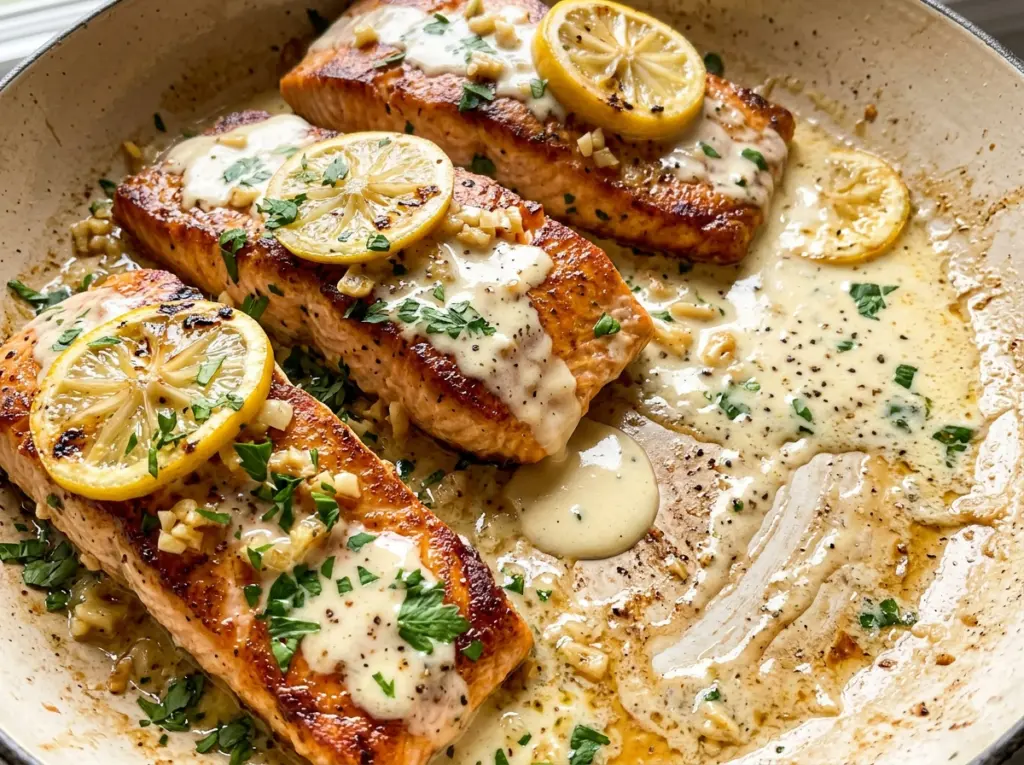
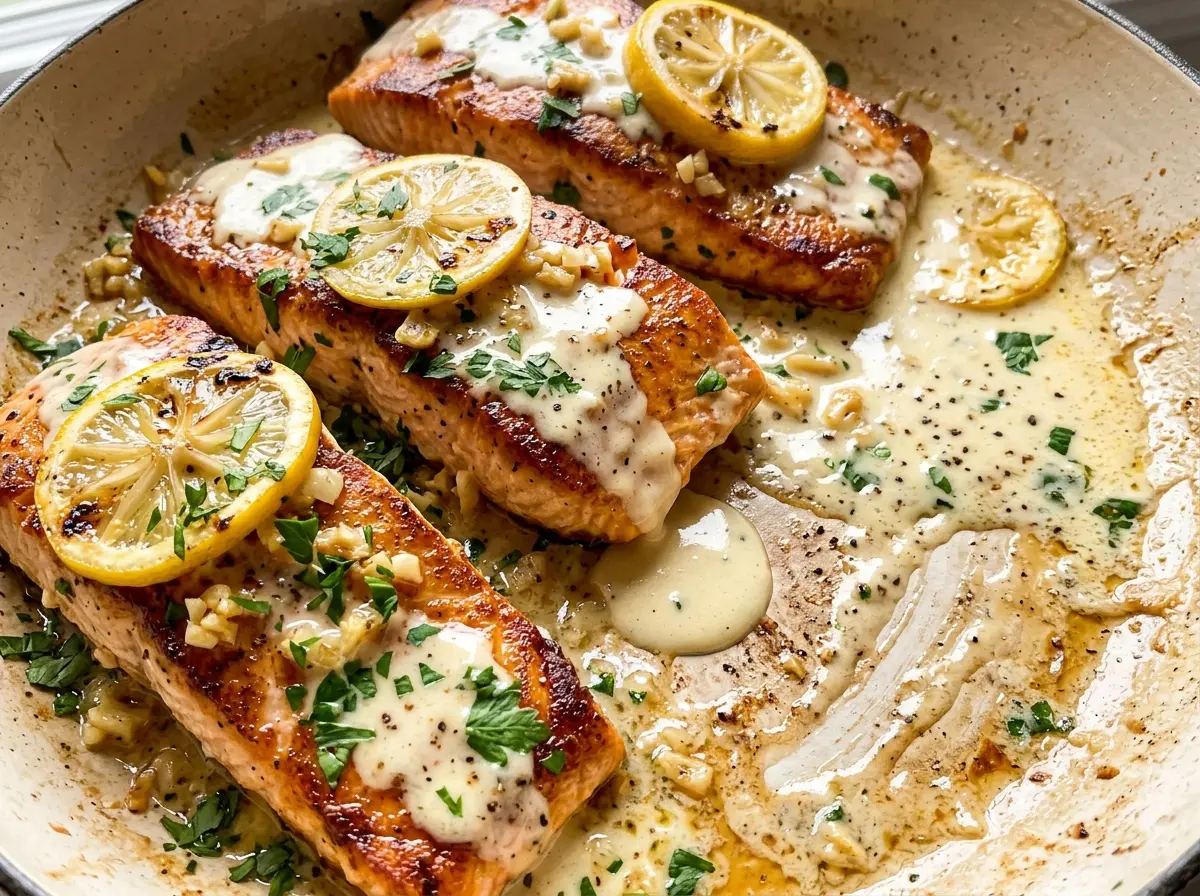
The skin gives a quiet sizzle when the salmon hits the skillet, then turns crisp while the sides slowly change from translucent to opaque. That’s the moment to leave the fillets alone; nudging them too soon can tear the skin before it releases. Pan Seared Salmon with Lemon Garlic Cream Sauce brings that crisp-edged fish together with a quick sauce made in the same pan, so the browned bits from searing become part of the meal instead of something left behind.
I use salmon fillets about an inch thick so the skin has time to brown before the centers finish cooking. A thermometer takes the guesswork out of the flip: once the thickest part reaches 145°F, the fish comes out and the sauce gets its turn. Chicken broth lifts the savory bits from the pan, while cream softens the garlic and lemon. The finished sauce is lightly thickened, bright at the edges, and just rich enough to cling to the salmon.
Kitchen Note
Pat the skin and flesh dry before seasoning, rather than giving the fillets a quick pass with a towel. Surface moisture steams against the hot skillet and gets in the way of that crisp skin.
Save this pan-seared salmon for a night when crisp skin and lemon garlic cream sauce sound just right.
Why This Sauce Starts with the Salmon’s Brown Bits, Not a Separate Pan
A good pan sauce needs something savory to build on. Once the salmon comes out, the skillet holds browned bits from the sear, along with the flavor of the olive oil and fish. Pouring in the chicken broth while the pan is still warm loosens those bits; scraping the bottom as the broth simmers works them into the liquid. That’s what gives the sauce a deeper taste than cream and lemon would have on their own.
The order matters because garlic is quick to burn. After the salmon is out, lower the heat to medium and let the butter melt before stirring in the minced garlic. Give it about 30 seconds, just until fragrant, then add the broth. If the garlic darkens in the pan, it can make the sauce taste bitter, so don’t let it sit unattended. The broth gets a short simmer before the cream goes in, which gives the browned bits time to join the base without reducing the cream too far.
There’s no need to wash the skillet between the fish and the sauce. The browned residue is useful, but any blackened bits would taste harsh; the method here depends on a golden sear, not scorched fond. The finished sauce should lightly coat the salmon rather than drown out its clean, savory flavor.
Fresh Lemon Does Two Different Jobs in This Cream Sauce

- Skin-on salmon gives the skillet a chance to develop crisp skin while the thicker flesh cooks more gently. Fillets close to an inch thick are easiest to time consistently; thinner tail pieces will cook faster, so use the thermometer rather than relying on the clock alone. Fresh fillets should look moist, not dried out at the edges.
- Olive oil and unsalted butter each have a job: the oil heats for searing, and the butter carries the garlic into the sauce. A neutral cooking oil can stand in for olive oil if that’s what you keep by the stove, though it won’t bring the same faint fruitiness. Unsalted butter gives you control over seasoning; salted butter works, but the finished sauce may taste saltier.
- Fresh garlic gives the sauce its savory backbone, and finely mincing it helps it cook quickly and evenly. Fresh cloves are worth using here because the garlic has such a short time in the pan. Pre-minced garlic can work in a pinch, but its flavor is often milder and less fragrant.
- Low-sodium chicken broth loosens the fond without making the sauce overly salty as it reduces. Low-sodium broth is the better choice when you want the salmon’s seasoning and the sauce’s lemon to stay in balance. Low-sodium vegetable broth can replace it, but the sauce will lose some of the savory depth from the chicken broth.
- Heavy cream and a whole lemon create the sauce’s rich, lightly thickened texture and fresh citrus lift. The zest brings fragrant lemon oil; the juice adds the sharper acidity, so bottled juice can replace the juice in a pinch but can’t replace the zest. Half-and-half isn’t a direct stand-in for heavy cream because it makes a thinner sauce and is more prone to splitting when lemon is added.
The Timing That Keeps the Skin Crisp and the Sauce Silky
Dry and season the fillets
Blot the salmon dry with paper towels, then season both sides with kosher salt and black pepper. Keep the fillets intact and handle them gently so the skin stays in one piece. Starting with a dry surface helps the skin brown instead of releasing moisture into the skillet. Set the seasoned fish near the stove while the oil heats.
Let the skin sear without nudging it
Heat the olive oil in a 12-inch skillet over medium-high for about 1 minute, until it shimmers. Lay the fillets skin-side down and leave them in place for 5–6 minutes. Watch the sides: the opaque band should climb about halfway up each fillet, and the skin should look crisp. If you try to move the fish before it has seared, the skin is more likely to stick or tear.
Flip once, then check the thickest part
Turn the fillets and cook the second side for 2–4 minutes. The exact time depends on the thickness of the fish, so check the thickest part with an instant-read thermometer instead of guessing from the outside. Transfer the salmon to a plate when it reaches 145°F. The fish is then out of the skillet before the sauce begins, which keeps the sauce-making steps from adding extra cook time to the fillets.
Build the sauce in the same skillet
Reduce the heat to medium and melt the butter, then stir in the finely minced garlic for about 30 seconds, until fragrant. Pour in the chicken broth and scrape up the browned bits as it simmers for 2–3 minutes and reduces slightly. Stir in the heavy cream and lemon zest, then simmer for 2–4 minutes until the sauce is lightly thickened. Take the skillet off the heat before stirring in the lemon juice, then spoon the sauce over the salmon.
Two Useful Changes for a Different Plate
A dairy-free lemon garlic sauce
For a dairy-free version, use olive oil in place of the butter and full-fat canned coconut milk instead of heavy cream. Keep the garlic, broth, lemon zest, and juice, and use the same pan-sauce sequence. The sauce will have a noticeable coconut note and won’t taste quite as neutral or classically creamy, but its richness pairs well with salmon.
Skinless salmon, with a softer finish
Skinless fillets work if that’s what you have, though you’ll miss the crisp skin that gives the original its contrast. Use the same skillet and seasoning, and turn the fish carefully because the flesh has less protection from the hot pan. Fillets around an inch thick are still the easiest to cook evenly; use the thermometer to judge doneness rather than assuming the skin-on timing will fit every piece.
Storage and Reheating
- Refrigerator: Refrigerate leftovers within 2 hours and use them within 3–4 days. The salmon will lose some of its crisp skin, and the sauce may thicken as it chills.
- Freezer: Cooked salmon can be frozen for 2–3 months, but cream sauce may separate or turn grainy after thawing. Freeze the fish and sauce separately if possible; for the best sauce texture, make it fresh.
- Reheating: Warm the salmon and sauce gently in a covered skillet over low heat until leftovers reach 165°F. Avoid boiling the sauce or using high heat, which can dry out the fish and make the cream sauce separate.
Questions That Come Up When Cooking This Salmon
Pan Seared Salmon with Lemon Garlic Cream Sauce
Ingredients
Equipment
Method
- Pat the salmon dry with paper towels.
- Season both sides with the kosher salt and black pepper.
- Heat the olive oil in a 12-inch skillet over medium-high heat for about 1 minute, until shimmering.
- Place the salmon skin-side down in the skillet and cook without moving for 5–6 minutes, until the skin is crisp and the sides look opaque about halfway up.
- Flip the fillets and cook for 2–4 minutes, until the thickest part reaches 145°F on an instant-read thermometer.
- Transfer the salmon to a plate.
- Reduce the heat to medium and melt the butter in the skillet.
- Add the garlic and cook, stirring, for about 30 seconds, until fragrant.
- Pour in the chicken broth, scraping up browned bits.
- Simmer for 2–3 minutes, until reduced slightly.
- Stir in the heavy cream and lemon zest.
- Simmer for 2–4 minutes, until lightly thickened.
- Remove from the heat and stir in the lemon juice.
- Spoon the sauce over the salmon and serve.


