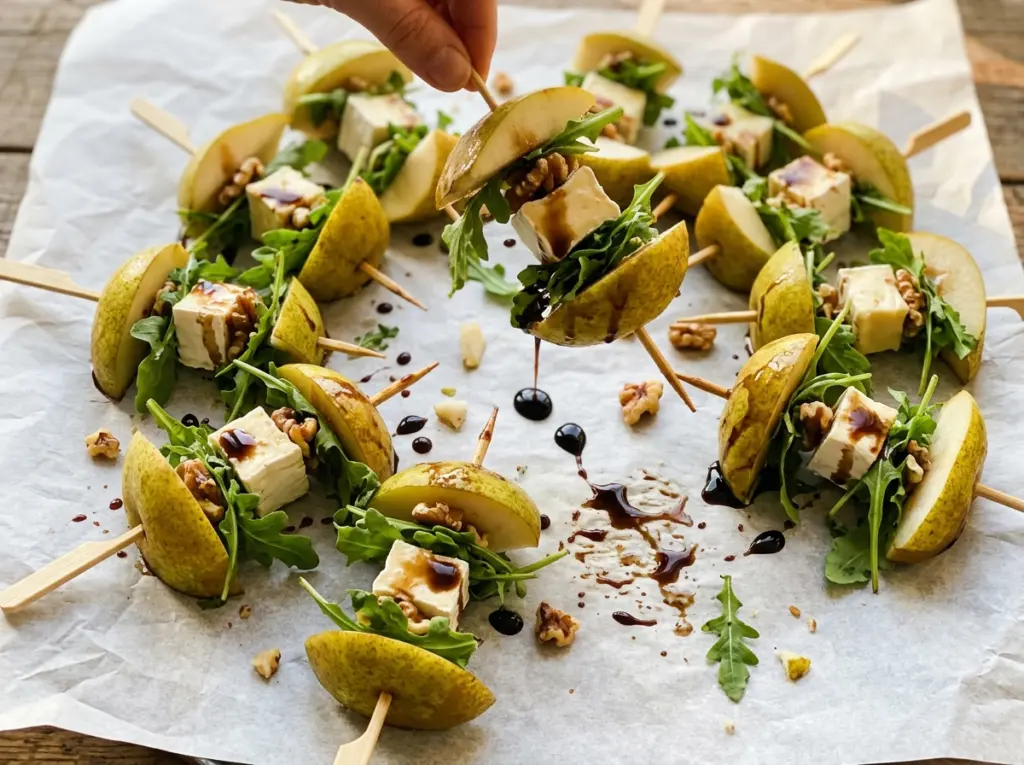
A pear can look perfectly ripe on the cutting board and still slump when you try to thread it onto a cocktail pick. Firm-ripe fruit holds its shape, so each bite stays tidy instead of sliding around. That small distinction makes these Pear and Brie Salad Skewers easy to assemble and pleasant to eat, with sweet pear, creamy Brie, and peppery arugula on every pick.
I like these for the way a few familiar ingredients turn into a composed little appetizer without any cooking. Lemon juice coats the pear, the cold Brie is easy to cut into neat pieces, and balsamic glaze brings a sweet-tart finish. The chopped pecans add crunch right before the platter goes out. Sixteen picks make eight servings, with two bites per person and no large salad bowl to pass around.
Kitchen Note
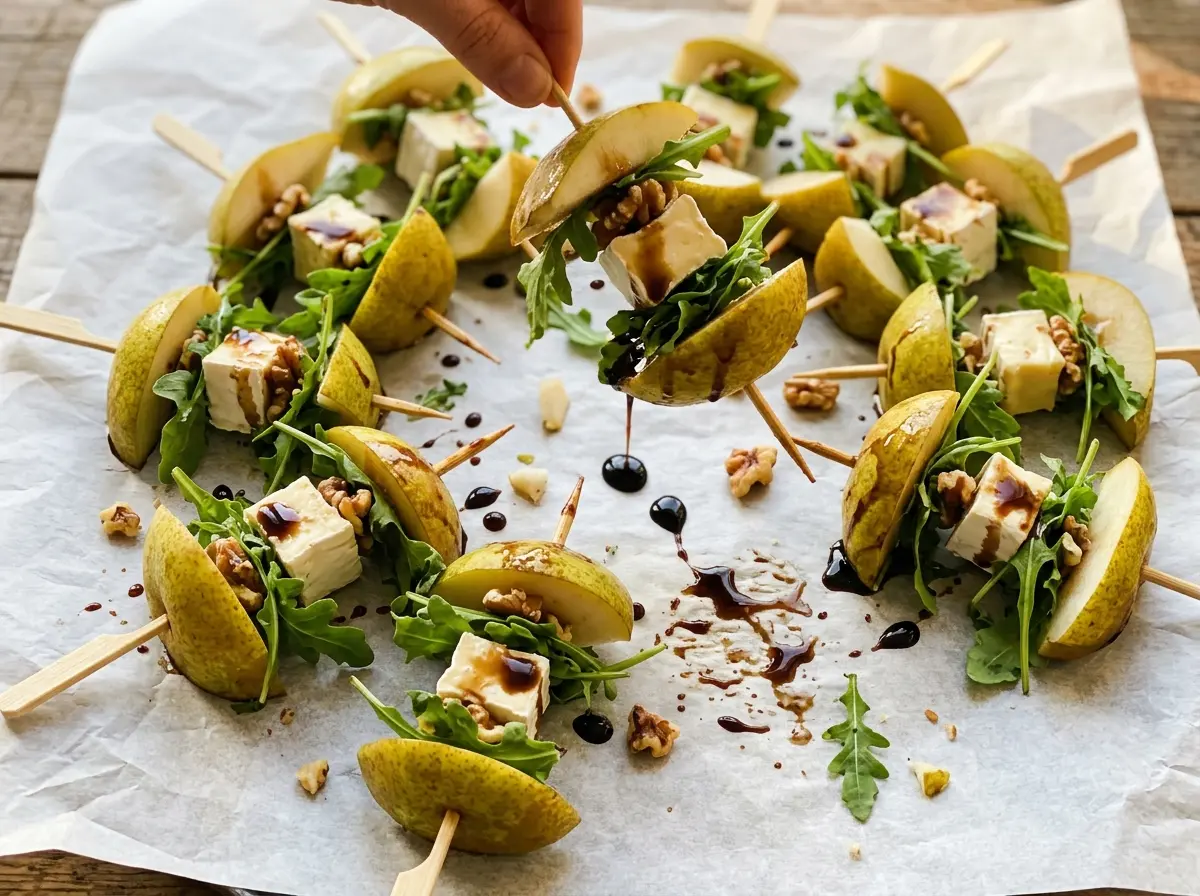
Fold each arugula leaf as you thread it rather than leaving it flat. It sits neatly between the pear and Brie, so the greens stay tucked into the bite.
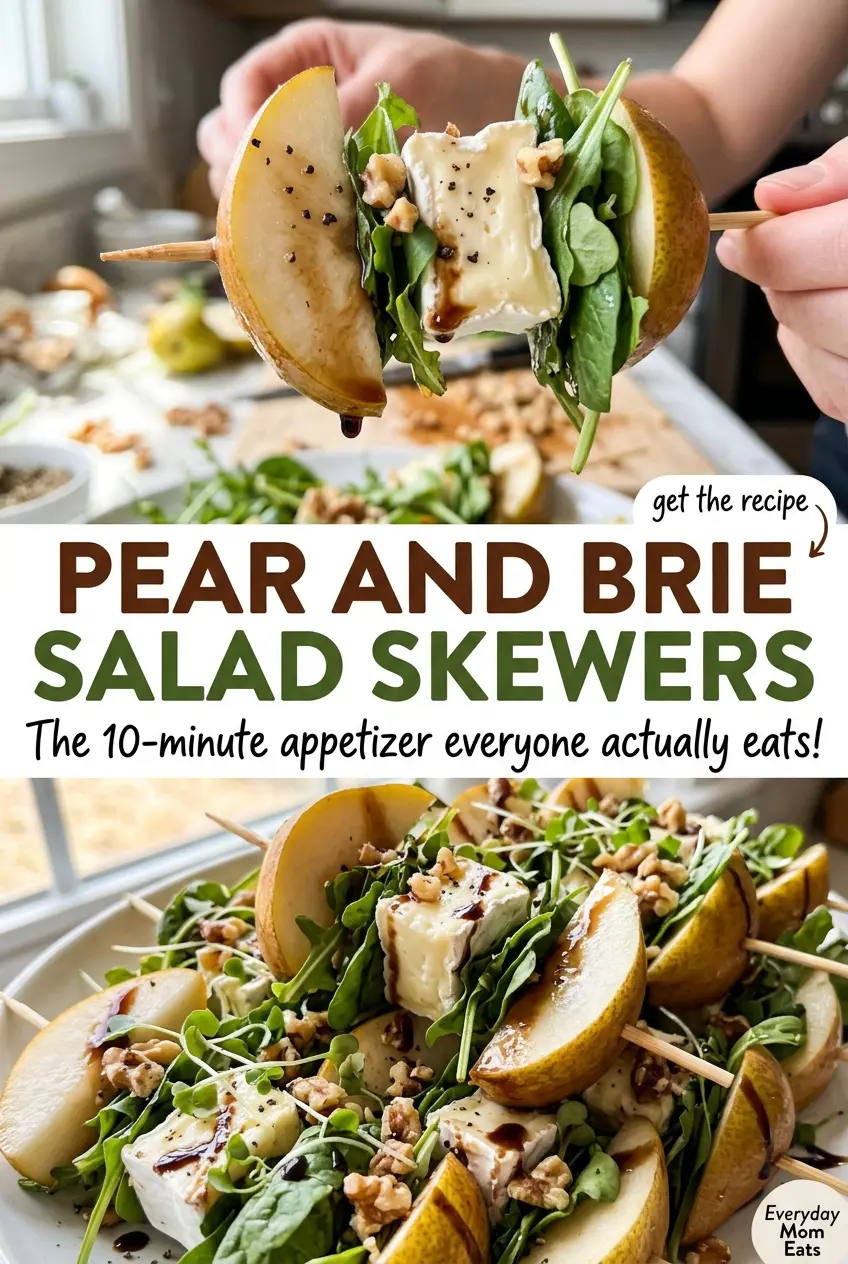
Save these Pear and Brie Salad Skewers for a party platter with sweet pear, peppery arugula, and a balsamic finish.
Why the One-Pear, One-Brie Balance Matters
These picks work best when each bite tastes like a little salad, not just cheese with fruit attached. A piece of pear brings sweetness and a clean, juicy snap; Brie is richer and softer; arugula adds a pleasantly peppery edge. Keeping one piece of each on every pick gives those contrasts room to balance. If one piece is much larger than the others, it tends to take over the bite.
That’s also why bite-size cuts are worth the extra minute. Cut the pears and Brie into pieces that are easy to eat in one or two bites, and keep them fairly consistent across the platter. The goal isn’t geometric perfection; it’s a comfortable bite with fruit, cheese, and greens together. Balsamic glaze and pecans finish the combination, but they shouldn’t bury it. A light drizzle and an even scatter let the pear and Brie remain the main event.
What Each Ingredient Adds to These Pear and Brie Bites
- Pears — Firm-ripe pears cut cleanly and hold their shape on the picks; very soft fruit is harder to handle. Bosc and Anjou pears both work well. For a crisp, less floral swap, use a firm apple cut into the same bite-size pieces.
- Lemon juice — It adds a fresh, tart note and coats the cut fruit. Freshly squeezed juice tastes bright, but bottled lemon juice is fine here. Lime juice can stand in at the same amount for a sharper citrus edge.
- Brie — Its creamy, mild character softens the pear’s sweetness and the arugula’s bite. Keep the wedge cold when cutting so the pieces are easier to portion; a grocery-store Brie is perfectly suitable. Cold Camembert is the closest swap, with a slightly stronger earthy flavor. The rind is edible and can stay on.
- Baby arugula — Small leaves fit the picks and bring a peppery contrast that a mild lettuce won’t match. Choose fresh leaves without limp or bruised edges. If you want a gentler green, use baby spinach leaves and fold them to fit the same way.
- Balsamic glaze — The thick, sweet-tart glaze clings to the assembled bites better than ordinary vinegar. Store-bought glaze works well. If all you have is balsamic vinegar, stir a little honey into it until it lightly coats a spoon; the result will be thinner, so drizzle sparingly.
- Toasted pecans — They bring a buttery crunch that makes the soft cheese and fruit more interesting. Pre-toasted pecans save time; choose ones that smell fresh rather than stale. Chopped toasted walnuts make a close swap, with a slightly more assertive flavor.
Assemble Each Pick Before You Finish the Platter
Coat the Pear Before It Browns
Put the pear chunks in a bowl and toss them with the lemon juice until the cut surfaces are coated. Turn the pieces gently so they don’t bruise or break apart. The fruit should look lightly glossy, not sit in a puddle of juice. If a few pieces are still dry, give the bowl another gentle toss before you start assembling.
Thread the Pear, Greens, and Brie
Take a four-inch cocktail pick and thread on one pear chunk, one folded baby arugula leaf, and one piece of cold Brie. Keep the order consistent as you work through all sixteen picks. Push the pick through the center of each piece rather than catching just an edge, which helps the bites stay in place when lifted. If a pear chunk splits, set it aside and use a sound piece instead of forcing it onto the pick.
Finish With Glaze and Pecans
Arrange the completed picks on a serving platter, then drizzle the balsamic glaze over them. Sprinkle the chopped toasted pecans across the top so the crunchy bits land on the bites rather than gathering in one spot. A modest drizzle keeps the glaze from masking the pear and Brie. The finished platter should show the greens and fruit, with pecans scattered over the surface.
Two Easy Ways to Change the Skewers
A Tree-Nut-Free Crunch
Replace the pecans with toasted sunflower kernels from a source suitable for your allergy needs. They’re smaller and less buttery, but still add crunch against the pear and Brie.
A Little Heat With the Sweet
Add a thin slice of fresh jalapeño to each pick with the pear, arugula, and Brie. The pepper adds a clean, sharp heat that cuts through the cheese; keep the slices thin so they don’t overwhelm a small bite.
Making Ahead and Holding
- Before serving: Cut the Brie and chop the pecans ahead, keeping the cheese covered in the refrigerator and the pecans in an airtight container. Toss the pears and assemble the picks close to serving so the arugula stays fresh.
- Leftovers: Cover and refrigerate leftover skewers; they’re best within a day, before the pear softens and the leaves wilt.
- Holding: Keep the platter chilled until serving, and don’t leave it at room temperature for more than two hours.
Questions That Come Up When Making These Skewers
Pear and Brie Salad Skewers
Ingredients
Method
- Toss the pear chunks with the lemon juice until coated.
- Thread one pear chunk, one folded arugula leaf, and one piece of Brie onto each of 16 four-inch cocktail picks.
- Arrange the skewers on a serving platter.
- Drizzle the skewers with the balsamic glaze.
- Sprinkle the skewers with the pecans.


