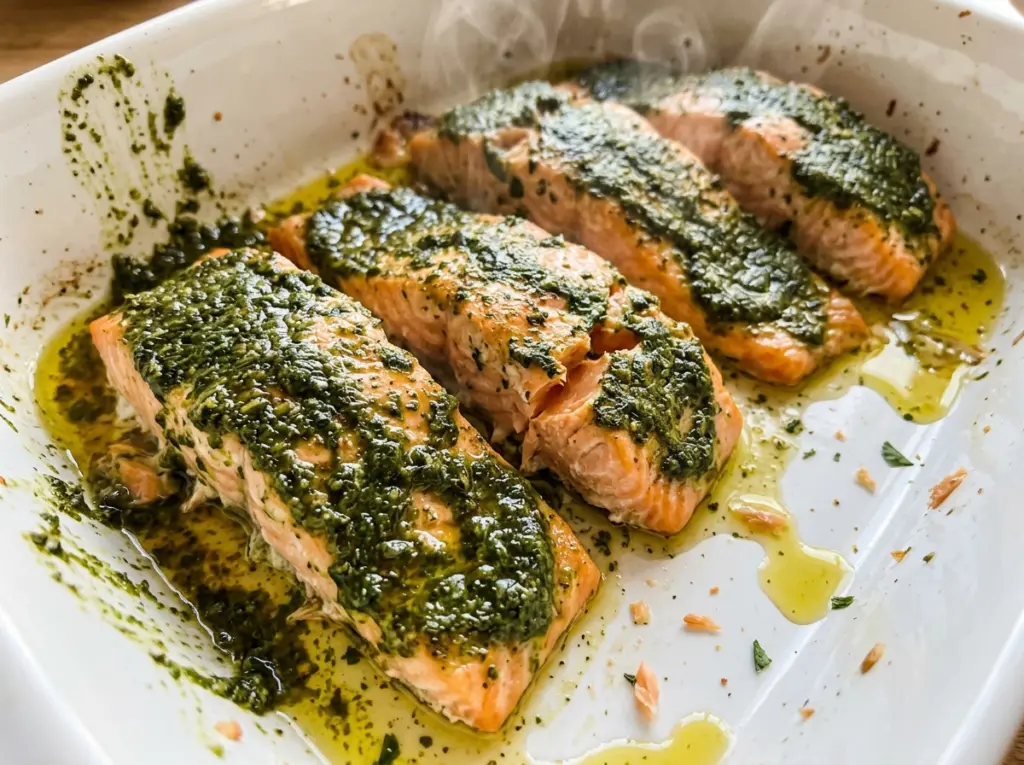
When the pesto warms in the oven, its basil aroma reaches the kitchen before the salmon is done. I turn to this Pesto Salmon Bake when I want to cook four portions together without tending a skillet. The one thing I keep an eye on is the thickest piece, since salmon portions don’t always match in size.
Spreading pesto over each portion gives every piece its own layer of herbs and oil. I add the lemon juice after baking rather than before, so its fresh, bright taste stays distinct against the rich salmon and pesto.
The method is straightforward, but the fish is best when you let its doneness—not just the clock—guide you. The result is tender salmon with a fragrant basil topping and a clean finish of lemon.
Kitchen Note
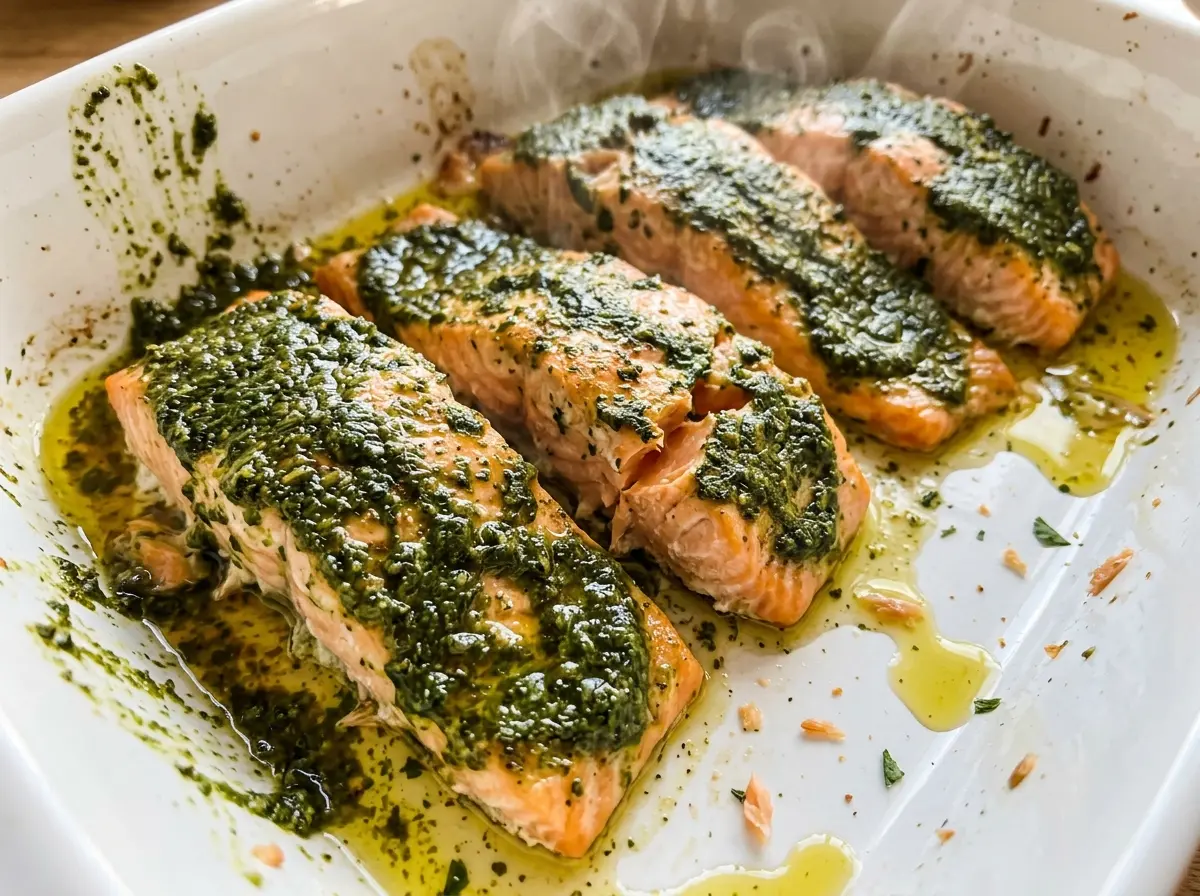
Spread the pesto across the full top of each salmon portion instead of leaving it in a thick mound. An even layer gives every bite that basil-and-oil coating without burying the fish.
Save this Pesto Salmon Bake for a weeknight when you want tender fish, a basil pesto topping, and a fresh squeeze of lemon.
Why Salmon’s Thickness Matters More Than the Timer
Four portions cut from the same fillet can still vary in thickness, and the thin ends won’t cook at the same pace as a tall center-cut piece. If you rely on the timer alone, the thinner portion may be ready while the thickest one still needs time. Salmon also continues to cook briefly after it leaves the oven, so pushing it well past the point of doneness can leave it dry.
Use the baking time as a window, then judge the thickest portion. A thermometer gives you a clear endpoint, while the fork test offers a second cue: the flesh should separate into flakes without looking raw in the middle. If you’re cooking portions of noticeably different thickness, check the thickest one first and avoid assuming the smaller pieces need the same extra minutes. This small adjustment matters more than adding pesto or changing the oven temperature; it helps keep the fish tender without guessing.
What the Salmon, Pesto, and Lemon Each Bring to the Bake

- Salmon fillet — The salmon is the center of the dish, so choose a fillet that looks moist and smells clean, not strongly fishy. Cutting it into four portions helps each piece fit in the baking dish and makes serving simple. Skin-on portions work well here; they sit skin-side down as they bake.
- Basil pesto — Pesto provides the basil flavor and the oily coating on top of the fish, so its taste carries through the finished dish. A reasonably priced pesto with a fresh basil taste works; the most expensive jar isn’t necessary. If choosing a store-bought pesto, a smooth, spreadable texture makes it easier to cover each portion.
- Fresh lemon juice — The lemon cuts through the richness of the salmon and pesto. Fresh juice has a brighter citrus edge than bottled juice, which is why I use it as the finishing touch. Squeeze it just before serving for the cleanest flavor.
- Olive oil, kosher salt, and black pepper — The olive oil is there to lightly grease the baking dish, while salt and pepper season the fish beneath the pesto. Even seasoning matters because pesto brings its own savory taste; keep the salt distributed across all four portions rather than concentrating it on one.
From Greased Baking Dish to Lemon Finish
Heat the Oven and Prepare the Dish
Heat the oven to 400°F and lightly grease a 9×13-inch baking dish with the olive oil. Spread the oil over the bottom so the salmon isn’t sitting on a dry surface. Set the dish near your work area before seasoning, which makes it easy to transfer the portions in one layer.
Arrange and Season the Portions
Place the salmon in the dish skin-side down. Season the portions evenly with the kosher salt and black pepper, taking a moment to distribute both across the fish rather than letting them collect on one end. Keep the portions arranged in a single layer so the pesto can be spread over each top.
Coat the Fish and Bake
Spread the basil pesto over the top of each portion, then put the dish in the heated oven. Bake for 12–16 minutes, checking the thickest part of the salmon for 145°F and looking for flesh that flakes easily with a fork. If the center hasn’t reached that point, give it a little more time and check again rather than pulling it early because the outside looks opaque.
Add the Lemon After Baking
Once the salmon is cooked through, take the dish from the oven and drizzle the fresh lemon juice over the portions. The lemon goes on at the end, where its citrus flavor stays lively rather than baking away. Serve the fish while the pesto is still warm and fragrant.
Two Pesto Swaps That Change the Finish
Choose a Dairy-Free Basil Pesto
For a dairy-free version, replace the basil pesto with the same amount of dairy-free basil pesto and keep the rest of the ingredients and method unchanged. The salmon still gets its herb-and-oil topping, though the pesto may taste a little less rich depending on the brand.
Use a Spicy Basil Pesto
Swap in a spicy basil pesto for the regular basil pesto if you want a little heat with the salmon. Keep the quantity the same and spread it over the portions as usual. The finished fish will have a bolder, warmer bite, so choose a pesto with a heat level you already enjoy.
Storage and Reheating
- Refrigerator: Store leftovers in a covered container within two hours and eat within 3–4 days. The salmon will be firmer once chilled, and the pesto may lose some of its fresh color.
- Freezer: Freeze cooked portions in airtight packaging for up to 2–3 months. Thaw them in the refrigerator before reheating; the salmon may be a little less tender after freezing.
- Reheating: Warm a portion gently in the microwave in short bursts or in a low oven, checking that the center reaches 165°F. High heat is the common mistake here; it can dry out the fish before it warms evenly.
Questions That Come Up When Baking Pesto Salmon
Pesto Salmon Bake
Ingredients
Equipment
Method
- Heat the oven to 400°F.
- Lightly grease a 9x13-inch baking dish with the olive oil.
- Arrange the salmon skin-side down in the dish.
- Season evenly with the salt and pepper.
- Spread the pesto over the top of each portion.
- Bake for 12–16 minutes, until the thickest part reaches 145°F and the fish flakes easily with a fork.
- Drizzle the salmon with the lemon juice.
- Serve.


