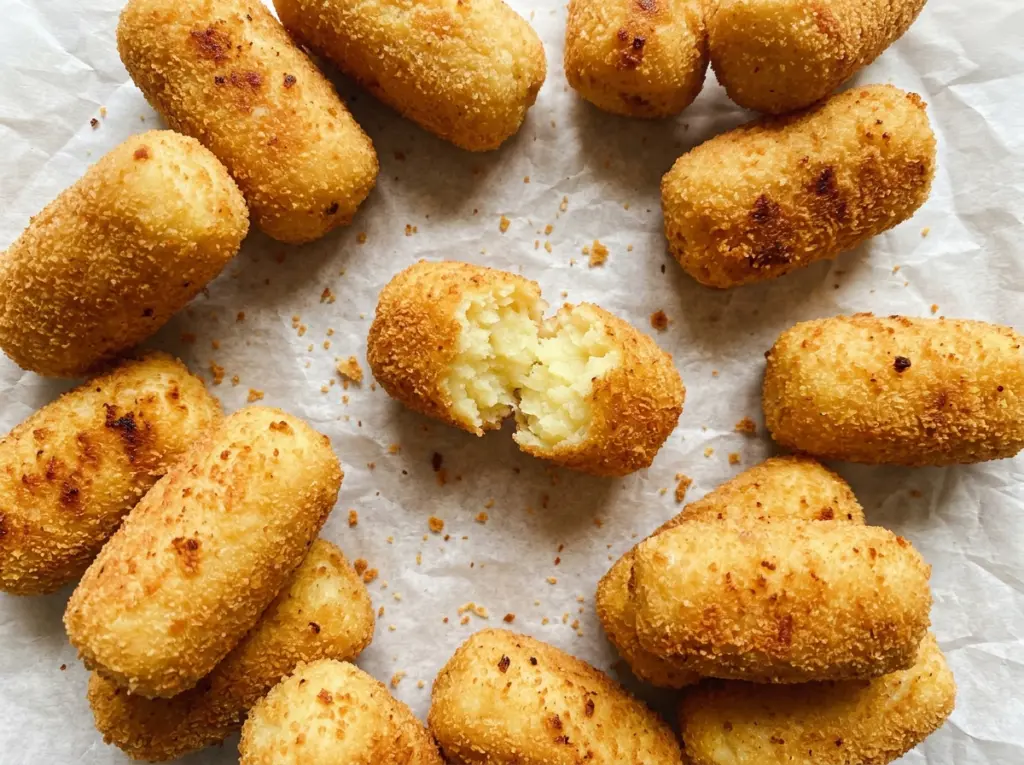
When you lift the first potato cube from the pot, it should give way easily to a knife, not crumble into the water. I learned to pay attention to that small difference because potatoes that are undercooked leave little lumps in the mash, while potatoes that hold too much moisture make croquettes hard to shape. These potato croquettes are worth getting that texture right: the centers turn soft and buttery beneath a thin, crisp breadcrumb shell.
Russet potatoes are a good fit here because they mash smoothly and make a light, fluffy base. After draining, I let them cook briefly over low heat so the surface dries before I mash in the butter and egg yolk. Then the mixture gets a proper chill. Cold, firm potato is much easier to shape and coat than warm mash, and the finished croquettes fry up neatly instead of slumping in the oil.
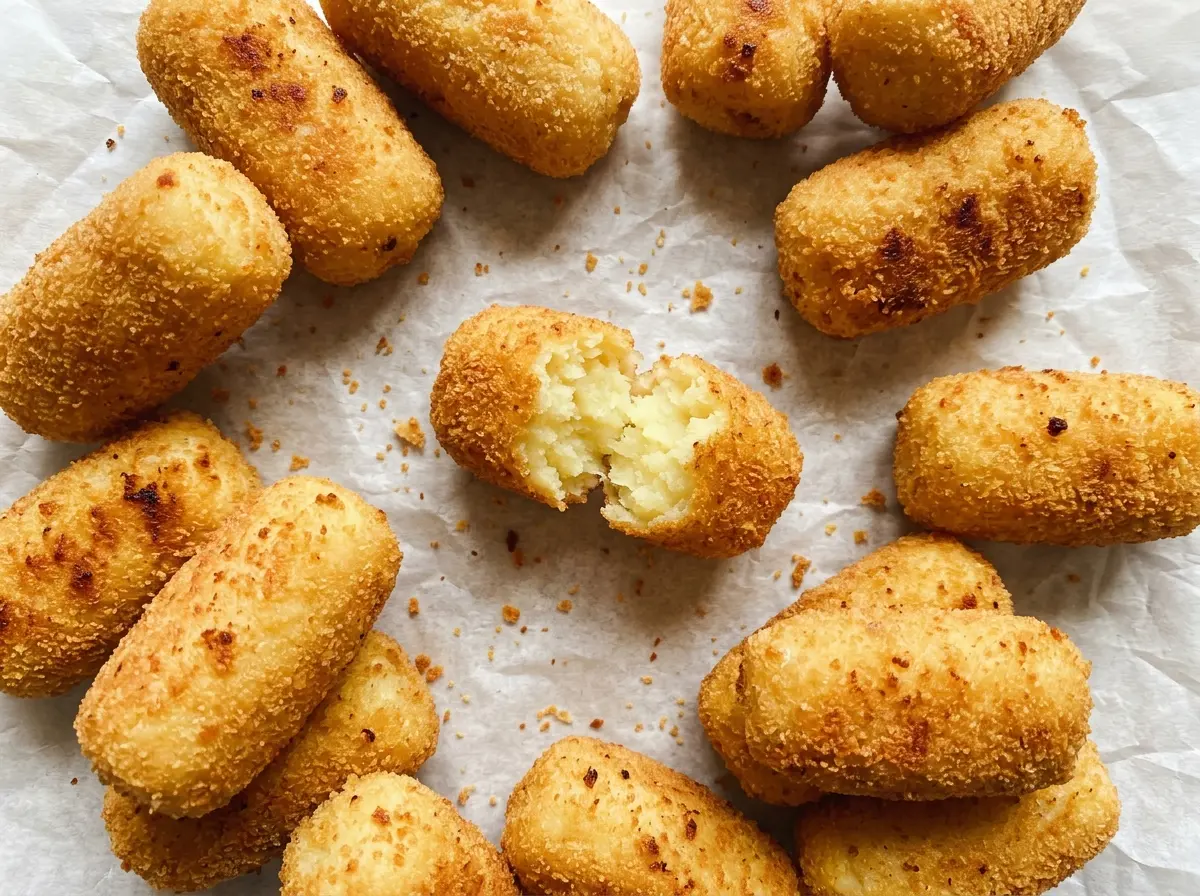
Kitchen Note
Give the breaded croquettes their full 20 minutes in the refrigerator before frying. That short rest helps the coating cling when you turn them in the oil, so you get a crisp shell instead of crumbs floating in the pot.
Save these potato croquettes for a crisp, golden coating and a soft, buttery center.
Why Potato Croquettes Turn Loose Before They Turn Golden
A croquette has to hold together twice: first when you shape and bread it, then again when it meets hot oil. Russets help because their fluffy, starchy flesh mashes into a cohesive mixture without needing extra binders. But even a good potato can make a loose filling if water clings to it after boiling. That excess moisture softens the mash and makes neat ovals harder to form.
Drying the drained potatoes briefly over low heat takes care of that without adding anything to the mixture. The potato surface should look matte rather than wet before you mash it. Chilling matters for a different reason: butter and egg yolk are mixed into the mash, and the cold rest firms everything up so the portions can be handled cleanly. With a dry, cold filling, the three-part coating has a steady surface to cling to, and the inside stays tender while the outside browns.
Russets, Egg Yolk, and Breadcrumbs: What Each One Contributes

- Russet potatoes — Their starchy, fluffy texture makes a smooth mash that can be shaped once cold. Peel them and cut them into even 1-inch cubes so they cook at about the same pace. Waxy potatoes tend to make a denser, stickier mash, so they aren’t my first choice here.
- Butter and egg yolk — Butter gives the filling a mellow richness, while the yolk helps the mashed potatoes hold together. Unsalted butter lets the kosher salt stay in control; a good everyday butter works well because its flavor is blended into the filling.
- Fresh parsley — Finely chopped parsley adds a fresh, herbal note throughout the potato. Fresh is worth using because dried parsley won’t give the same bright flecks or flavor. Chop it finely so it distributes evenly and doesn’t leave large pieces in the shaped croquettes.
- Flour, eggs, and plain dry breadcrumbs — This sequence gives the coating something to grip at each stage: flour on the potato, egg over the flour, then crumbs pressed onto the egg. Plain dry breadcrumbs make a fine, even crust; store-brand crumbs work just as well as a pricier package.
- Canola oil — Its neutral taste lets the potato and parsley come through, and it suits frying at the specified temperature. There’s no need for a specialty oil; use fresh canola oil for a clean-tasting crust.
Shape and Fry the Croquettes Without Losing Their Coating
Cook the potatoes until a knife slips in
Put the peeled, 1-inch potato cubes in a 4-quart saucepan with cold water, bring it to a boil over high heat, then reduce to a simmer. Cook for 12–15 minutes, checking a piece with a knife; it should slide in easily without the potato falling apart. Drain the potatoes well, return them to the pan, and stir over low heat for 1–2 minutes. Watch for the surface to look dry, not glossy with water.
Mash while warm and season the filling
Mash the potatoes until smooth before stirring in the butter, egg yolk, finely chopped parsley, kosher salt, and black pepper. Work out any lumps now, while the potatoes are still warm and easy to mash. The mixture should look even, with the parsley distributed rather than gathered in one spot. Spread it in an 8-inch square dish and leave it to cool for 15 minutes before covering and refrigerating for at least 1 hour, until cold and firm.
Shape ovals and build an even crumb coat
Set out three shallow bowls: one with flour, one with the two beaten eggs, and one with plain dry breadcrumbs. Shape the cold potato mixture into 18 ovals about 2 inches long, then coat each one in flour, egg, and breadcrumbs in that order. Press the breadcrumbs gently against every side so there aren’t bare patches, but handle the soft centers carefully. Arrange them on a 13×18-inch rimmed baking sheet and refrigerate for 20 minutes.
Fry in batches until the shells are golden
Heat the canola oil in a 5-quart Dutch oven to 350°F. Lower in a batch of croquettes and fry for 3–4 minutes total, turning them once; the outside should be an even golden brown. Frying in batches gives each one room to brown instead of crowding the pot. Transfer them to a wire rack or paper towels to drain before serving.
Easy Ways to Change the Coating or the Filling
Make the croquettes gluten-free
Replace the all-purpose flour with a cup-for-cup gluten-free flour blend and use plain gluten-free dry breadcrumbs. Keep the same flour-egg-crumb order and press the crumbs on gently; the coating may be a little more delicate, so handle the croquettes carefully when turning them.
Give the filling a dairy-free swap
Use an equal amount of a firm, unsalted plant-based butter in place of the butter. The potato mixture will still mash and chill well, though the finished center will have a slightly different buttery flavor. Check that the plant-based butter is suitable for cooking and use plain breadcrumbs without dairy ingredients.
Add a Parmesan note to the crust
Stir finely grated Parmesan into the breadcrumbs before coating the croquettes. It gives the shell a savory, salty edge and a slightly deeper color; because Parmesan can brown faster than plain crumbs, keep an eye on the outside as they fry.
Storage and Reheating
- Refrigerator: Keep leftover fried croquettes in an airtight container for up to 3 days. The coating softens in the refrigerator.
- Freezer: Freeze cooled croquettes in a single layer until solid, then transfer them to a freezer-safe container for up to 2 months. Thaw them in the refrigerator before reheating.
- Reheating: Heat them on a baking sheet in a 375°F oven until hot through and crisp again. Avoid the microwave if you want the coating to regain its crunch.
Questions That Come Up When Making Potato Croquettes
Potato Croquettes
Ingredients
Equipment
Method
- Put the potatoes and cold water in a 4-quart saucepan.
- Bring to a boil over high heat, reduce to a simmer, and cook for 12–15 minutes, until a knife slides easily into the potatoes.
- Drain the potatoes well and return them to the saucepan.
- Cook over low heat for 1–2 minutes, stirring, until the surface looks dry.
- Mash the potatoes until smooth.
- Stir in the butter, egg yolk, parsley, salt, and pepper.
- Spread the mixture in an 8-inch square dish and let cool for 15 minutes.
- Cover and refrigerate for at least 1 hour, until cold and firm.
- Set out three shallow bowls with the flour, beaten eggs, and breadcrumbs.
- Shape the cold potato mixture into 18 oval croquettes, about 2 inches long.
- Coat each croquette in flour, egg, then breadcrumbs, pressing the crumbs on.
- Arrange the croquettes on a 13x18-inch rimmed baking sheet and refrigerate for 20 minutes.
- Heat the oil in a 5-quart Dutch oven to 350°F.
- Fry the croquettes in batches, turning once, for 3–4 minutes total, until golden brown.
- Transfer the croquettes to a wire rack or paper towels to drain.


