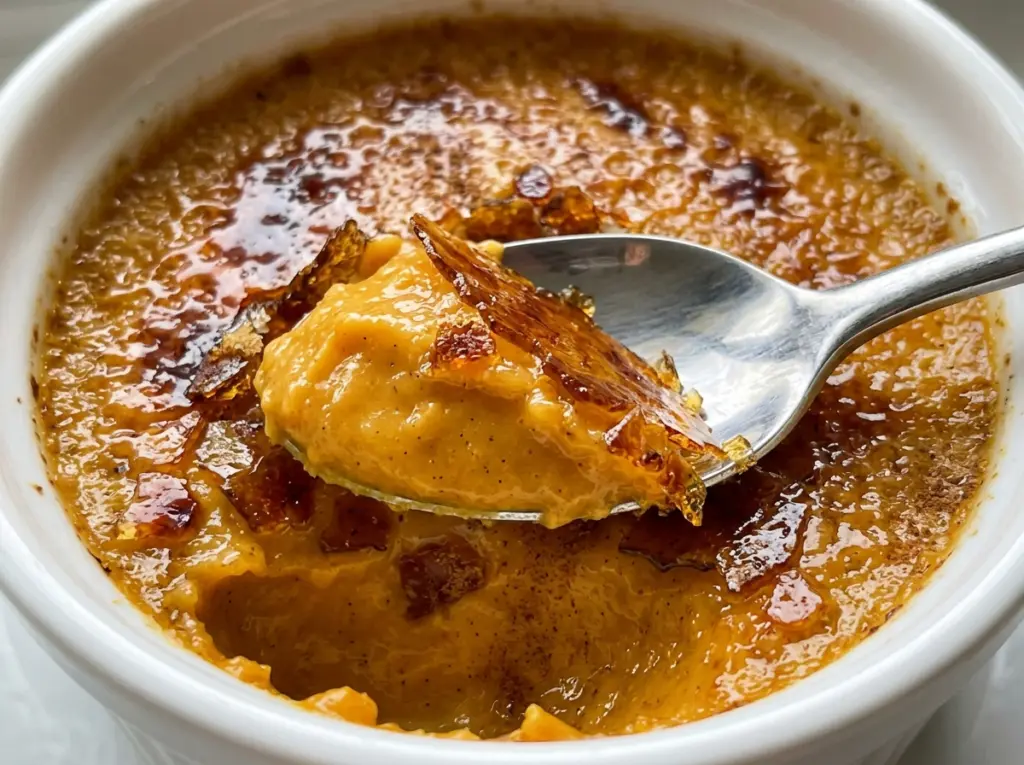
When the cream is hot enough to steam but hasn’t started bubbling, it’s ready to meet the eggs. I keep the heat moderate for this pumpkin crème brûlée because boiling cream can make the next step harder to control. The custard should pour smoothly, with the pumpkin stirred in before the hot cream goes near the yolks.
Pumpkin adds body and moisture, so this custard won’t behave exactly like a plain vanilla crème brûlée. Whisking the cream in gradually helps the yolks warm without scrambling, while the water bath cushions the custards as they bake. After a long chill, each spoonful is cool and silky under a thin, crackling layer of amber sugar.
Kitchen Note
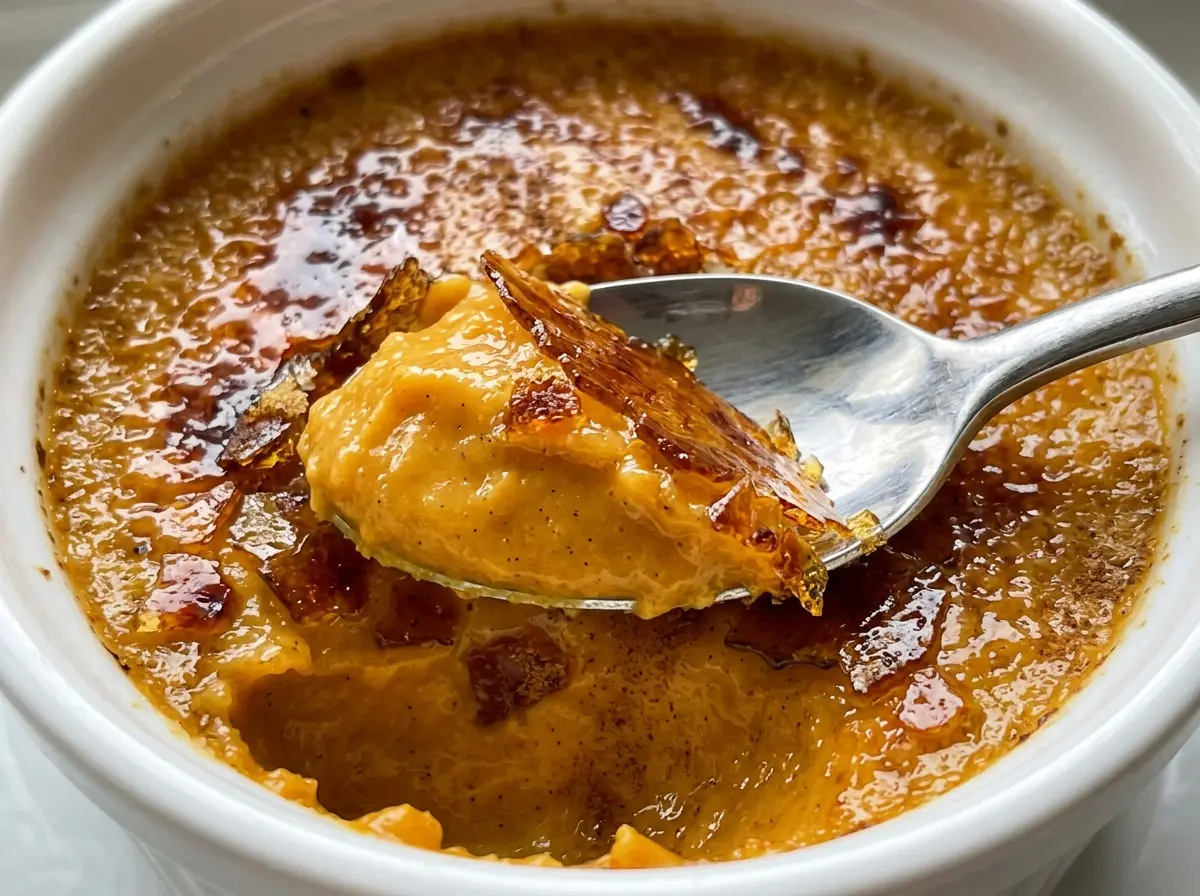
I torch the sugar shortly before serving, not before the custards go into the refrigerator. Moisture softens the caramel shell, so give it time to harden and bring the ramekins straight to the table.
Save this pumpkin crème brûlée for a make-ahead dessert with chilled pumpkin custard and a crisp, freshly torched sugar top.
Why Pumpkin Custard Needs a Gentler Set Than Plain Crème Brûlée
Pumpkin purée changes the texture before the custard even reaches the oven. It adds moisture and a little thickness, while the yolks still do the work of setting the custard. The result should be tender and creamy, not as delicate as a plain cream-and-yolk custard. That’s why I rely on a moderate oven and a water bath rather than trying to rush the bake.
The water surrounding the ramekins warms more gently than the oven air. It helps the custards cook evenly from the edges toward the center, which matters when the mixture contains pumpkin. Without that cushion, the outside can firm up before the middle has had time to set. The roasting pan also gives you room to add hot water after the ramekins are in place, instead of trying to carry filled cups through the kitchen.
There’s a balance to aim for: a custard that holds together but still feels soft on the spoon. The eggs provide structure, and the brown sugar dissolves into the yolks before the pumpkin and cream are added. Keeping those components smooth before baking gives the finished dessert an even texture, with warm spice in the custard and the brittle sugar shell left to provide the crisp contrast.
What Pumpkin Purée Changes in the Custard—and What It Doesn’t

- Pumpkin purée — Use plain pumpkin purée, not a sweetened pumpkin pie filling. The filling is already seasoned and sweetened, which would throw off the brown sugar and spice balance. A thick, smooth homemade purée can stand in for canned purée; watery purée may leave the custard looser.
- Heavy cream — Its fat gives the custard a rich, smooth mouthfeel. Lower-fat milk isn’t an equivalent swap here; it makes a less rich custard and changes how the mixture sets. Choose fresh cream, but there’s no need to seek out a specialty brand.
- Egg yolks — Yolks thicken the cream into a spoonable custard. Separate them carefully so stray whites don’t leave threads in the finished mixture, and use large eggs to keep the proportions consistent.
- Light brown sugar — Packed brown sugar brings sweetness and a mild molasses note that suits the pumpkin. Break up any firm lumps before whisking so they disappear into the yolks instead of leaving sweet pockets.
- Ground spices and vanilla — Cinnamon, ginger, nutmeg, and vanilla round out the pumpkin without hiding it. Fresh, fragrant spices make the most difference here; if a jar smells faint, the flavor will be faint too.
- Granulated sugar — This is for the crisp top, not the custard. Regular granulated sugar melts cleanly under the torch, so a more expensive specialty sugar isn’t needed.
From Steaming Cream to a Glassy Amber Top
Warm the cream and spices without boiling
Set six 6-ounce ramekins in a roasting pan, then preheat the oven to 325°F. Combine the heavy cream, cinnamon, ginger, nutmeg, and kosher salt in a saucepan over medium heat. Warm it for about 4 to 6 minutes, until steam rises from the surface. Take the pan off the heat before the cream boils; bubbling cream is hotter than you need for a smooth custard.
Whisk the pumpkin mixture before tempering
In a medium bowl, whisk the egg yolks and packed light brown sugar until smooth. Whisk in the pumpkin purée and vanilla so the mixture is uniform before adding the cream. Pour the hot cream in gradually while whisking, rather than tipping it in all at once; that slower addition warms the yolks without cooking them into bits. Divide the finished custard among the ramekins.
Bake the ramekins in a halfway-deep water bath
Pour hot water into the roasting pan until it reaches halfway up the sides of the ramekins. Add it carefully so none splashes into the custard. Bake at 325°F for 35 to 45 minutes, watching for edges that look set while the centers still jiggle slightly. If you bake until the centers look completely firm, the custard will be more set than the soft texture you want.
Chill thoroughly, then torch the sugar
Carefully lift the ramekins from the hot water bath and cool them on a rack for 30 minutes. Refrigerate until thoroughly chilled, at least 4 hours; the custards need that time to firm up. Sprinkle 1 teaspoon of granulated sugar evenly over each one, then use a kitchen torch to melt and caramelize it to deep amber. Serve once the tops have hardened.
A Coconut-Cream Swap and a Cinnamon-Forward Version
Dairy-free with full-fat coconut milk
Replace the heavy cream with an equal amount of full-fat canned coconut milk and warm it with the spices as usual. The egg yolks still set the custard, though the finished dessert will have a gentle coconut note and won’t taste quite as traditionally creamy.
Make the cinnamon more prominent
For a simpler, cinnamon-led spice note, leave out the ginger and nutmeg while keeping the cinnamon amount the same. The custard will taste warmer and less layered, with the pumpkin coming through more clearly behind the cinnamon.
Storage and Reheating
- Refrigerator: Keep the unbrûléed custards covered and refrigerated for up to 3 days. The custard stays creamy, but the sugar top should be made fresh.
- Freezer: Freezing isn’t recommended; thawed custard can turn grainy or release liquid.
- Reheating: No reheating is needed. Serve the custards chilled and torch the sugar just before serving.
Questions That Come Up Before the Sugar Hits the Torch
Pumpkin Creme Brulee
Ingredients
Equipment
Method
- Preheat the oven to 325°F.
- Arrange six 6-ounce ramekins in a roasting pan.
- Combine the cream, cinnamon, ginger, nutmeg, and salt in a saucepan.
- Heat over medium heat until steaming, about 4 to 6 minutes, without letting it boil.
- Whisk the egg yolks and brown sugar in a medium bowl until smooth.
- Whisk in the pumpkin puree and vanilla.
- Gradually whisk the hot cream into the yolk mixture.
- Divide the custard among the ramekins.
- Pour hot water into the roasting pan until it reaches halfway up the sides of the ramekins.
- Bake for 35 to 45 minutes, until the edges are set and the centers still jiggle slightly.
- Carefully remove the ramekins from the water bath.
- Cool on a rack for 30 minutes.
- Refrigerate the custards until thoroughly chilled, at least 4 hours.
- Sprinkle 1 teaspoon granulated sugar evenly over each custard.
- Use a kitchen torch to melt and caramelize the sugar until deep amber.
- Serve once the tops have hardened.