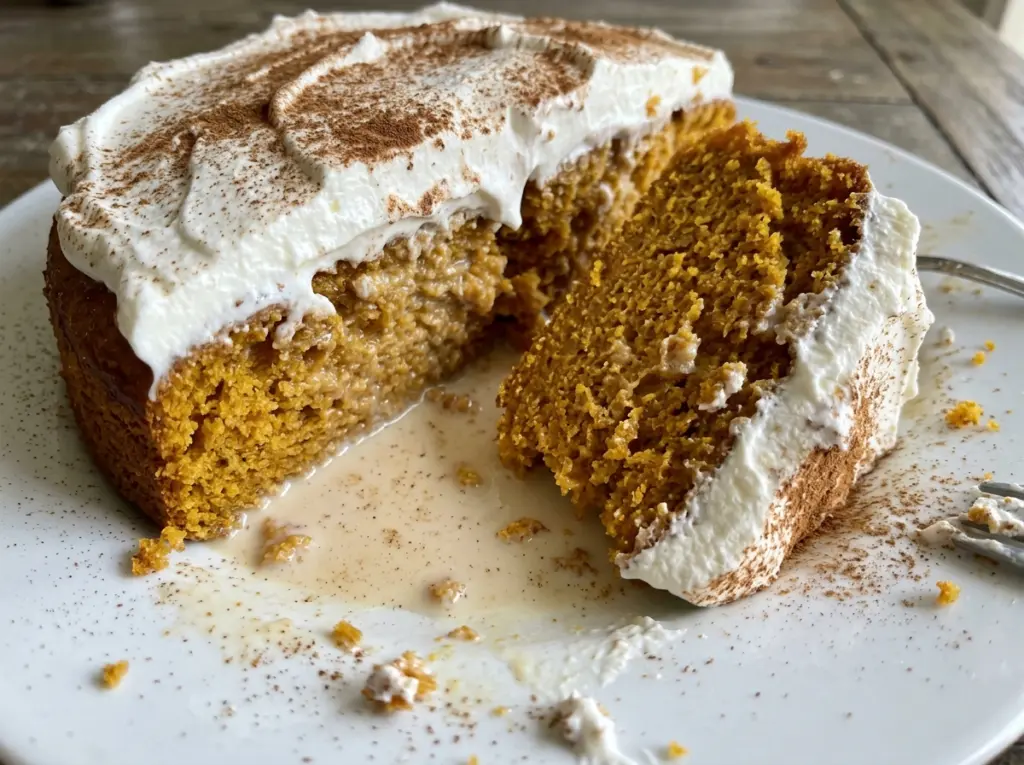
The toothpick test matters more here than it does with a plain cake: pumpkin keeps the crumb moist, and the center needs to be baked through before it can take on the milk soak. I bake this in a 9×13-inch dish until the tester comes out clean or with a few moist crumbs, then let the cake cool completely before adding the three milks. The result is a tender, warmly spiced Pumpkin Tres Leches Cake that serves 12.
The soak is a blend of evaporated milk, sweetened condensed milk, and whole milk, so it brings richness and sweetness without asking the pumpkin cake to do all the work. Once the milk has had at least four hours to settle into the crumb, a cloud of vanilla whipped cream finishes each chilled slice. It’s a generous dessert, but the balance stays soft and creamy rather than heavy.
Kitchen Note
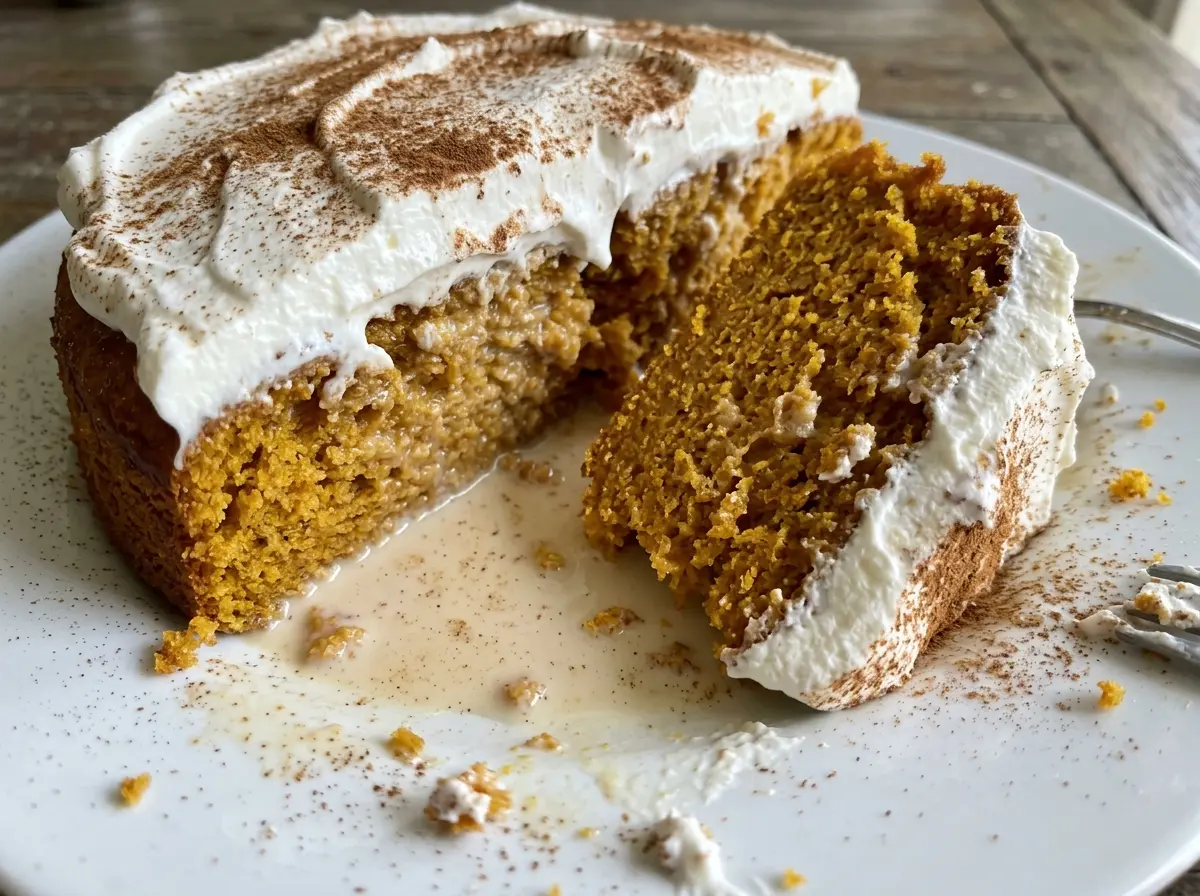
The milk mixture can look like a lot when it first hits the cake, so pour it slowly and spread it over the whole surface rather than emptying it into one spot. Give the cake the full chill; the top should look settled, not like milk is still sitting in puddles.
Save this Pumpkin Tres Leches Cake for its spiced pumpkin crumb, milky center, and soft vanilla cream topping.
Why Pumpkin Cake Needs a Different Kind of Tres Leches Crumb
A classic tres leches cake is often built around a light sponge, but this version starts with pumpkin puree and oil. That gives the cake a softer, more substantial crumb, with enough structure to take on the milk without feeling like a dry sponge. The pumpkin also brings moisture before the soak ever goes in, so the cake needs to be baked until its center is set instead of pulled early in the hope that the milk will finish the job.
The baking powder and baking soda help lift that richer batter, while whisking the eggs and sugars until smooth helps the cake bake up evenly. Folding the flour mixture in only until the dry streaks disappear keeps the crumb tender. Think of the soak as an addition to a properly baked cake, not a fix for one that’s underdone; that distinction is what keeps the slices creamy instead of gummy.
What Gives the Pumpkin, Milk, and Cream Their Separate Jobs

- Canned pumpkin puree — Choose plain pumpkin puree, not pumpkin pie filling, which is already sweetened and spiced. Canned puree gives the batter a consistent texture; the pumpkin flavor should be clear but not so strong that it hides the cinnamon, ginger, and nutmeg.
- Neutral oil — Vegetable or canola oil keeps the crumb tender without adding a distinct buttery flavor. Either is a sensible, inexpensive choice here, and the neutral taste lets the pumpkin and spices come through.
- Flour and leaveners — All-purpose flour gives the cake enough structure for the soak, while baking powder and baking soda lift the moist batter. Measure the flour without packing it down; too much flour makes the crumb heavier and less receptive to the milk.
- The three milks — Evaporated milk brings concentrated dairy richness, sweetened condensed milk supplies both sweetness and body, and whole milk loosens the mixture so it can spread over the cake. Replacing the condensed milk with ordinary milk would leave the soak thinner and much less sweet.
- Heavy cream — Chilled heavy cream whips into a topping that’s richer and softer than a firm frosting. Powdered sugar dissolves smoothly into it, and vanilla keeps the topping in step with the cake’s warm spices.
- The spices — Ground cinnamon leads, with ginger and nutmeg giving the pumpkin a warmer edge. Fresh, aromatic spices make the most difference here; if yours have been open for a long time, the cake may taste flatter even when the amounts are right.
Mix, Bake, Soak, and Finish Without Losing the Tender Crumb
Whisk the Dry Mix, Then Fold Gently
Whisk the flour, baking powder, baking soda, cinnamon, ginger, nutmeg, and salt together in a medium bowl so the spices and leaveners are distributed before they meet the wet ingredients. In a large bowl, whisk the eggs with both sugars until smooth, then whisk in the pumpkin, oil, and vanilla. Fold the flour mixture into the pumpkin mixture just until no dry streaks remain. If you keep stirring after that point, the cake can turn tougher than it needs to be.
Bake Until the Center Is Set
Coat a 9×13-inch baking dish with cooking spray, spread the batter evenly in it, and bake at 350°F for 30 to 35 minutes. The edges should look set, and a toothpick inserted in the center should come out clean or with a few moist crumbs. Wet batter on the toothpick means the center needs more time. Cool the cake completely in the dish, about 1 hour, before adding the soak.
Spread the Soak Across the Cake
Whisk the evaporated milk, sweetened condensed milk, and whole milk until combined. Pierce the cooled cake all over with a skewer, making holes across the surface rather than concentrating them in the middle. Pour the mixture evenly over the cake, then refrigerate it for at least 4 hours. The holes give the milk places to enter the crumb, and the chill gives it time to settle throughout.
Whip the Cream for a Soft, Stable Finish
Beat the chilled heavy cream with the powdered sugar and vanilla in a large bowl until medium-stiff peaks form. Stop when the cream holds its shape but still looks smooth; overbeating can make it grainy. Spread the cream over the chilled cake in an even layer. Keep the finished cake cold until you’re ready to serve it.
Easy Ways to Adapt Pumpkin Tres Leches Cake
Turn Up the Cinnamon and Ginger
For a bolder spice note, use 1 1/2 teaspoons cinnamon and 3/4 teaspoon ginger in the cake, keeping the nutmeg where it is. The pumpkin will taste warmer and more pronounced, while the milk soak and vanilla cream stay the same.
Make a Gluten-Free Version
Replace the all-purpose flour with the same amount of a cup-for-cup gluten-free baking blend that includes xanthan gum. The cake will still take the milk soak, though its crumb may be a little more tender or compact than the wheat-flour version. Avoid almond flour here; it doesn’t provide the same structure.
Adapt It for a Dairy-Free Table
Use full-fat canned coconut milk in place of the evaporated milk, dairy-free sweetened condensed coconut milk for the condensed milk, and unsweetened oat milk for the whole milk. For the topping, use chilled coconut cream in place of the heavy cream and keep the powdered sugar and vanilla. Expect a noticeable coconut flavor and a slightly different texture from the original.
Storage and Reheating
- Refrigerator: Cover and refrigerate for up to 3 days. The crumb will soften further, and the whipped cream gradually loses some of its lift.
- Freezer: Freezing the finished cake isn’t recommended; the soaked crumb and whipped topping can turn watery or lose their texture after thawing.
- Reheating: Don’t reheat this cake. It’s served chilled, and warming it will melt the whipped cream and loosen the milk-soaked crumb.
Questions That Come Up When Making Pumpkin Tres Leches Cake
Pumpkin Tres Leches Cake
Ingredients
Equipment
Method
- Heat the oven to 350°F and coat a 9x13-inch baking dish with cooking spray.
- Whisk together the flour, baking powder, baking soda, cinnamon, ginger, nutmeg, and salt in a medium bowl.
- Whisk the eggs with the granulated sugar and brown sugar in a large bowl until smooth, then whisk in the pumpkin, oil, and vanilla; fold in the flour mixture just until no dry streaks remain.
- Spread the batter in the prepared dish and bake for 30 to 35 minutes, until a toothpick inserted in the center comes out clean or with a few moist crumbs.
- Cool the cake completely in the dish, about 1 hour.
- Whisk together the evaporated milk, sweetened condensed milk, and whole milk in a medium bowl.
- Pierce the cooled cake all over with a skewer.
- Pour the milk mixture evenly over the cake and refrigerate for at least 4 hours.
- Beat the heavy cream, powdered sugar, and vanilla in a large bowl until medium-stiff peaks form.
- Spread the topping over the chilled cake and serve.


