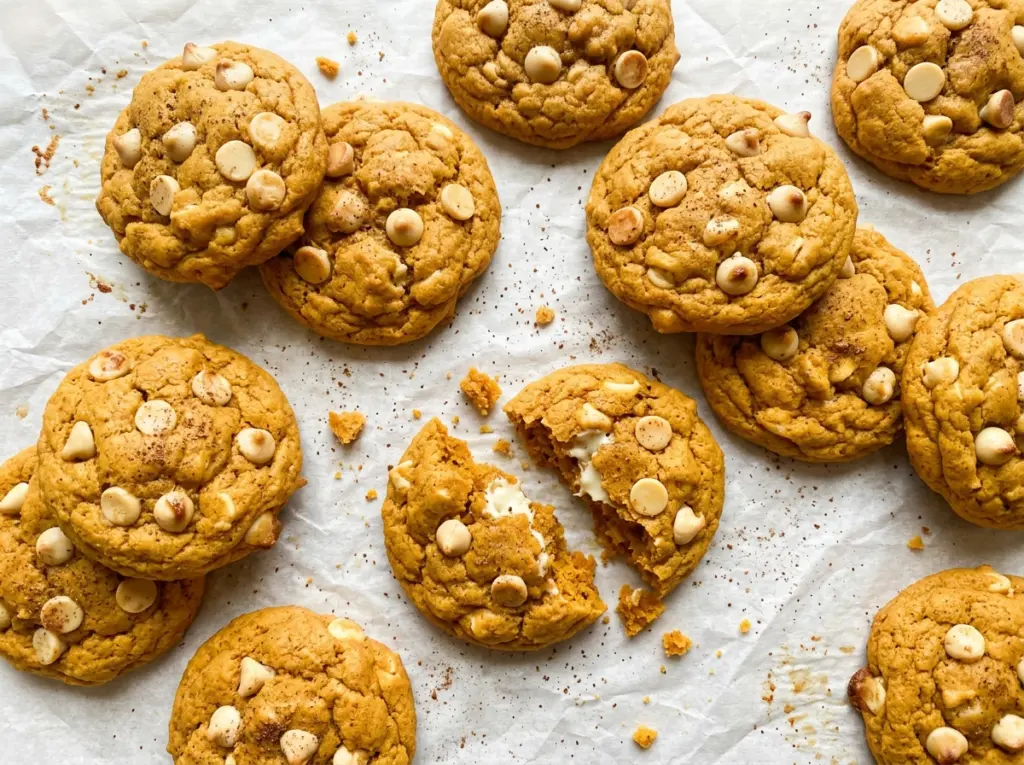
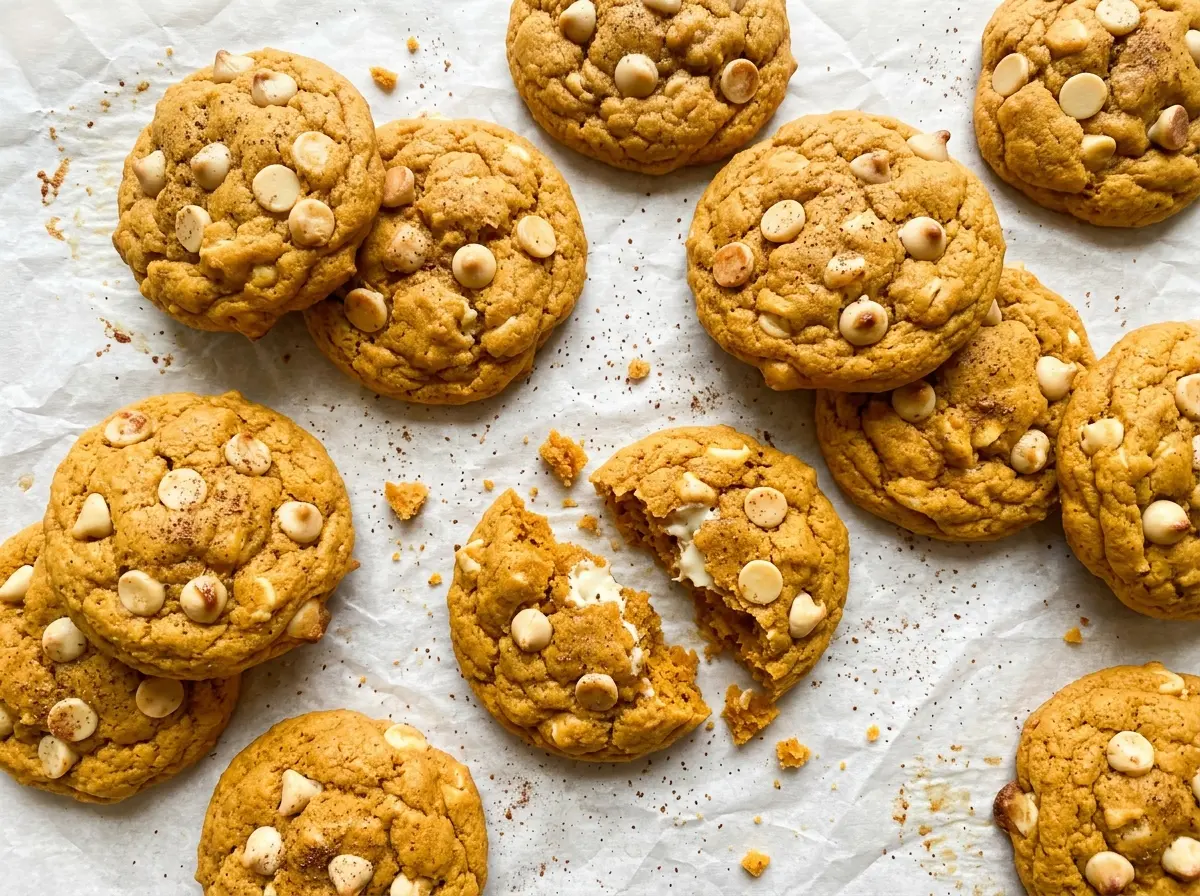
When the beaters lift from this dough, it looks softer than the dough for a typical chocolate chip cookie. Pumpkin brings moisture, and the first time I made these Pumpkin White Chocolate Chip Cookies, I learned that a short chill makes a big difference when it’s time to scoop. The finished cookies have set edges, a soft middle, and little pockets of sweet white chocolate.
I use canned pumpkin puree, not pumpkin pie filling, so the dough gets pumpkin flavor without extra sugar or spice already mixed in. A single egg yolk gives the dough richness without adding the moisture of a whole egg, and the flour gets mixed in only until the dry streaks disappear. That keeps the cookies tender rather than tough, with a mellow pumpkin-spice flavor in every bite.
Kitchen Note
I give the covered dough the full 30 minutes in the refrigerator before scooping. It firms up enough to portion neatly, so the cookies go onto the baking sheet as rounded scoops instead of spreading from a loose, sticky mound.
Save these pumpkin white chocolate chip cookies for a soft-centered batch with pumpkin spice in every bite.
Why These Pumpkin Cookies Use Only the Egg Yolk
Pumpkin puree already brings moisture to cookie dough, so using the yolk without the egg white keeps the liquid in check. The yolk contributes fat and helps the dough hold together, while the white would add extra water and protein. In a dough with pumpkin, that difference matters: too much moisture can push the texture toward soft and cakey instead of giving you a cookie with defined edges and a tender center.
This is also why I don’t swap in a whole egg casually. It may seem like a small change, but it changes the balance of the dough. The pumpkin and yolk blend smoothly with the creamed butter and sugars, and the flour mixture then gives the dough enough structure to scoop and bake. Keep the yolk intact when separating it; a little egg white clinging to it is fine, but don’t pour the whole egg in.
The finished cookies are meant to look slightly soft in the middle when they leave the oven. That soft center isn’t a sign that the yolk has left them underbaked; the edges set first, and the cookies continue settling as they cool on the baking sheet.
What Pumpkin, Flour, and White Chocolate Each Bring

- Canned pumpkin puree — Choose plain puree, not pumpkin pie filling, which already contains sweeteners and spices. The puree gives the cookies their pumpkin flavor and moisture; canned puree is consistent, while homemade puree can vary in how wet it is. For this dough, canned puree is the dependable choice.
- All-purpose flour — Spoon it into the measuring cup and level the top rather than packing it in. Too much flour can make the dough stiff and the cookies dry. All-purpose flour gives the dough its familiar cookie structure; a cup-for-cup gluten-free blend is the most practical swap, though the cookies may have a more delicate crumb.
- Unsalted butter — Softened butter creams evenly with the sugars and gives the dough richness. Let it soften until it yields when pressed but isn’t greasy or melted. Unsalted butter lets you control the seasoning; if you only have salted butter, reduce the added salt, keeping in mind that salt levels vary by brand.
- Light brown and granulated sugars — The brown sugar brings a gentle molasses note and helps keep the centers tender, while granulated sugar balances it and supports the cookie’s edges. Dark brown sugar can stand in for light brown if you like a more pronounced molasses flavor. The granulated sugar is best left as written for the closest texture.
- White chocolate chips — Their creamy sweetness contrasts with the pumpkin spice, and chips hold their shape in the baked cookies. Use a brand you enjoy eating on its own; white chocolate varies noticeably in sweetness. Semisweet chocolate chips work as a direct flavor swap, but they make the cookies less sweet overall.
- Pumpkin pie spice and baking soda — The spice provides the warm pumpkin-cookie aroma, and baking soda helps the dough rise and spread as it bakes. Use fresh baking soda for reliable lift. There isn’t a single-ingredient substitute for pumpkin pie spice that keeps the same balanced seasoning, so use the blend for the intended flavor.
From Creamed Butter to Soft-Centered Cookies
Whisk the dry ingredients evenly
Heat the oven to 350°F and line a large baking sheet with parchment paper. In a medium bowl, whisk the flour, baking soda, pumpkin pie spice, and salt until the spice looks evenly distributed. Breaking up any flour clumps now helps avoid overmixing later. Set the bowl aside while you cream the butter and sugars.
Cream the butter and sugars
Beat the softened butter with the brown sugar and granulated sugar in a large bowl for about 2 minutes, until creamy. Scrape down the bowl if the mixture sticks high on the sides, so the butter and sugar combine evenly. The mixture should look cohesive rather than like separate butter streaks and sugar. Butter that’s melted or oily won’t cream the same way, so start with softened butter, not warm butter.
Mix in the pumpkin, then add the flour
Beat in the egg yolk, pumpkin puree, and vanilla until the mixture looks smooth. Add the flour mixture and mix only until no dry streaks remain; stop as soon as the flour disappears. Overmixing after the flour goes in can make cookies tougher. Fold in the white chocolate chips last so they’re spread through the dough without being crushed by the mixer.
Chill, scoop, and space the dough
Cover the dough and chill it for 30 minutes. Scoop rounded 1 1/2-tablespoon portions onto the parchment-lined sheet, leaving about 2 inches between them. That spacing gives the cookies room to spread without running together. Bake in batches rather than crowding the pan.
Bake until the edges are set
Bake at 350°F for 11–13 minutes, until the edges look set and the centers still look slightly soft. Don’t wait for the centers to look fully firm in the oven; they’ll continue to set as they cool. Let the cookies rest on the baking sheet for 5 minutes, then move them to a wire rack to cool completely. That brief rest helps them firm up enough to transfer without breaking.
Easy Swaps for a Different Batch
Trade the white chocolate for semisweet
Use semisweet chocolate chips in place of the white chocolate chips. The bittersweet chocolate gives the pumpkin spice a deeper contrast and makes each cookie taste less sweet, while keeping the same scoop-and-bake method.
Bake a gluten-free batch
Replace the all-purpose flour with a cup-for-cup gluten-free baking blend made for baking, ideally one that includes xanthan gum. Measure it according to the package’s cup-for-cup directions. The cookies may be a little more delicate, so let them rest on the baking sheet before moving them.
Leave out the chocolate chips
Skip the white chocolate for a simpler pumpkin-spice cookie. The dough and baking method stay the same, but the cookies won’t have the creamy sweet pockets that make the chocolate version distinctive.
Storage and Reheating
- Room temperature: Keep completely cooled cookies in an airtight container for up to 3 days. They’ll soften slightly as they sit.
- Freezer: Freeze cooled cookies in a freezer-safe airtight container for up to 2 months. Separate layers with parchment so the chocolate chips don’t stick to the cookies above them.
- Reheating: Warm a cookie in a 300°F oven for 4–5 minutes. Don’t leave it in until the center feels firm; the cookie will continue to soften as it cools.
Questions That Come Up While Baking These Cookies
Pumpkin White Chocolate Chip Cookies
Ingredients
Equipment
Method
- Heat the oven to 350°F.
- Line a large baking sheet with parchment paper.
- Whisk the flour, baking soda, pumpkin pie spice, and salt together in a medium bowl.
- Beat the butter, brown sugar, and granulated sugar in a large bowl until creamy, about 2 minutes.
- Beat in the egg yolk, pumpkin puree, and vanilla until smooth.
- Add the flour mixture and mix just until no dry streaks remain.
- Fold in the white chocolate chips.
- Cover the dough and chill it for 30 minutes.
- Scoop rounded 1 1/2-tablespoon portions onto the prepared baking sheet, spacing them about 2 inches apart.
- Bake in batches for 11–13 minutes, until the edges are set and the centers look slightly soft.
- Cool the cookies on the baking sheet for 5 minutes.
- Transfer the cookies to a wire rack to cool completely.


