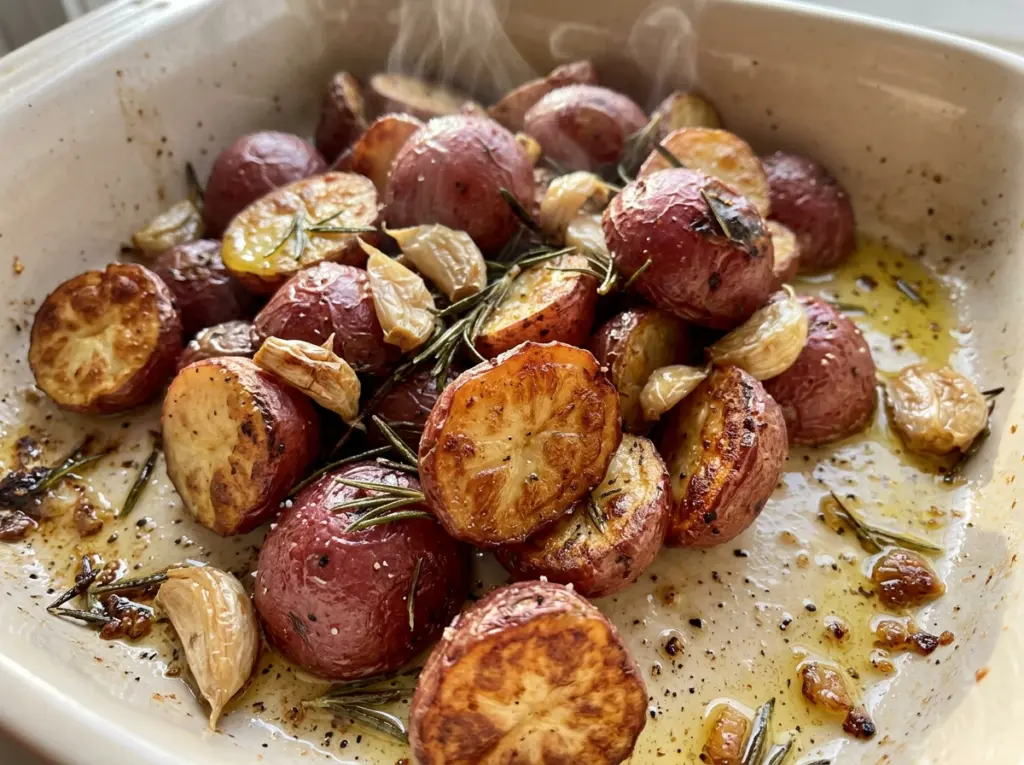
The potatoes are ready for the oven when each piece has a light sheen of olive oil and there’s still room to see the baking sheet between them. That little bit of breathing space matters: red potatoes release moisture as they roast, and crowded pieces soften instead of browning. I keep the cut size even so the centers turn tender at about the same time the edges get golden.
For these roasted red potatoes, I use the straightforward combination of olive oil, kosher salt, and black pepper. Red potatoes hold their shape well, so the finished pieces stay creamy inside instead of crumbling when you turn them. They’re a simple side, but the balance of tender centers and browned edges depends on giving them a proper hot roast.
Kitchen Note
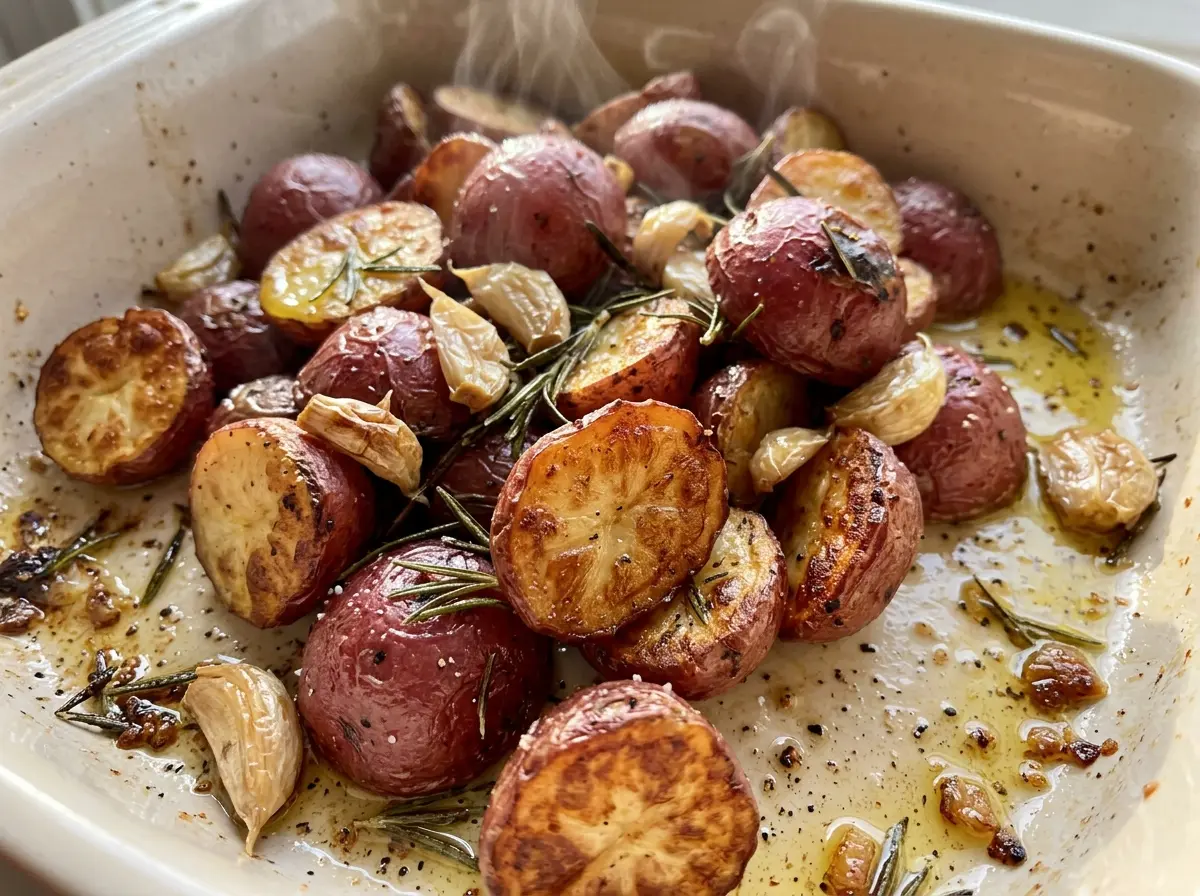
At the halfway turn, flip the pieces rather than just stirring them around. That gives another side a chance to sit against the hot pan and brown.
Save these roasted red potatoes for a side with tender centers, golden edges, and a short, simple ingredient list.
Why a Crowded Pan Turns Red Potatoes Soft Instead of Golden
Roasting browns the potato surfaces when they have direct contact with the hot baking sheet and the moisture coming off them can escape. If the pieces are packed together, that moisture collects in the gaps. The potatoes then steam against one another, which softens them without giving the edges much color. It’s the same reason a pan full of vegetables can come out limp even when the oven is hot.
The 18×13-inch rimmed baking sheet gives six servings room to spread in one layer. A few small gaps between pieces are useful; a heap in the middle is not. If your potatoes don’t fit without overlapping, use a second batch rather than squeezing them together. That keeps the cooking conditions consistent and gives each piece a chance to brown. The oven temperature does its job best when the hot pan, exposed potato surfaces, and escaping steam all have room to work.
What Red Potatoes, Olive Oil, and Seasoning Each Bring
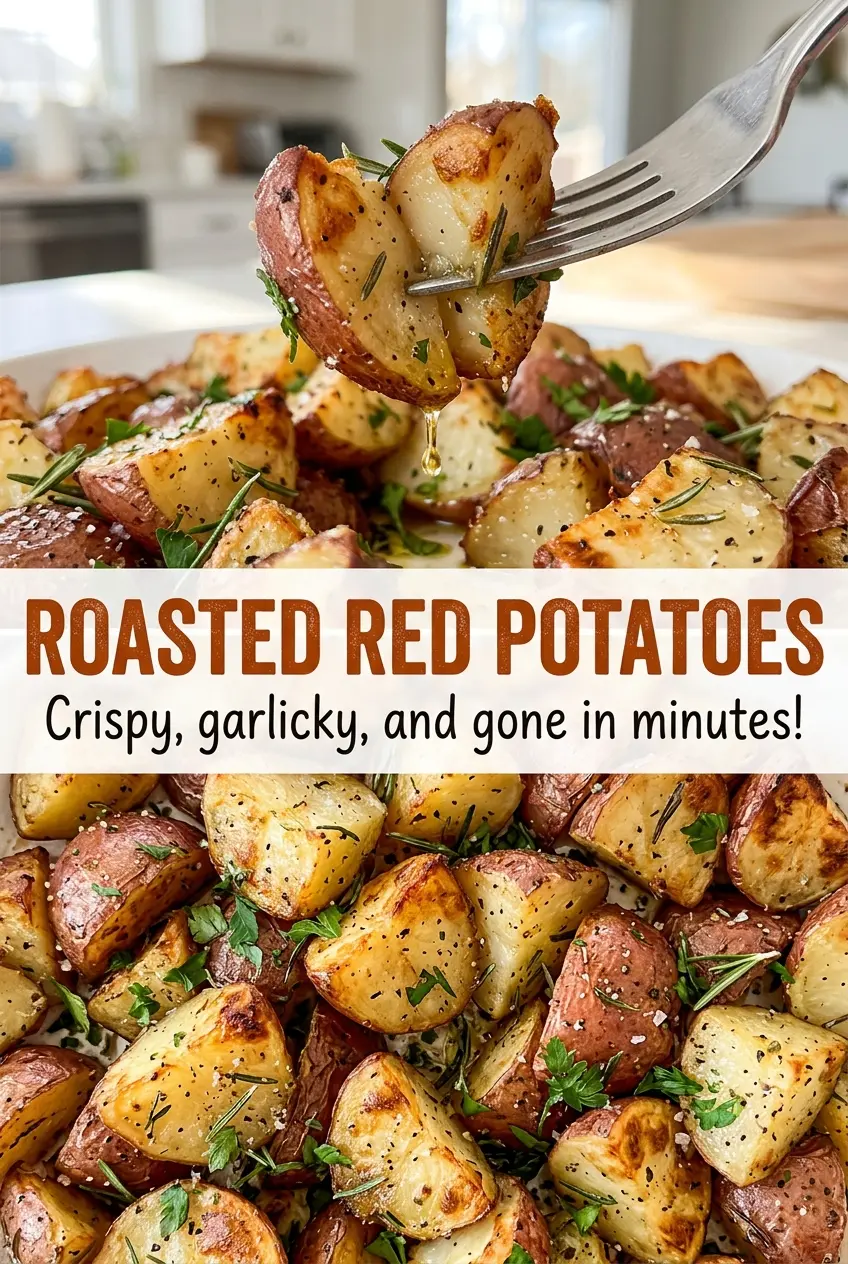
- Red potatoes — Their relatively waxy flesh holds together through roasting, so the pieces stay intact when turned and served. Choose potatoes that feel firm and have smooth, unshrivelled skins. Since the potato is the whole point of this side, fresh, firm ones matter more than finding a particular size; cut them into even pieces for consistent cooking.
- Olive oil — The oil coats the cut surfaces and helps them roast rather than dry out. An everyday olive oil works well here; there’s no need to reach for an expensive bottle because its subtler tasting notes won’t be the main event. Use enough to coat the pieces lightly, not so much that oil pools on the pan.
- Kosher salt — Salt brings out the potatoes’ own flavor and seasons the outside of each piece. Kosher salt is the measure used for this version, and crystal size varies between brands, so stick with the stated type rather than swapping in a different salt measure without adjusting it.
- Black pepper — Pepper gives the simple seasoning a gentle bite. Freshly ground pepper has a more fragrant edge, though the pepper you already have in the pantry is fine for an easy side dish.
Roasting Red Potatoes Until the Centers Turn Tender
Cut the Potatoes to the Same Size
Cut the red potatoes into 1-inch pieces so they roast at a similar pace. Try not to leave a mix of tiny scraps and much larger chunks; the small pieces can brown before the larger ones soften through. Keep the pieces in a bowl or on the baking sheet as you finish cutting, ready for the oil and seasoning.
Heat the Oven and Set the Rack
Heat the oven to 425°F with a rack in the center. Give the oven time to reach temperature before the potatoes go in, since a properly heated oven gets the roast started right away. The center position gives the baking sheet steady heat during the full cooking time.
Coat and Spread the Pieces
Toss the potatoes on the 18×13-inch rimmed baking sheet with the olive oil, kosher salt, and black pepper. Turn the pieces until the oil and seasoning are distributed across them instead of collecting in a few spots. Spread everything into one layer with a little space between pieces. If they’re piled together, the result will be softer and paler in the crowded spots.
Roast, Turn, and Check
Roast for 35 to 45 minutes, turning the potatoes halfway through. The edges should look browned, and the pieces should feel tender when pierced with a fork. Start checking near the shorter end of the time range, since individual ovens and potato pieces can vary. If the centers still resist the fork, give them more time and check again before pulling the pan out.
How to Scale the Same Pan of Potatoes Up or Down
A Half Batch for a Smaller Table
For three servings, halve each ingredient and keep the pieces at the same size. Use the same oven temperature, center rack, and turning point; begin checking for browned edges and fork tenderness within the usual roasting window. The smaller amount will still benefit from being spread out rather than gathered in one spot.
A Larger Batch Without a Crowded Tray
For more servings, double the ingredients and roast in separate batches on the same 18×13-inch sheet pan instead of piling extra potatoes onto one tray. Run each batch through the same oven and halfway-turn routine. It takes longer overall, but the potatoes brown more reliably than they do when crowded.
Storage and Reheating
- Refrigerator: Refrigerate leftovers within 2 hours and keep them covered for 3 to 4 days. The browned edges soften as the potatoes chill.
- Freezer: Freezing isn’t recommended; thawed roasted potatoes tend to lose their crisp edges and turn softer in texture.
- Reheating: Spread leftovers on a baking sheet and warm them in a 425°F oven until hot throughout and crisp at the edges. Check that they reach 165°F; reheating them in a covered container traps steam and leaves them soft.
Questions That Come Up While Roasting Red Potatoes
Roasted Red Potatoes
Ingredients
Equipment
Method
- Heat the oven to 425°F and arrange a rack in the center.
- Toss the potatoes with the olive oil, salt, and pepper on an 18x13-inch rimmed baking sheet.
- Spread the potatoes in a single layer.
- Roast for 35 to 45 minutes, turning the potatoes halfway through, until browned and tender when pierced with a fork.


