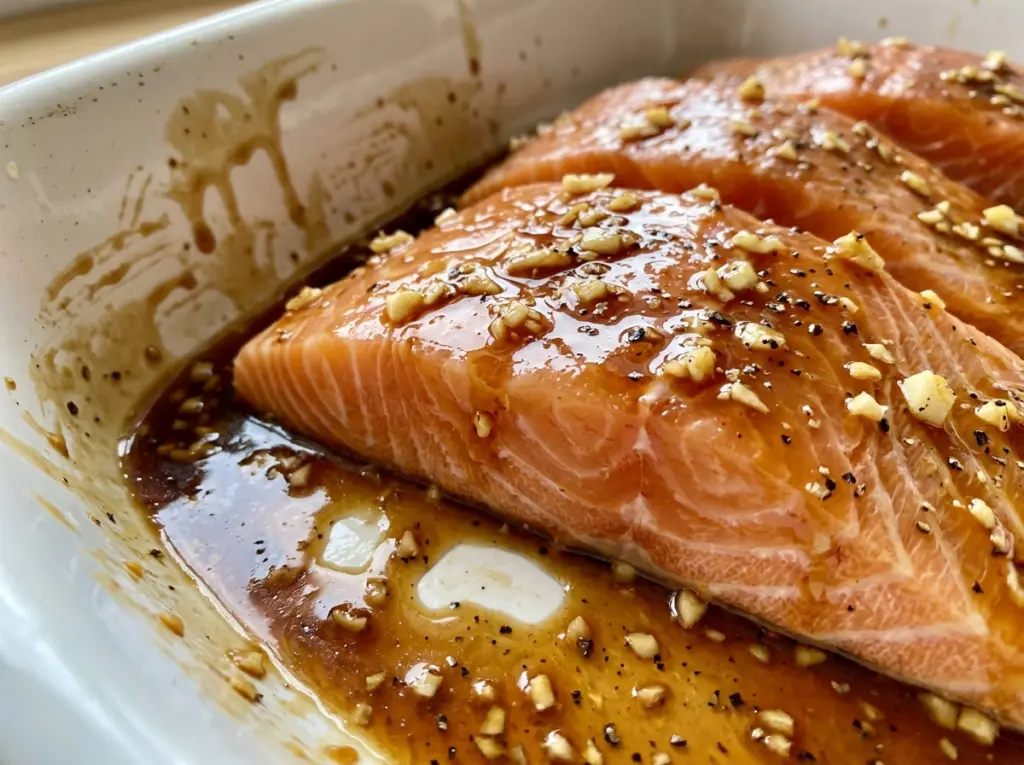
The marinade looks modest in the bowl, but once it’s whisked together, it coats four salmon portions with a glossy layer that carries straight into the oven. I make this Salmon Marinade when I want a quick, savory-sweet finish without a separate sauce to cook on the stove. The lemon keeps the soy sauce from tasting heavy, and a little honey rounds everything out.
What I like about this version is that the fish stays the focus. The marinade adds a bright, garlicky edge, while the salmon’s center stays tender when you pull it at the right moment. It’s a short, hands-off bake, and the portions go from their dish to a lined pan without any fussy steps. The finished salmon has a lightly glossy surface and flakes cleanly with a fork.
Kitchen Note
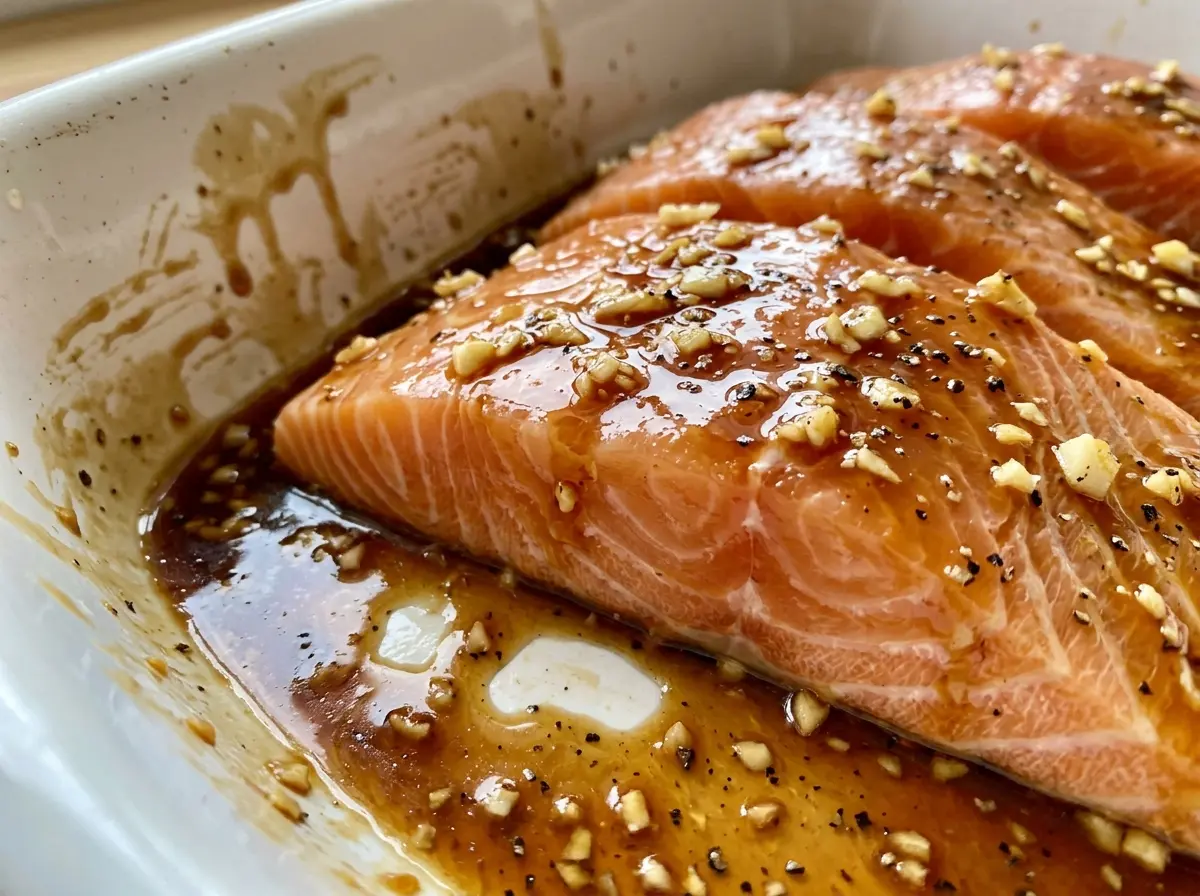
I mince the garlic finely so it spreads through the marinade instead of clumping on one portion. Set out the lined baking sheet before you start moving the fish, and the transfer is quick and tidy.
Save this Salmon Marinade for a simple oven-baked dinner with a savory-sweet glaze and tender, flaky salmon.
Why a Longer Salmon Soak Can Make the Outside Worse
Marinating salmon isn’t like marinating a thick roast, where extra time gives seasoning a chance to travel farther inward. These portions are relatively delicate, and the lemon juice starts changing the texture at the surface. Leave the fish in the mixture too long and the outside can turn soft while the center still tastes only lightly seasoned.
The goal here is a flavorful coating, not a marinade that penetrates all the way through. Soy sauce brings salt and savory depth to the surface; honey balances that salt, and Dijon helps the oil and lemon stay blended while you whisk. Give the mixture enough contact with the fish to coat it, then let the oven finish the job. A stronger flavor doesn’t come from leaving salmon in an acidic marinade indefinitely.
Why Soy, Lemon, and Honey Need Each Other Here

- Soy sauce — It gives the marinade its salty, savory backbone. Gluten-free tamari works in its place in the same quantity; the flavor stays full, though tamari can taste a little less sharp.
- Olive oil — Oil helps the liquid cling to the fish and keeps the coating from tasting one-note. Avocado oil is a good neutral swap if that’s what you have, though it won’t add olive oil’s faint fruitiness.
- Lemon juice — Fresh lemon has a brighter aroma, but bottled lemon juice works when that’s what’s in the fridge. Lime juice can replace it for a slightly rounder, less classic citrus note.
- Honey — Honey softens the salty and tart notes and helps the surface turn glossy as it bakes. Pure maple syrup swaps in measure for measure, bringing a more woodsy sweetness and a slightly different finish.
- Dijon mustard — Dijon contributes a gentle tang and helps the oil and watery ingredients combine while you whisk. Whole-grain mustard is a workable swap, but its seeds leave a more noticeable texture in the coating.
- Garlic — Freshly minced cloves give the marinade a clean, pungent note. Jarred minced garlic works in a pinch, but its flavor is usually softer and less lively.
- Salmon — Choose portions with similar thickness so they finish at roughly the same pace. Fresh or previously frozen salmon both work; the useful quality cue is flesh that looks moist and has no strong fishy odor.
From a Quick Whisk to a Just-Flaked Center
Whisk Until the Marinade Looks Even
Whisk the soy sauce, olive oil, lemon juice, honey, Dijon mustard, minced garlic, and black pepper together in a small bowl. Keep whisking until the honey is no longer sitting in a sticky layer at the bottom and the mustard is evenly dispersed. A few tiny beads of oil are fine; you’re looking for a blended mixture rather than a perfectly thick emulsion. If the honey has settled while you work, give the bowl another quick whisk before pouring.
Coat the Portions and Keep the Marinating Brief
Set the four salmon portions in a shallow dish or resealable bag, then pour the marinade over them. Refrigerate the fish for 15 to 30 minutes; this gives the coating time to season the surface without leaving the lemon against the salmon for too long. Keep the fish refrigerated during this step rather than leaving it on the counter. When the marinating time is up, heat the oven to 400°F and line a rimmed baking sheet with foil or parchment paper.
Bake Until the Thickest Part Reaches the Target
Transfer the salmon to the prepared baking sheet, placing it skin-side down if the portions have skin. Discard the used marinade rather than spooning it over the cooked fish. Bake for 12 to 15 minutes, checking the thickest portion rather than judging by the thinnest edge. The salmon is ready when the thickest part reaches 145°F and the flesh flakes easily with a fork; the center should look opaque, not glassy.
Easy Swaps That Keep the Marinade in Balance
Make It Gluten-Free with Tamari
Replace the soy sauce with gluten-free tamari in the same quantity. It keeps the marinade savory and balanced, with a slightly rounder taste than standard soy sauce.
Use Maple Syrup for a Deeper Sweetness
Swap pure maple syrup for the honey in the same quantity. The salmon keeps its sweet-savory balance, but the maple brings a warmer, woodsy note instead of honey’s floral edge.
Trade the Lemon for Lime
Use lime juice in place of the lemon juice to shift the citrus note toward something rounder and less familiar. Keep the rest of the marinade unchanged so the soy, sweetener, and mustard remain in balance.
Storage and Reheating
- Refrigerator: Refrigerate cooked salmon within 2 hours and use it within 3 to 4 days. The texture becomes firmer and less silky as it chills.
- Freezer: Cooked salmon freezes well for about 2 to 3 months. Wrap each cooled portion tightly and place it in an airtight freezer container to limit freezer burn.
- Reheating: Warm covered in a 275°F oven until the center reaches 165°F. Gentle heat helps, but reheating too long will dry the fish; avoid using high heat to rush it.
The Salmon Marinade Questions That Come Up at the Oven
Salmon Marinade
Ingredients
Equipment
Method
- Whisk the soy sauce, olive oil, lemon juice, honey, Dijon mustard, garlic, and black pepper in a small bowl.
- Place the salmon in a shallow dish or resealable bag.
- Pour the marinade over the salmon and refrigerate for 15 to 30 minutes.
- Heat the oven to 400°F.
- Line a rimmed baking sheet with foil or parchment paper.
- Transfer the salmon to the prepared baking sheet, skin-side down if it has skin.
- Discard the used marinade.
- Bake for 12 to 15 minutes, until the thickest part reaches 145°F and flakes easily with a fork.