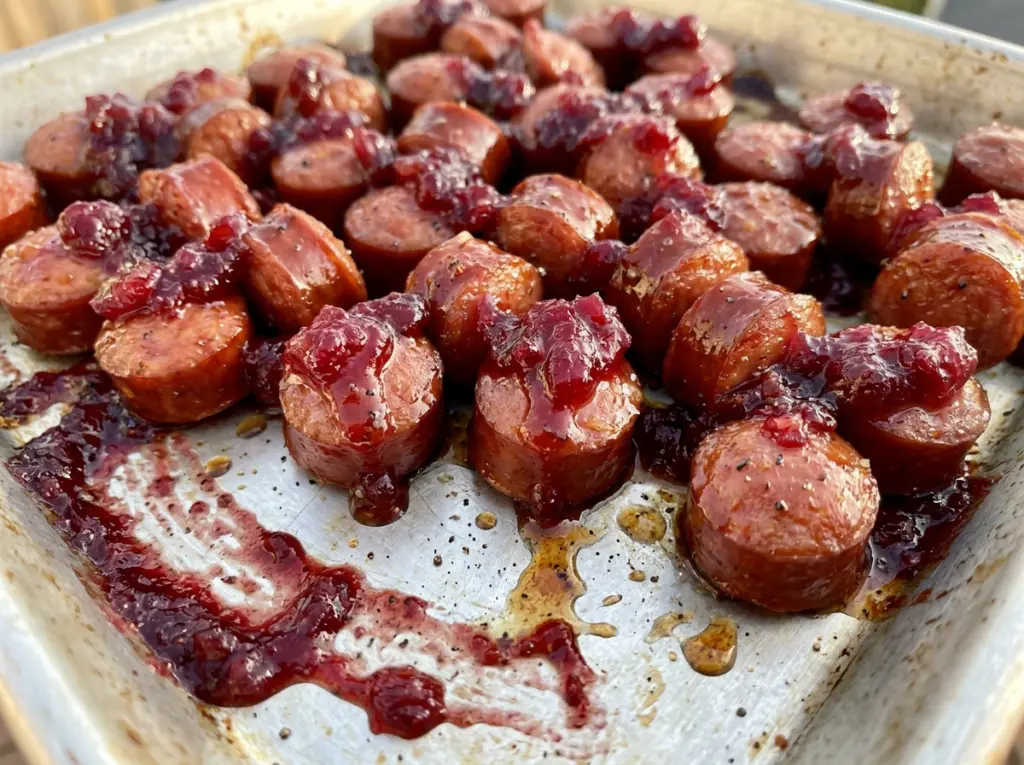
The sausage rounds come out of their first roast with browned edges, but the cranberry glaze still looks loose in the bowl. That’s exactly how I want them at this point. The sausage needs a little time on the hot pan before it gets coated, or the glaze can soften the surfaces instead of turning sticky. These sheet pan smoked sausage cranberry bites are a warm, tangy-sweet appetizer with very little hands-on work.
I use whole-berry cranberry sauce for a glaze with some texture, then stir in Dijon mustard and apple cider vinegar to keep the sweetness from taking over. The sausage roasts on its own first, and the glazed bites go back into the oven briefly to finish. The result is a glossy coating that clings to the rounds rather than pooling underneath them, with savory browned sausage in every bite.
Kitchen Note
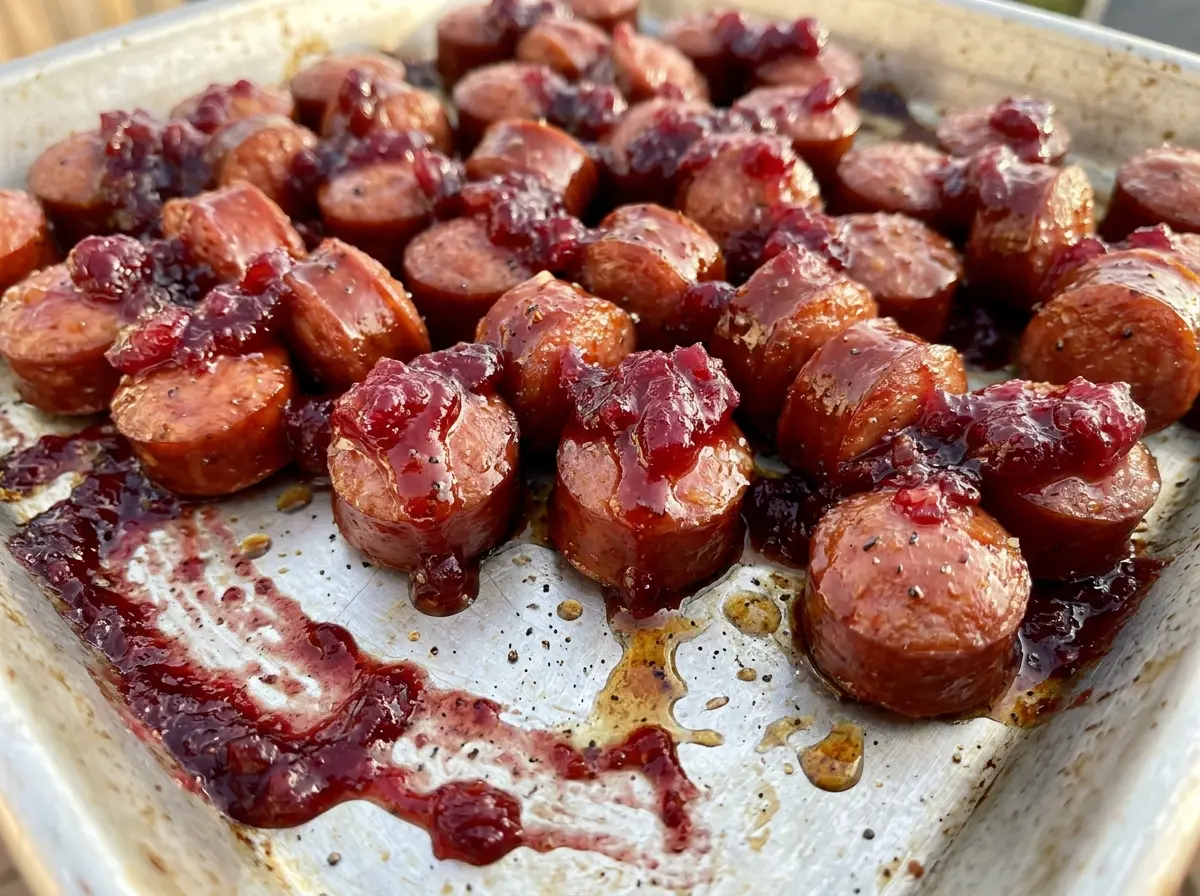
Let the bites rest right on the baking sheet for the full five minutes before serving. The glaze settles onto the sausage as it cools slightly, so moving them straight from the oven can leave more of it on the pan than on the bites.
Save these sheet pan smoked sausage cranberry bites for a party spread or an easy warm appetizer with a tangy, sticky cranberry glaze.
Why the Cranberry Glaze Goes on After the Sausage Browns
It’s easy to think the glaze should coat the sausage from the start, but the two-stage bake gives you a better finish. Smoked sausage already has plenty of flavor; that first stretch in the oven gives the cut sides time to brown without a wet coating sitting between the meat and the hot pan. You’ll see the rounds deepen in color around the edges, which gives the finished bites a more savory, roasted taste.
The cranberry sauce goes on only after that browning happens. Its sugars can turn sticky in the oven, but a longer bake can take the glaze from glossy to scorched, especially around the edges of the pan. A short second bake is enough to thicken the coating around the sausage. Toss the rounds while they’re hot so the glaze spreads over their surfaces, then return them in one layer so the sticky finish develops evenly instead of collecting in a puddle.
This order also makes the texture easier to judge. Before the glaze goes on, you’re looking for browned sausage; afterward, you’re looking for a tacky coating. Each stage has one clear job, and neither has to compete with the other.
What Whole-Berry Cranberry Sauce Brings to the Glaze

- Fully cooked smoked sausage — This is the right starting point for the short roast: the oven warms it through and browns the cut surfaces rather than cooking raw meat from scratch. Cut the rounds evenly so they brown at about the same pace. A fully cooked smoked turkey sausage works as a leaner swap, though it may brown less deeply than pork sausage.
- Whole-berry cranberry sauce — The berries give the glaze little pockets of fruit and a thicker, more rustic texture. A store-brand can works well here; the mustard and vinegar bring plenty of character, so there’s no need to seek out a specialty sauce. Smooth cranberry sauce can replace it for an even coating, but you’ll lose the berry pieces.
- Dijon mustard — Dijon contributes a sharp, savory edge that keeps the cranberry from tasting one-note sweet. Any standard Dijon is fine; a grainy style changes the glaze’s texture but still coats the sausage. Yellow mustard can stand in, though the flavor will be milder and less sharp.
- Apple cider vinegar — A small splash brightens the fruit and cuts through the richness of the sausage. If you’re out, use the same amount of white wine vinegar; it brings a similar clean acidity. Measure it carefully, since too much vinegar can make the glaze taste harsh.
Roast, Coat, and Finish the Bites Without Losing the Glaze
Brown the Sausage on a Roomy Pan
Heat the oven to 425°F and line an 18×13-inch rimmed baking sheet with parchment paper. Arrange the 1/2-inch sausage rounds in a single layer, leaving a little breathing room so the cut sides roast rather than steam. Bake for 10–12 minutes, turning the rounds once halfway through. They’re ready for the glaze when they’re browned and heated to 165°F.
Loosen the Cranberry Mixture While the Sausage Roasts
Stir the whole-berry cranberry sauce, Dijon mustard, and apple cider vinegar together in a microwave-safe bowl. Microwave for 30–45 seconds, then stir until the mixture loosens and looks easy to toss with the sausage. The berries will remain visible; the goal isn’t to make a perfectly smooth sauce. If you skip the stir after microwaving, thicker portions can stay unevenly warmed.
Toss While Hot, Then Give the Glaze a Short Bake
Transfer the hot sausage rounds into the glaze and toss until they’re coated. Return them to the parchment-lined sheet pan in a single layer, spreading out any rounds that have stuck together. Bake for 5–7 minutes, watching for the glaze to look shiny and sticky rather than wet. If the rounds are piled up, the sauce can gather between them instead of setting over each piece.
Rest on the Pan Before Serving
Take the pan from the oven and leave the bites in place for five minutes. The glaze will be hot and loose immediately after baking, so give it a little time to settle on the sausage. Serve the bites warm while the coating is glossy and the centers are still tender.
Easy Swaps for a Different Sausage Bite
Use Smoked Turkey Sausage for a Leaner Bite
Swap in fully cooked smoked turkey sausage and cut it into the same-size rounds. The cranberry glaze still works well, while the sausage itself tastes a little lighter and may not develop quite as much browning as pork sausage.
Bring More Heat with Spicy Smoked Sausage
Choose a fully cooked spicy smoked sausage in place of the standard smoked sausage. The cranberry glaze will soften the heat with its sweet-tart flavor, giving each bite more contrast without changing the method.
Choose Smooth Cranberry Sauce for an Even Coating
Use smooth cranberry sauce in place of whole-berry sauce if you prefer a uniform glaze without fruit pieces. The coating will look more polished, but it won’t have the same bursts of cranberry throughout.
Storage and Reheating
- Refrigerator: Store leftovers in a covered container within two hours and use within 3–4 days. The chilled glaze firms up and won’t be as glossy.
- Freezer: Freeze in an airtight container for up to two months. Thaw overnight in the refrigerator; the sausage may be softer and the glaze less shiny after freezing.
- Reheating: Warm the bites in a 350°F oven until hot throughout. Avoid leaving them in the oven longer than needed, since the cranberry coating can darken and turn sticky at the edges.
Questions That Come Up When Making These Cranberry Sausage Bites
Sheet Pan Smoked Sausage Cranberry Bites
Ingredients
Equipment
Method
- Heat the oven to 425°F.
- Line an 18x13-inch rimmed baking sheet with parchment paper.
- Arrange the sausage rounds in a single layer.
- Bake for 10–12 minutes, turning once halfway through, until browned and heated to 165°F.
- While the sausage bakes, stir together the cranberry sauce, Dijon mustard, and vinegar in a microwave-safe bowl.
- Microwave for 30–45 seconds.
- Stir until loosened.
- Toss the hot sausage with the glaze.
- Return it to the baking sheet in a single layer.
- Bake for 5–7 minutes, until the glaze is sticky.
- Let the bites rest on the pan for 5 minutes.
- Serve warm.


