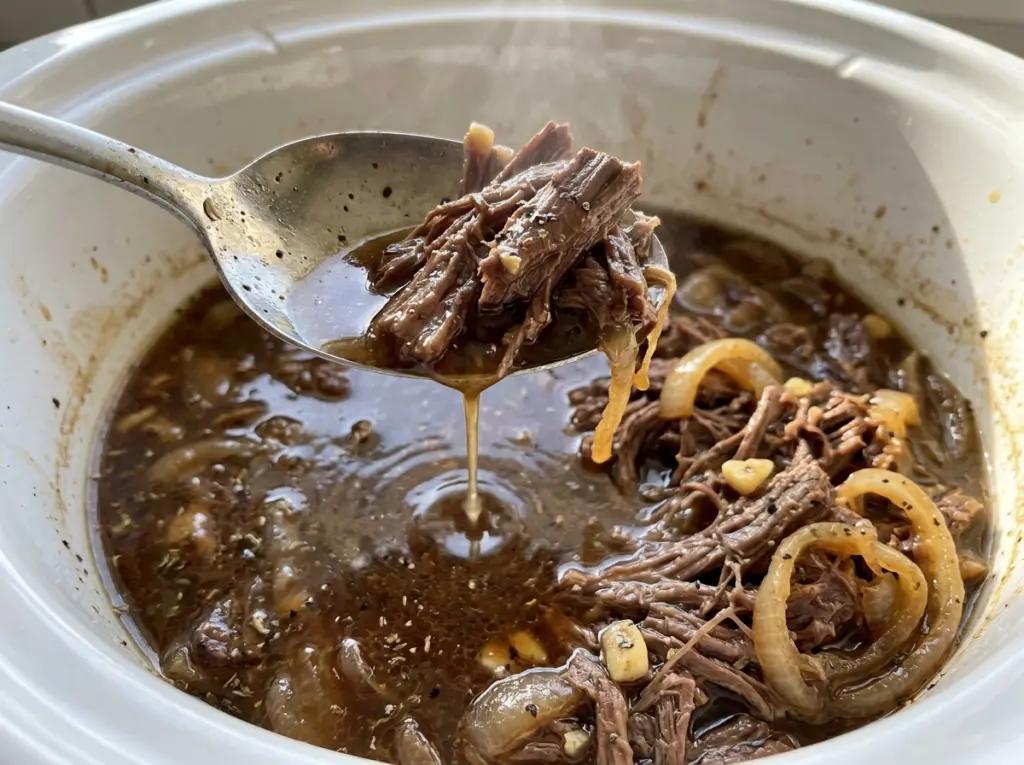
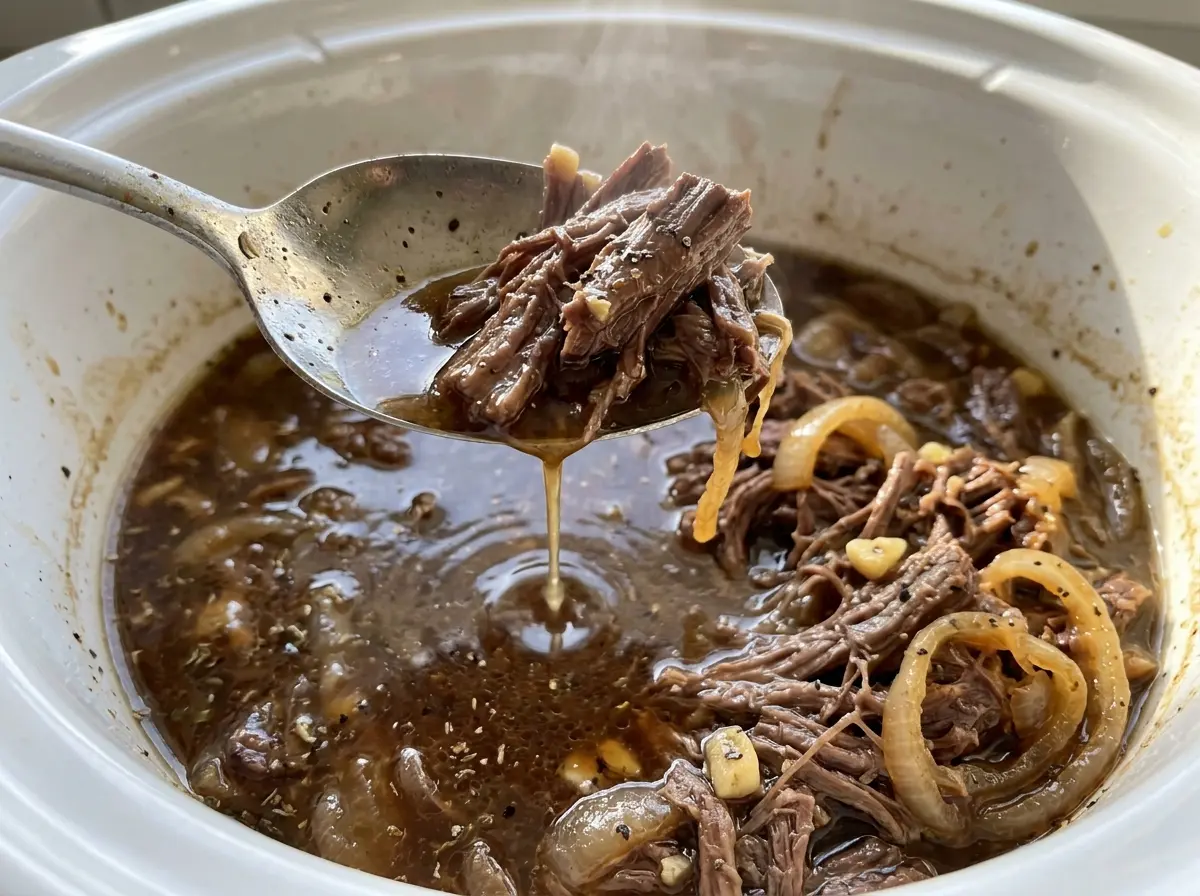
The lid comes off and the chuck roast is tender enough to pull apart with a fork, while the broth underneath smells deeply savory. That’s the moment these slow cooker French dip sandwiches start to feel like more than beef on a roll: the cooking liquid becomes a dip that gives every bite a little extra richness.
I brown the roast before it goes into the slow cooker, then let the onion, garlic, thyme, and beef broth do their work while the meat cooks until fork-tender. The extra skillet step gives the beef a browned exterior that you won’t get by putting the roast straight into the cooker.
At the end, the shredded beef goes onto split hoagie rolls with provolone, then under the broiler just long enough to melt the cheese and toast the edges. Set out the cooking liquid for dipping, and you’ve got eight hot, cheesy sandwiches with tender beef and plenty of savory broth.
Kitchen Note
Pat the chuck roast dry before seasoning it. A damp surface steams in the skillet instead of browning well, and that crust is worth taking a moment for before the slow cooking begins.
Save these slow cooker French dip sandwiches for tender shredded beef, melted provolone, and a savory broth made for dipping.
Why the Cooking Liquid Belongs Beside the Sandwich, Not on the Roll
It’s easy to think of the broth as something to pour over the beef, but these sandwiches are better when the cooking liquid stays on the side. The hoagie roll gets topped with shredded beef and provolone, then toasted under the broiler. Keeping the liquid separate means the bread starts out toasted rather than already soaked through.
Dip each bite as you eat it. The beef brings plenty of the slow-cooked flavor to the sandwich, and a quick dip adds more savory broth without turning the roll soft before it reaches the table. That small distinction matters with a sandwich you want to hold in your hands: you get tender beef, melted cheese, and a roll that still has some structure.
The liquid is built in the same cooker as the roast, so it carries the savory flavor of the beef along with the onion, garlic, Worcestershire, and thyme. Once you skim excess fat, serve it alongside the sandwiches for dipping rather than pouring it over the finished rolls.
How the Beef, Broth, and Roll Each Shape a Better French Dip

- Chuck roast — This cut turns tender enough to shred after a long, moist cook. Look for a roast with some marbling; the least expensive chuck roast is fine, but avoid trimming away all the fat before cooking because it helps keep the beef moist. Pat the surface dry before it hits the skillet so it can brown instead of steaming.
- Beef broth and Worcestershire sauce — Beef broth gives the cooking liquid its base, while Worcestershire adds a tangy, savory note that plain broth won’t quite match. A standard store-brand beef broth works well here. If you’re out of broth, prepare beef bouillon to make the same volume, following the package directions; for the Worcestershire, soy sauce can stand in one-for-one, though it gives the liquid a saltier taste and less tang.
- Onion, garlic, thyme, and bay leaf — These aromatics slowly season the broth without needing extra steps or a separate sauce. Fresh onion and garlic are worth using because they cook right alongside the roast; mince the garlic so it disperses through the liquid. Dried thyme is convenient for the long cook, and the bay leaf adds a subtle background note that fresh herbs won’t reproduce in quite the same way.
- Hoagie rolls and provolone — Choose rolls sturdy enough to hold shredded beef and survive a dip. Standard supermarket rolls work; a very soft roll is more likely to lose its structure. Provolone melts smoothly without overpowering the beef, and pre-sliced cheese is an easy choice for even coverage.
From a Browned Roast to Broiled, Cheesy Hoagies
Brown the Chuck Roast
Heat the vegetable oil in a 12-inch skillet over medium-high heat, then pat the roast dry and season it with kosher salt and black pepper. Sear for 3 to 4 minutes per side, until the outside is well browned. Don’t rush to turn it while the surface is still pale; give each side time to develop color. The skillet browning adds a savory layer before the roast goes into the slow cooker.
Layer the Aromatics and Slow-Cook
Add the sliced onion and minced garlic to a 6-quart slow cooker, then set the roast on top. Pour in the beef broth and Worcestershire sauce, and add the dried thyme and bay leaf. Cover and cook on LOW for 8 to 9 hours or HIGH for 4 to 5 hours, until the beef is fork-tender. If a fork still meets resistance, the roast needs more cooking time to reach the shreddable texture you want.
Skim the Liquid and Shred the Beef
Take out the bay leaf before shredding so it doesn’t get lost among the meat. Skim excess fat from the cooking liquid, then shred the roast. Fork-tender beef should pull apart easily into strands; if it’s fighting you, don’t force it into pieces. Keep the shredded beef with the cooking liquid while you get the rolls ready.
Broil the Rolls Just Until the Cheese Melts
Heat the oven broiler and arrange the split hoagie rolls cut side up on a baking sheet. Divide the beef among the rolls and top each with a slice of provolone. Broil for 1 to 2 minutes, watching closely, until the cheese is melted and the edges of the rolls are lightly toasted. Serve the sandwiches with the cooking liquid for dipping.
Easy Swaps for Different Rolls and Cheese
Use Swiss Instead of Provolone
Replace each slice of provolone with a slice of Swiss. It still melts over the beef, but brings a nuttier, more noticeable cheese flavor that stands up to the savory broth.
Make the Sandwiches Gluten-Free
Swap the hoagie rolls for sturdy gluten-free hoagie rolls and use the same assembly and broiling method. Gluten-free rolls vary in softness, so a firmer style will hold the beef and dipping liquid better than a delicate one.
Storage and Reheating
- Refrigerator: Store leftover beef and cooking liquid together in an airtight container for 3 to 4 days. Keep the rolls separate; assembled sandwiches soften as they sit.
- Freezer: The shredded beef and cooking liquid freeze well. Freeze them together in an airtight, freezer-safe container for up to 3 months, then thaw in the refrigerator before reheating.
- Reheating: Warm the beef and liquid together in a saucepan over medium-low heat until the beef reaches 165°F, then build fresh sandwiches. Reheating assembled rolls in the liquid makes the bread soggy.
Questions That Come Up When Making French Dip Sandwiches
Slow Cooker French Dip Sandwiches
Ingredients
Equipment
Method
- Heat the vegetable oil in a 12-inch skillet over medium-high heat.
- Pat the chuck roast dry and season it with the kosher salt and black pepper.
- Sear the roast for 3 to 4 minutes per side, until well browned.
- Add the yellow onion and garlic to a 6-quart slow cooker.
- Place the roast on top and pour in the beef broth and Worcestershire sauce.
- Add the dried thyme and bay leaf.
- Cover and cook on LOW for 8 to 9 hours or HIGH for 4 to 5 hours, until the beef is fork-tender.
- Remove the bay leaf and skim excess fat from the cooking liquid.
- Shred the beef.
- Heat the oven broiler and arrange the split hoagie rolls cut side up on a baking sheet.
- Divide the beef among the rolls and top each with a slice of provolone cheese.
- Broil for 1 to 2 minutes, watching closely, until the cheese is melted and the edges of the rolls are lightly toasted.
- Serve with the cooking liquid for dipping.


