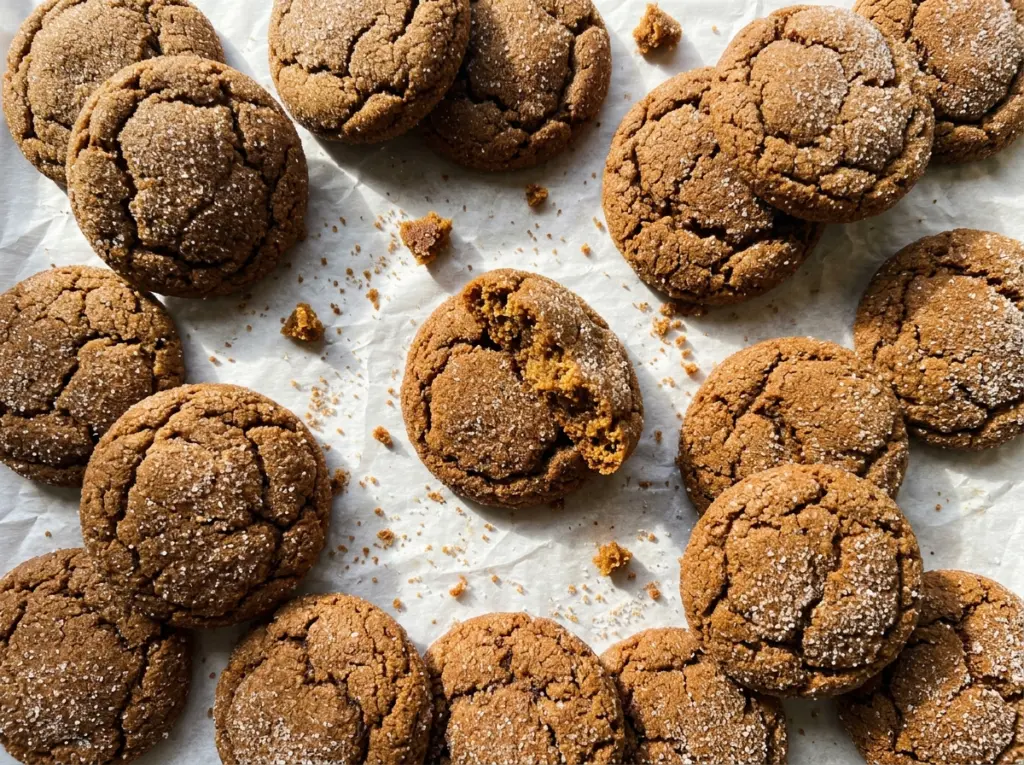
The first thing you notice is the smell: ginger and cinnamon warming up as the cookies puff in the oven. Then the tops split into little cracks, while the edges look set and the centers still seem soft. That’s the moment I look for with these soft and chewy molasses cookies; waiting for the centers to look firm can take them past chewy and into dry.
Unsulphured molasses gives the dough its deep, bittersweet flavor, and the short chill makes it easier to portion and roll without a sticky mess. Each ball gets a quick turn in granulated sugar before baking, so the finished cookies have a lightly crisp, sparkling outside around a tender middle. They’re full of warm spice, but the molasses still gets to lead.
Kitchen Note
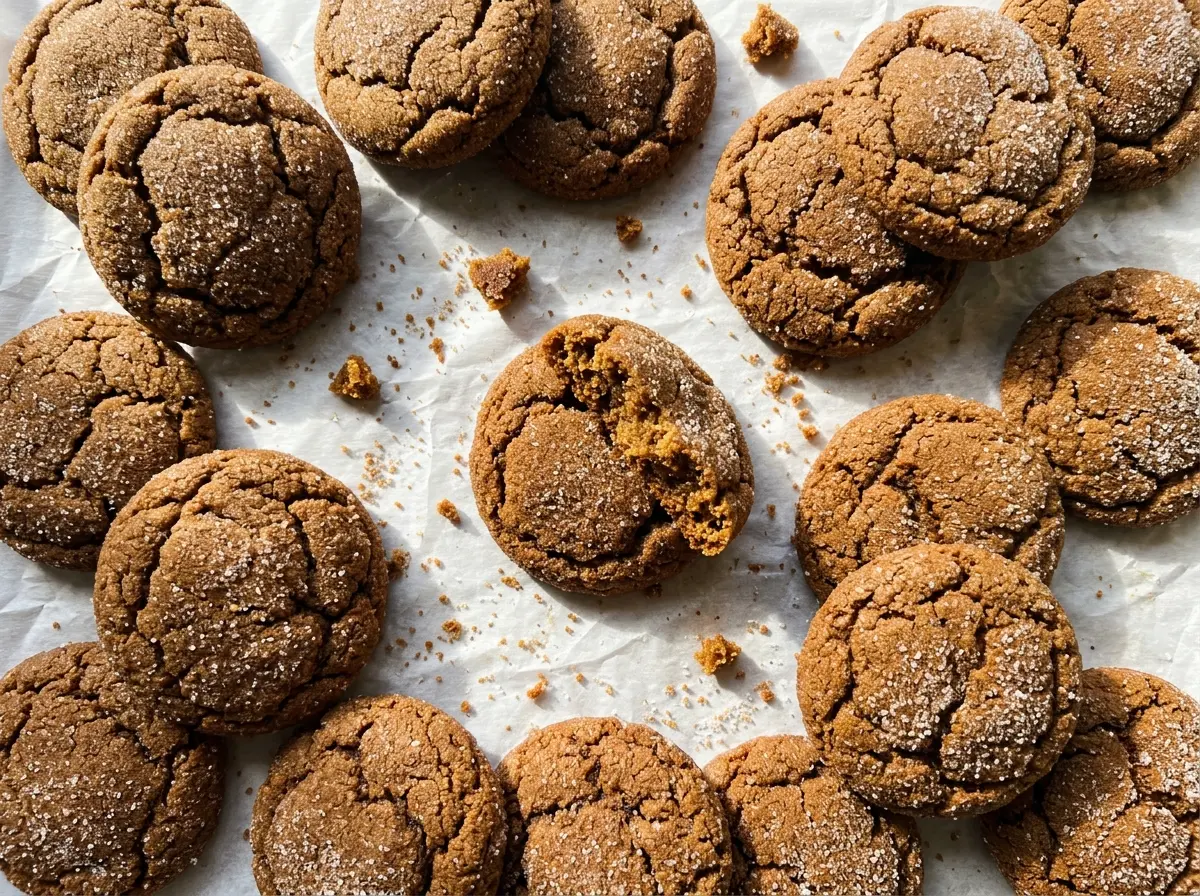
Give the cookies five minutes on the baking sheets before moving them. They’re delicate while hot, and that short rest lets them firm up enough to transfer without breaking.
Save these soft and chewy molasses cookies for a batch with crackled tops, tender centers, and a sugar-coated edge.
Those Crackled Tops Are a Cue to Stop Baking, Not Keep Going
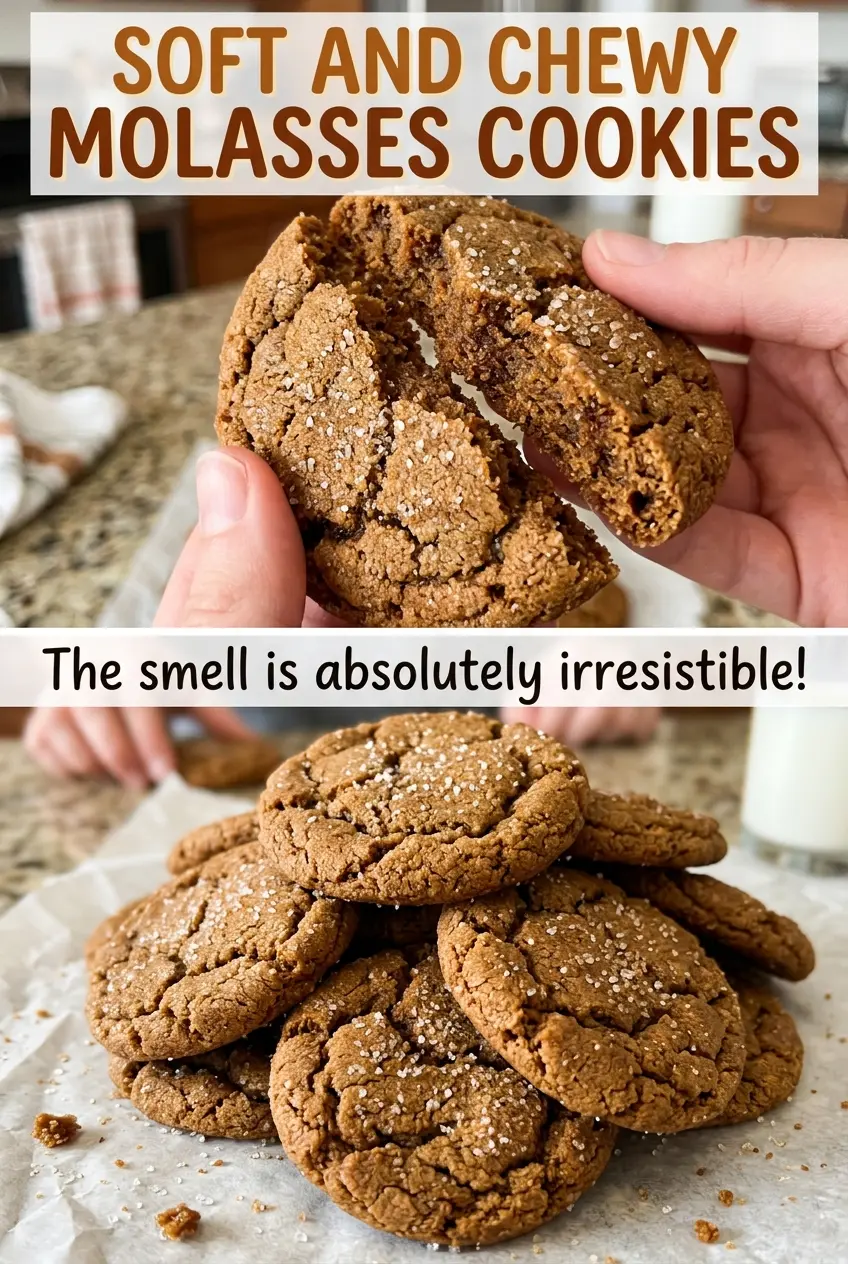
Molasses cookies can look unfinished right when they’re ready to come out. The edges should be set, but the centers will still be soft; the cookies continue to settle as they cool. If you wait for the middle to feel firm in the oven, you’ll lose some of the chew that makes this batch worth baking.
Look for cookies that have puffed and developed visible cracks across the top. That combination of a set edge and a soft center is more useful than judging by color alone, since molasses gives the dough a dark color before the cookies are baked through. The crackled surface is part of the finished cookie, not a sign that it has dried out.
There’s a balance in the dough, too: the molasses brings moisture and a strong, earthy sweetness, while ginger, cinnamon, and cloves keep each bite warmly spiced. The coating of granulated sugar adds a fine outer crunch without covering up that molasses flavor. Let the visual cues guide you, and pull the sheets when the edges have set and the centers remain soft.
Why Unsulphured Molasses and Divided Sugar Matter Here
- Unsulphured molasses — It brings the signature deep flavor and soft texture. A standard grocery-store unsulphured molasses is right for this dough; blackstrap is much more intense and bitter, so it isn’t a straight swap.
- Granulated sugar — The larger portion creams with the butter, while the reserved portion coats the dough balls. Keep those jobs separate: sugar worked into the dough helps build its base, and the outside coating gives the cookies their delicate crunch.
- Softened unsalted butter — Butter needs to be soft enough to cream smoothly with the sugar, not melted or greasy. Ordinary grocery-store butter works well; unsalted lets the measured salt stay in balance.
- Ground ginger, cinnamon, and cloves — Together they make the spice taste rounded rather than one-note. Fresh, fragrant spices give the best aroma, though spices already in your pantry are fine if they still smell lively when you open the jars.
- All-purpose flour and baking soda — These give the dough structure and lift. Spoon flour into its measuring cup and level it rather than packing it down; too much flour can leave the cookies dry and thick. Baking soda is the leavener here, so baking powder isn’t a direct replacement.
- Egg — The egg binds the dough and helps it hold together after mixing. Use a large egg, as listed, so the dough’s moisture stays in proportion to the flour.
From Creaming to Crackled Tops: The Stages That Matter
Cream the Butter and Build the Molasses Base
Heat the oven to 350°F and line two baking sheets with parchment. Beat the softened butter with the larger portion of sugar until creamy, about 2 minutes; scrape the bowl if butter is clinging to the sides. Beat in the egg and molasses until the mixture looks evenly combined. If streaks of molasses remain, keep mixing briefly before adding the dry ingredients.
Mix the Dry Ingredients Without Overworking the Dough
In a separate bowl, whisk together the flour, baking soda, ginger, cinnamon, cloves, and salt so the leavener and spices are distributed. Add this mixture to the butter mixture and mix on low just until no dry streaks remain. Stop as soon as the flour disappears; mixing longer can make the cookies tougher. Cover the bowl and chill the dough for 30 minutes.
Portion, Roll, and Coat
Put the reserved sugar in a small bowl. Scoop the chilled dough into 1-tablespoon portions, roll each one into a ball, then roll the ball in sugar until coated. If the dough softens while you work, pause briefly so the next portions are easier to handle. Arrange the balls about 2 inches apart on the prepared baking sheets to leave room for them to spread.
Bake Until the Edges Set
Bake for 10 to 12 minutes, swapping the sheets’ positions halfway through so both pans bake evenly. The cookies should be puffed and crackled, with set edges and soft centers. Don’t wait for the centers to look dry; they’ll continue to firm as they cool. Let the cookies rest on the sheets before transferring them to a wire rack to cool completely.
Small Changes for a Different Molasses Cookie
Skip the Sparkling Sugar Coat
Leave the dough balls uncoated if you’d rather have a less sweet, softer exterior. The cookies will miss the thin sugary crunch, but the molasses and spices will still come through clearly.
Make the Spice More Ginger-Forward
For a sharper ginger bite, shift a little of the cinnamon toward ginger while keeping the same total amount of ground spices. The cookies taste warmer and less cinnamon-led, with no change to the mixing or baking method.
Chill the Dough Ahead
You can cover the dough and chill it overnight when you want to split the work across two days. It will be firmer the next day, so let it sit just until you can scoop and roll the portions without forcing the dough.
Storage and Reheating
- Room temperature: Keep completely cooled cookies in an airtight container for up to 5 days. The sugar coating softens a little as they sit, but the centers stay chewy.
- Freezer: Freeze baked, cooled cookies in an airtight freezer-safe container for up to 3 months, with parchment between layers if needed. Thaw at room temperature before serving.
- Reheating: These cookies are good at room temperature; for a warm cookie, microwave one briefly, about 5 to 8 seconds. Longer heating can make the center hot and the edges tough.
Questions That Come Up While Baking Molasses Cookies
Soft and Chewy Molasses Cookies
Ingredients
Equipment
Method
- Heat the oven to 350°F and line two baking sheets with parchment paper.
- In a large bowl, beat the softened butter and 1 cup of the granulated sugar with an electric mixer until creamy, about 2 minutes.
- Beat in the egg and unsulphured molasses until combined.
- In a separate bowl, whisk together the all-purpose flour, baking soda, ground ginger, ground cinnamon, ground cloves, and salt.
- Add the flour mixture to the butter mixture and mix on low just until no dry streaks remain.
- Cover and chill the dough for 30 minutes.
- Put the remaining 1/4 cup granulated sugar in a small bowl.
- Scoop the dough into 1-tablespoon portions and roll each portion into a ball.
- Roll each dough ball in the sugar.
- Arrange the dough balls about 2 inches apart on the prepared sheets.
- Bake for 10 to 12 minutes, swapping the sheets’ positions halfway through, until the cookies are puffed and crackled with set edges and soft centers.
- Let the cookies cool on the sheets for 5 minutes.
- Transfer the cookies to a wire rack to cool completely.