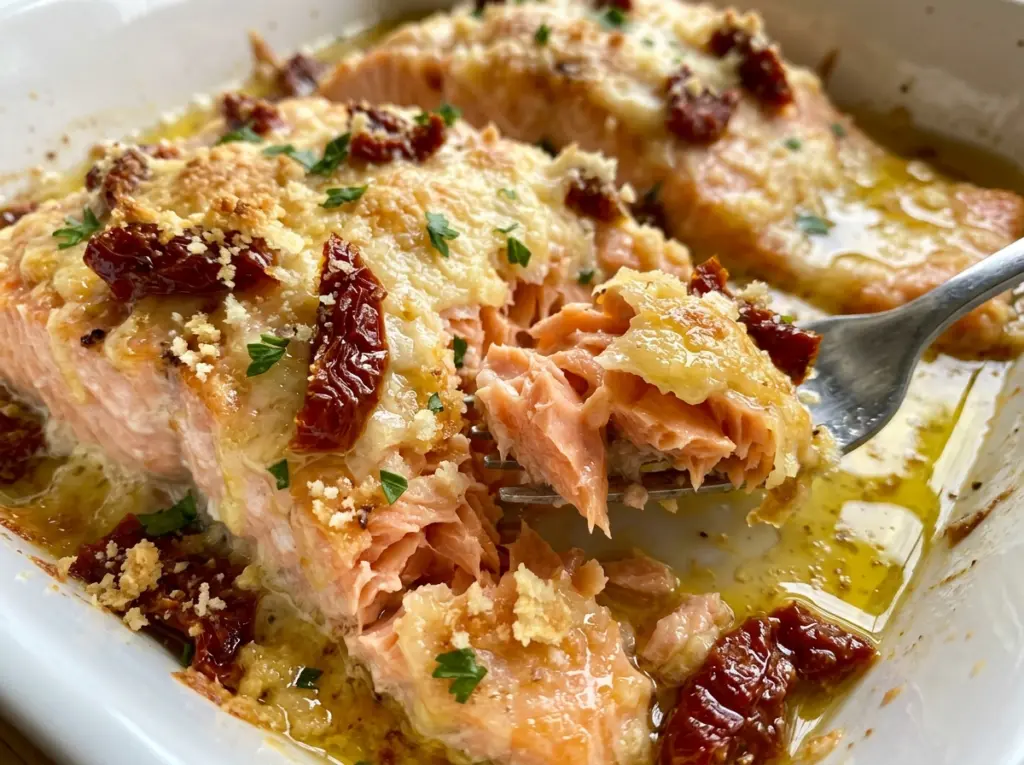
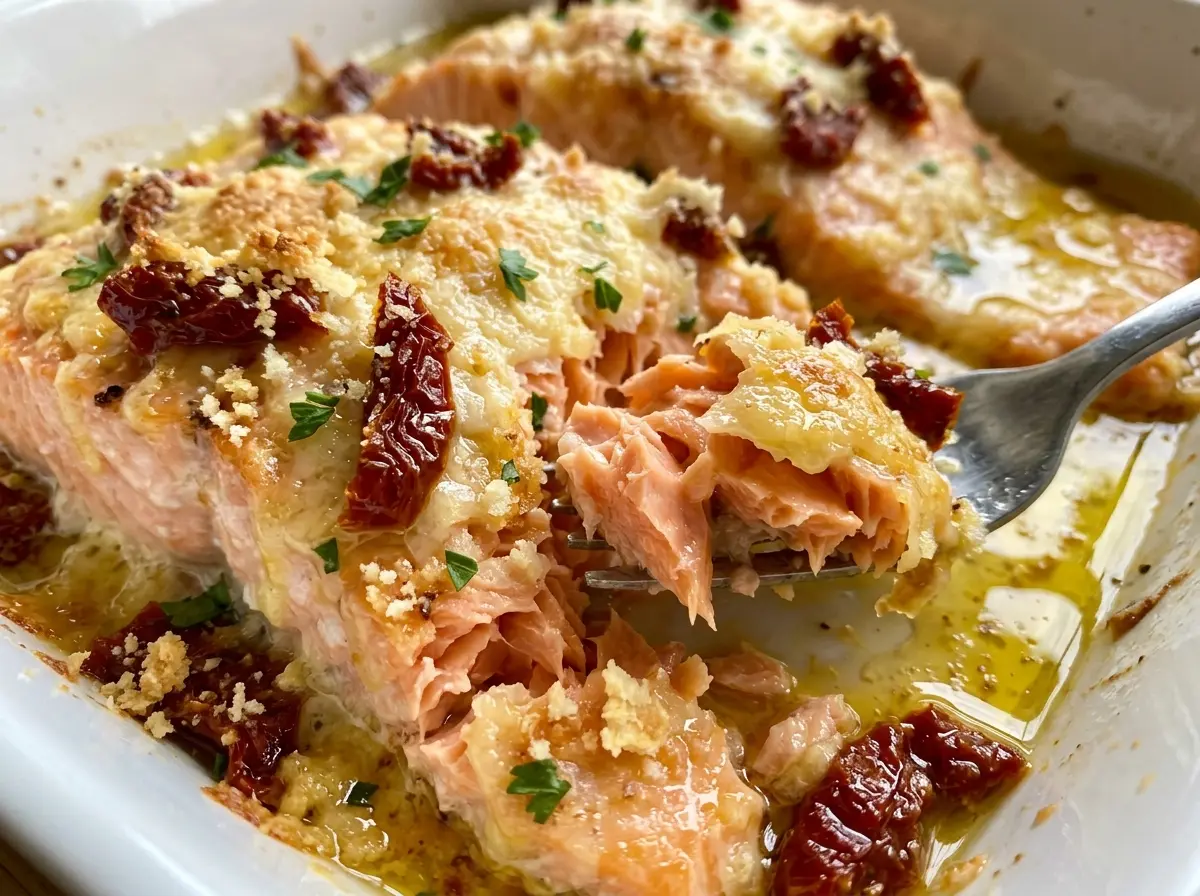
When the tray comes out, the panko should be golden, with little red pieces of tomato tucked through it and salmon just opaque at the edges. I bake these Sun-Dried Tomato Parmesan Crusted Salmon fillets on parchment, which keeps cleanup easy without getting between the fish and its topping. The crust has a crisp, savory bite, but it isn’t so thick that it hides the salmon. For four evenly sized fillets, the oven time is short enough that checking the thickest part matters more than guessing from the color of the crumbs.
I choose fillets close to an inch thick so the topping has time to brown while the centers cook through. Pieces that vary in thickness won’t necessarily finish together, so I pay attention to each fillet instead of treating the whole tray like one piece of fish. The result is salmon that stays tender under a buttery Parmesan crust, with sun-dried tomato in every bite.
Kitchen Note
The crumb mixture should look evenly moistened, not pasty. Stir until the melted butter is distributed through the panko before dividing it; that makes it easier to give each fillet a consistent layer.
Save this Sun-Dried Tomato Parmesan Crusted Salmon for a crisp panko top, tangy Dijon underneath, and golden Parmesan crumbs straight from the oven.
Why Dijon Belongs Between the Salmon and the Parmesan Crumbs
Dijon does more here than add a little tang. Spread in a thin layer over the salmon, it gives the panko mixture something to cling to, so the topping stays on the fish instead of scattering across the parchment. It also keeps the mustard flavor underneath the crust, where it brightens the rich butter and Parmesan without taking over the whole bite.
That placement is worth keeping. Stirring Dijon into the crumbs would make the topping wetter and distribute its sharpness through every mouthful; spreading it over the fish gives you a clear, savory layer. Use a thin, even coating across the top of each fillet. A thick mound isn’t needed, and it can make the crumb layer harder to press into place.
The Ingredients That Give This Crust Its Texture

- Panko breadcrumbs — Their large, airy flakes make a lighter, crunchier crust than fine breadcrumbs. For a gluten-free version, replace them with gluten-free panko in an equal volume; the topping may be a little more compact, but it still works well.
- Finely grated Parmesan — Fine shreds spread through the panko and help the crust taste savory in every bite. Freshly grated Parmesan blends especially evenly, while finely grated packaged Parmesan is convenient and works, too. Pecorino Romano is a useful swap if you want a sharper, saltier finish.
- Oil-packed sun-dried tomatoes — Drain them before chopping so extra oil doesn’t weigh down the crumbs. Chop them finely; smaller pieces distribute through the topping more evenly than large, chewy chunks.
- Dijon mustard — Smooth Dijon spreads in a thin coat and adds a mild, tangy edge beneath the topping. It’s doing a different job from the garlic and tomatoes, so don’t leave it out if you want the crumbs to adhere well.
- Unsalted butter — Melted butter helps the panko toast and gives the topping its rich, crumbly texture. Unsalted butter also lets the measured kosher salt season the fish without adding extra salt from the butter.
- Garlic and fresh parsley — Minced garlic brings a savory note, while parsley keeps the topping tasting fresh rather than heavy. Chopped fresh basil can stand in for the parsley for a sweeter, more aromatic herb note.
- Skinless salmon fillets — Fillets close to the listed thickness cook in a similar window and give you a flat surface for the mustard and crust. Patting the surface dry before seasoning helps keep excess moisture from interfering with the topping.
Building a Crust That Stays on the Fillets
Set Up the Pan and Season the Fish
Heat the oven to 400°F and line a rimmed baking sheet with parchment paper. Pat the salmon dry, then arrange the fillets on the sheet. Season them with the kosher salt and black pepper, and spread Dijon over the top of each one. Keep the mustard on the top surface so the crumb layer has an even base.
Stir Together the Tomato-Parmesan Crumbs
In a bowl, stir together the panko, finely grated Parmesan, drained and finely chopped sun-dried tomatoes, melted butter, minced garlic, and chopped fresh parsley. Break up any clumps as you stir so the tomatoes and garlic don’t collect in just one part of the mixture. The finished crumbs should be easy to divide among the fillets.
Press the Topping into Place
Divide the crumb mixture among the salmon fillets, placing it over the Dijon-coated tops. Press gently so the crumbs make contact with the mustard without packing them into a dense layer. Keep the topping on top of the fish rather than piling it along the sides. That gives the crust room to brown evenly.
Bake Until Golden, Then Let the Fish Rest
Bake for 12 to 16 minutes, until the crust is golden and the thickest part of the salmon reaches 145°F. The fillets may not all finish at precisely the same moment if their thickness varies, so check the thickest part of each one. Once they’re done, rest the salmon for 3 minutes before serving; the short pause lets the fish settle without leaving it in the hot oven.
Simple Swaps for a Different Crust
Make the Crust Gluten-Free
Use gluten-free panko in place of the regular panko, keeping the same volume. The crust may be slightly more compact, but it still gives the salmon a crisp, savory topping.
Give It a Sharper Cheese Note
Swap finely grated Pecorino Romano for the Parmesan. Pecorino makes the topping a little saltier and more assertive, so keep in mind that the finished crust won’t taste quite as mellow.
Trade Parsley for Basil
Use the same amount of chopped fresh basil instead of parsley. Basil gives the tomato topping a sweeter, more fragrant edge while leaving the crisp panko texture intact.
Storage and Reheating
- Refrigerator: Store leftovers in an airtight container for up to 3 days. The panko softens as it sits, though the salmon stays good for another meal.
- Freezer: Freeze the cooked fillets tightly wrapped for up to 2 months. Thaw them overnight in the refrigerator; the crust will lose some of its crispness.
- Reheating: Warm the salmon in a 275°F oven, loosely covered with foil, until it reaches 165°F in the center. High heat can dry out the fish before the middle warms through, and the crust will soften during reheating.
Questions That Come Up While Baking Crusted Salmon
Sun-Dried Tomato Parmesan Crusted Salmon
Ingredients
Equipment
Method
- Heat the oven to 400°F.
- Line a rimmed baking sheet with parchment paper.
- Pat the salmon dry and arrange the fillets on the baking sheet.
- Season the fillets with the salt and pepper.
- Spread the Dijon over the top of each fillet.
- Stir together the panko, Parmesan, sun-dried tomatoes, melted butter, garlic, and parsley.
- Divide the crust mixture among the fillets.
- Press the crust mixture gently onto the mustard-coated tops.
- Bake for 12 to 16 minutes, until the salmon reaches 145°F in the thickest part and the crust is golden.
- Rest the salmon for 3 minutes before serving.