The sugar and egg whites turn glossy over the double boiler, and that warm bowl is the first sign these Swiss Method Macarons are taking shape. I like this method because it gives me a clear checkpoint before the mixer starts: the sugar should dissolve, and the mixture should reach 160°F. From there, the meringue needs to cool and hold stiff peaks before anything else goes in.
The shells are delicate, but the steps give you useful cues at each turn. Sift the dry ingredients, fold until the batter falls in a thick ribbon, and let the piped tops dry before baking. A semisweet chocolate ganache brings the shells together, then a night in the refrigerator gives the filling time to settle into them.
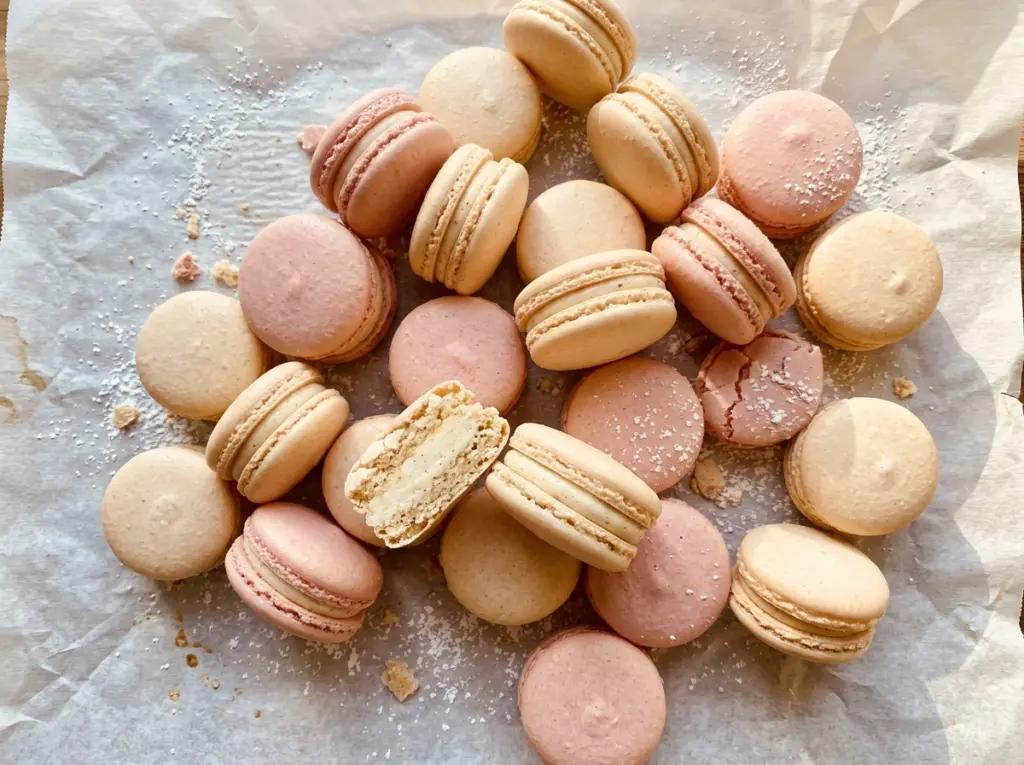
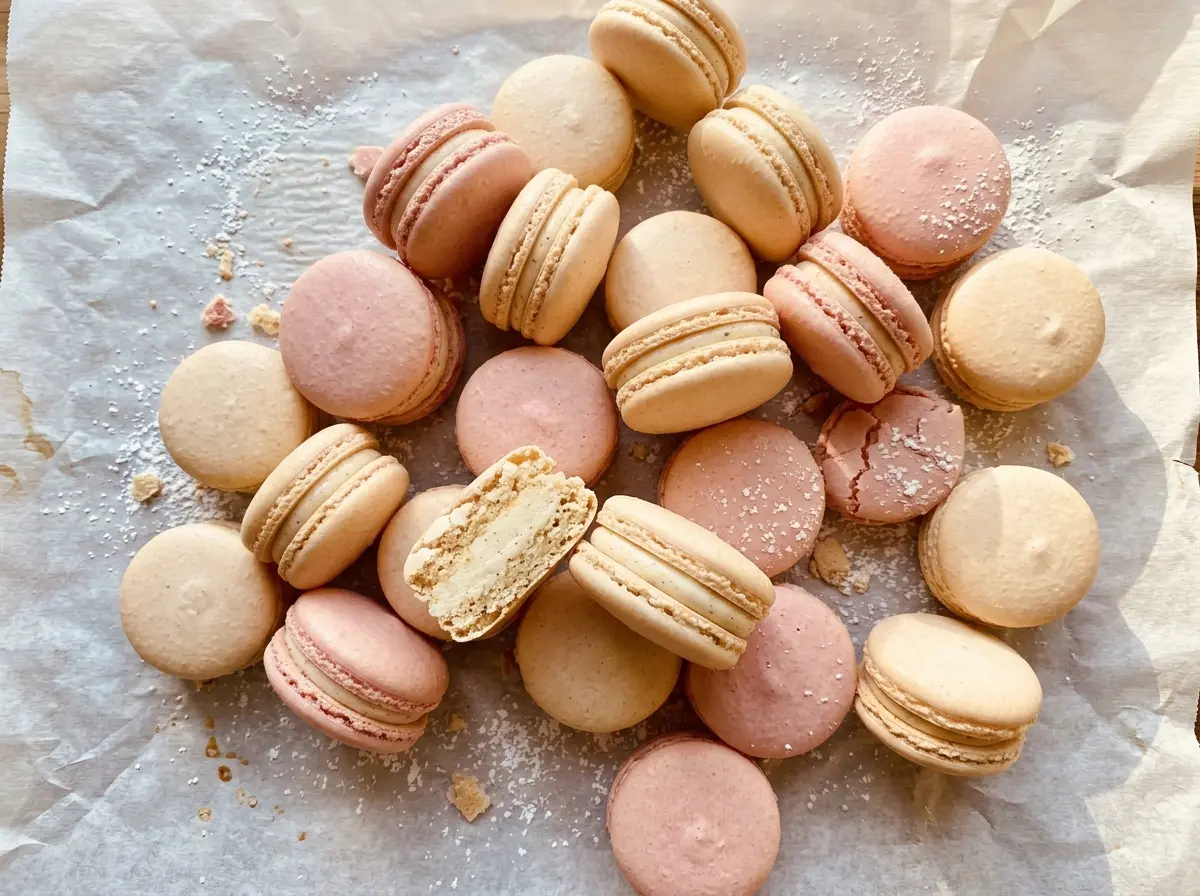
Give yourself time for the resting and chilling stages rather than trying to rush them. The finished macarons have smooth tops, crisp edges, and a tender center with chocolate ganache tucked between the shells.
Kitchen Note
Start with a clean bowl for the egg whites and sugar. Even a trace of grease can get in the way of a meringue that needs to whip up glossy and hold stiff peaks.
Save these Swiss Method Macarons for a baking day when you can give the shells time to dry and the chocolate filling a full overnight chill.
Why the Sugar Gets Heated Before the Meringue Is Whipped
Swiss macarons start with egg whites and granulated sugar warmed together over simmering water. That extra step isn’t just a warm-up for the mixer: the sugar has time to dissolve before the whites are whipped into a glossy meringue. When sugar crystals are still hanging around, they can leave the finished shells less smooth.
A thermometer gives you a dependable target while you whisk. Once the mixture reaches 160°F, it’s ready to move to the stand mixer; then patience matters again while the meringue becomes stiff and the bowl cools. Don’t rush straight into folding while it’s still warm. The dry ingredients need a meringue with enough body to hold the batter’s shape, while the folding itself needs to bring that firmness down to a ribbon that settles back into the bowl.
That’s the balancing act with this method: build a sturdy foam first, then fold only until the batter flows as it should. Stop too soon and the batter stays stiff; keep folding past the ribbon stage and it can become too loose to pipe into neat rounds.
Why Equal Weights Keep These Macaron Shells in Balance

- Almond flour — It gives the shells their nutty base and fine crumb. Choose a finely milled flour for smoother tops, and sift it with the powdered sugar so larger pieces don’t end up in the batter. There isn’t a straightforward flour swap that keeps these shells the same.
- Powdered sugar — It blends into the almond flour and helps make a fine dry mixture. Sifting both ingredients together is more useful here than trying to work out clumps after they’ve reached the meringue.
- Egg whites and granulated sugar — The whites create the meringue, while the granulated sugar dissolves into it as it warms. Room-temperature whites are ready to use without bringing a chill into the mixture. Weighing the whites matters more than assuming every egg gives the same amount.
- Gel food coloring — Gel gives the shells color without adding much liquid to a carefully balanced batter. Use only as much as you need for the shade you want; liquid coloring isn’t a like-for-like replacement.
- Semisweet chocolate and heavy cream — Finely chopped chocolate melts evenly when the hot cream is poured over it. A semisweet bar is the best fit for the filling here; chopping it small helps avoid stubborn pieces that take longer to melt. Heavy cream gives the ganache its smooth, pipeable texture.
How to Get Smooth Shells and a Pipeable Ganache
Warm the Whites, Then Whip a Cool Meringue
Set the egg whites and granulated sugar in a heatproof mixer bowl over a saucepan of gently simmering water, keeping the bottom of the bowl above the water. Whisk continuously until the sugar dissolves and the mixture reaches 160°F, about 5–8 minutes. Whip it on medium-high for another 5–8 minutes, until glossy, cool, and holding stiff peaks. Beat in gel coloring to the shade you want.
Fold Until the Batter Falls in a Ribbon
Sift the almond flour and powdered sugar together, discarding any large bits left in the sieve. Fold the dry mixture into the meringue in two additions, scraping around the bowl as you go. Stop when batter falls from the spatula in a thick ribbon and settles back into itself within about 10 seconds. If it still drops in clumps, keep folding gently and check again rather than piping it too soon.
Pipe, Tap, and Let the Tops Dry
Fit a piping bag with a ½-inch round tip and pipe 40 rounds about 1½ inches wide across two parchment-lined 18×13-inch rimmed baking sheets. Tap each sheet firmly on the counter, then pop any visible air bubbles with a toothpick. Leave the rounds at room temperature until the tops feel dry and don’t stick to a fingertip; this takes about 20–60 minutes. The drying time varies, so use the surface cue rather than relying on the shortest time.
Bake One Sheet at a Time and Cool Fully
Heat the oven to 300°F with a rack in the center, and bake one sheet at a time for 15–18 minutes, rotating the sheet halfway through. The tops should feel set and stay put when you nudge them gently. If they shift, give them a little longer rather than pulling the tray early. Let the shells cool completely on the baking sheets for at least 20 minutes before carefully peeling them from the parchment.
Thicken the Ganache Before Filling
Put the finely chopped semisweet chocolate in a heatproof bowl, then heat the cream in a small saucepan until steaming, about 2–3 minutes. Pour it over the chocolate and let it stand for 3 minutes before stirring until smooth. Refrigerate the ganache for 20–30 minutes, stirring every 10 minutes, until thick enough to pipe. Pair similar-sized shells, fill half with a small amount of ganache, and sandwich with the rest; refrigerate the filled macarons in an airtight container for at least 12 hours, then bring them to room temperature for about 20 minutes before serving.
Two Color Directions for the Same Delicate Shells
Leave the shells naturally pale
Skip the gel coloring for an uncolored shell. The recipe’s chocolate ganache still gives the finished macarons their defining flavor, while the plain tops keep the look simple.
Choose a deeper or softer shade
Use gel coloring to move the shells toward a stronger or more delicate hue. The color is a visual change rather than a flavor change, so the semisweet chocolate filling stays the same.
Storage and Reheating
- Refrigerator: Keep filled macarons in an airtight container. They need at least 12 hours in the refrigerator before serving, and the shells soften slightly as they mature with the ganache.
- Freezer: I don’t recommend freezing this batch; keep it refrigerated for the intended maturation and texture.
- Reheating: Don’t reheat macarons. Let them stand at room temperature for about 20 minutes before serving.
Questions That Come Up When Making Swiss Method Macarons
Swiss Method Macarons
Ingredients
Equipment
Method
- Heat the oven to 300°F with a rack in the center.
- Line two 18x13-inch rimmed baking sheets with parchment paper.
- Sift the almond flour and powdered sugar together into a bowl, discarding any large bits that remain in the sieve.
- Put the egg whites and granulated sugar in a clean, heatproof mixer bowl.
- Bring the water to a gentle simmer in a saucepan.
- Set the bowl over the pan without letting it touch the water, and whisk continuously until the sugar dissolves and the mixture reaches 160°F, about 5-8 minutes.
- Fit the bowl onto a stand mixer and whisk on medium-high until the meringue is glossy, holds stiff peaks, and the bowl feels cool, about 5-8 minutes.
- Beat in gel coloring to the desired shade.
- Fold the sifted dry ingredients into the meringue in two additions, stopping when the batter flows from the spatula in a thick ribbon and settles back into itself within about 10 seconds.
- Transfer the batter to a piping bag fitted with a 1/2-inch round tip.
- Pipe 40 rounds about 1 1/2 inches wide, spacing them across the two prepared sheets.
- Tap each sheet firmly on the counter.
- Pop any visible air bubbles with a toothpick.
- Let the piped shells stand at room temperature until their tops feel dry and do not stick to a fingertip, about 20-60 minutes.
- Bake one sheet at a time for 15-18 minutes, rotating the sheet halfway through; the tops should feel set and not shift when gently nudged.
- Cool the shells completely on the baking sheets, at least 20 minutes.
- Carefully peel the shells off the parchment.
- Put the chopped chocolate in a heatproof bowl.
- Heat the heavy cream in a small saucepan until steaming, about 2-3 minutes.
- Pour the hot cream over the chocolate and let stand for 3 minutes.
- Stir the chocolate and cream until smooth.
- Refrigerate for 20-30 minutes, stirring every 10 minutes, until thick enough to pipe.
- Pair similar-sized shells.
- Pipe or spoon a small amount of ganache onto the flat side of half of them.
- Sandwich with the remaining shells, pressing gently until the filling reaches the edges.
- Refrigerate the filled macarons in an airtight container for at least 12 hours before serving.
- Bring them to room temperature for about 20 minutes.


