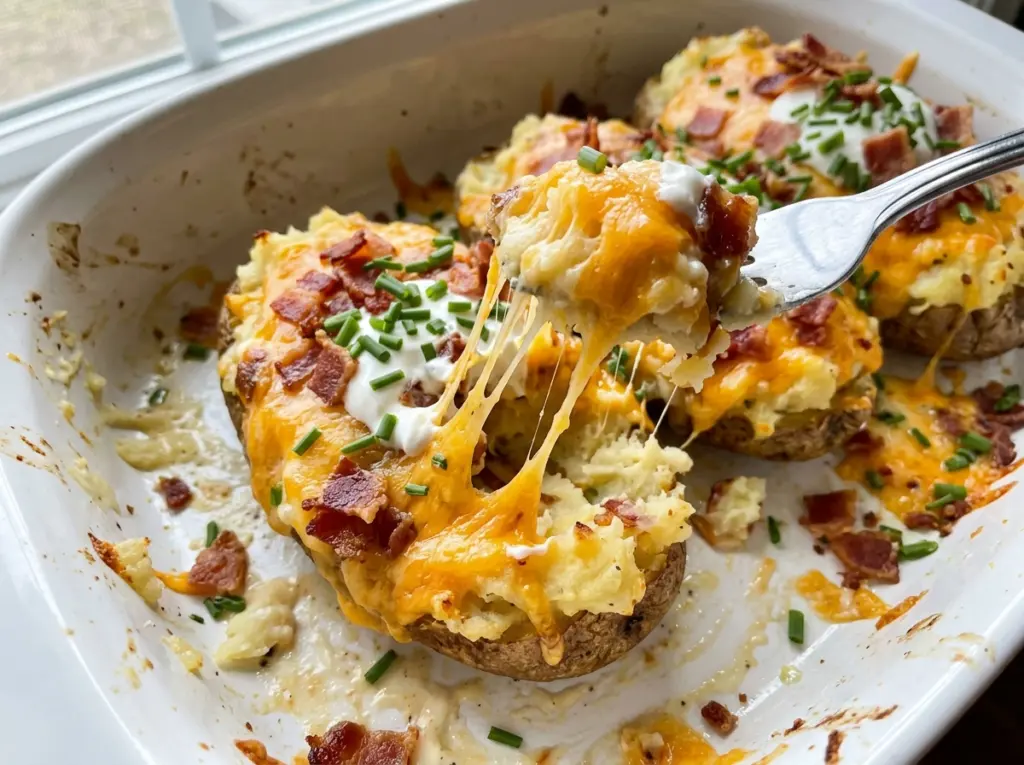
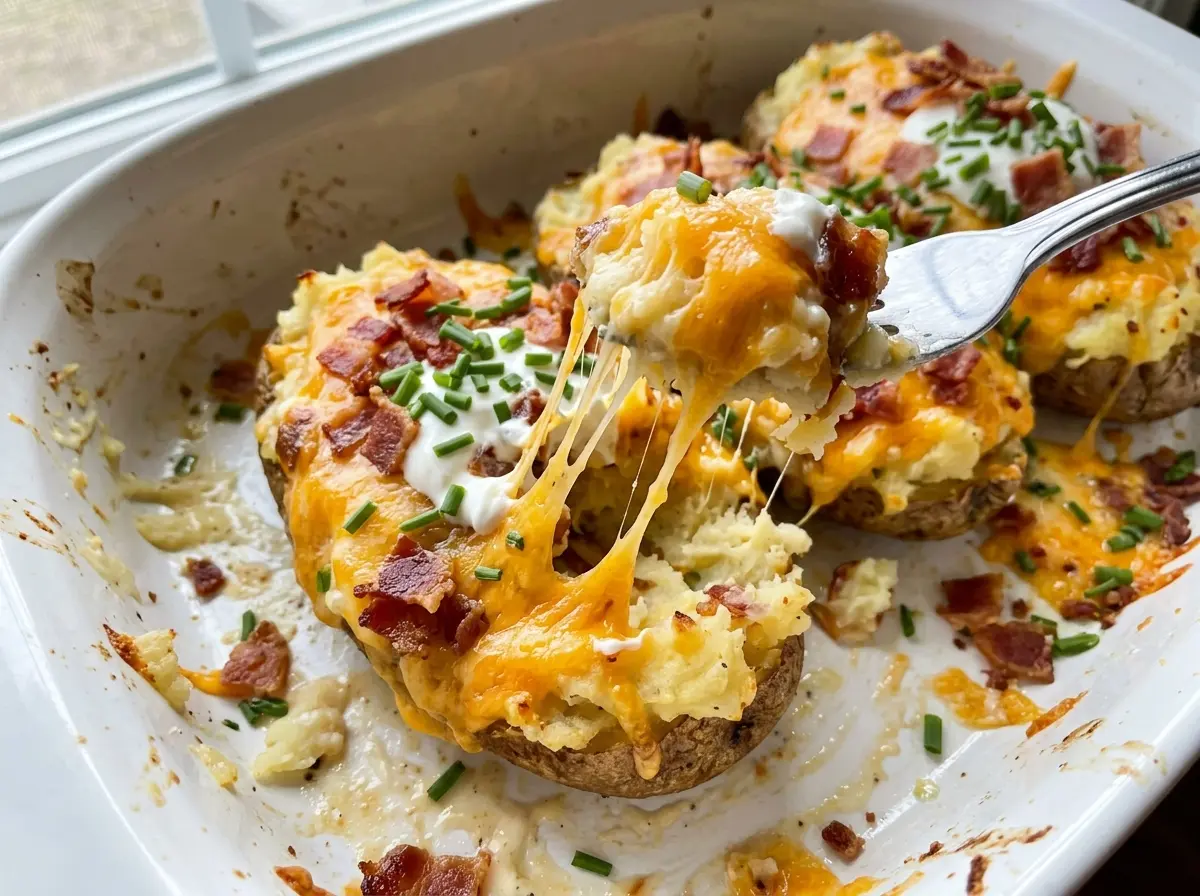
A russet can look ready on the outside and still push back in the center when you slide in a knife. I wait until the blade moves through easily before cutting; underbaked flesh is stubborn to mash and leaves lumps in the filling. These Twice Baked Crack Potatoes start with that fluffy russet interior, then get folded with butter, sour cream, milk, dry ranch seasoning, cheddar, and bacon.
The seasoning gets worked into the potato while you mash, so every bite tastes ranchy instead of having a dusty layer on top. Cheddar goes into the filling and over the finished halves, giving you a creamy middle with melted cheese across the top. The crisp bacon adds a salty bite to the soft potato and rich dairy, and the finished halves come out warm, cheesy, and ready to share.
Kitchen Note
Crumble the bacon into small pieces, not long strips. The smaller bits tuck into the filling and stay put beneath the melted cheddar instead of sliding off when you serve the potatoes.
Save these Twice Baked Crack Potatoes for a cheesy, ranch-seasoned side with crisp bacon in every bite.
Why Russets Need a Full First Bake Before You Scoop
The first bake has to soften the potato all the way through, not just make the skin feel tender. If the center is still firm, it won’t mash into the smooth, cohesive filling these shells need. A knife should slide easily into the center of each potato before it comes out of the oven; the size of the russets can shift the timing, which is why the visual cue matters as much as the clock.
Once the potatoes are tender, the second bake has a different job. The filling is already cooked, so this round warms it through and melts the cheddar on top. That distinction helps you judge the finish: you’re not waiting for raw potato to cook in the shells. You’re looking for hot filling and melted cheese, with the shells still sturdy enough to lift and eat. Rush the first bake and the filling can stay lumpy; give the russets the time they need, and the two-stage bake gives you soft centers without sacrificing the shape of the halves.
What the Russets, Ranch, and Cheddar Each Bring

- Russet potatoes — Their fluffy flesh mashes easily, while the skins are substantial enough to hold the filling. Choose large potatoes close in size so they bake at a similar pace. Smaller or waxier potatoes can be mashed, but they won’t give you the same roomy, sturdy shells.
- Dry ranch seasoning — The dried herbs and savory seasoning disperse through the mashed potato instead of watering it down. If gluten is a concern, use a gluten-free dry ranch seasoning mix; the taste will still be familiar, though the salt level can vary by brand.
- Sharp cheddar — Sharp cheddar gives the filling a more pronounced cheese flavor than a mild cheddar. A milder cheddar melts in its place, but the finished potatoes will taste less tangy and bold. Keep some for the top so it melts into a clear, cheesy layer.
- Sour cream and milk — Sour cream brings tang and richness, while milk loosens the potato enough to mash without making the filling heavy. Plain Greek yogurt can replace the sour cream; it brings a similar tang but makes the filling a little firmer.
- Bacon — Slices cooked in a skillet give you crisp pieces for both the filling and the top. For a gluten-free version, choose gluten-free bacon along with the gluten-free ranch seasoning; the bacon still brings the salty, smoky contrast that makes these potatoes distinctive.
- Unsalted butter — It adds richness as it melts into the potato without adding more salt than you intend. Unsalted butter is the better choice here because the ranch seasoning, bacon, and cheddar all contribute seasoning of their own.
The Four Stages That Keep the Filling Creamy and the Shells Intact
Bake the Russets Until the Centers Give Easily
Heat the oven to 400°F with a rack in the center. Rub the russets with olive oil and kosher salt, then set them on a baking sheet and bake for 55 to 75 minutes. Check the center with a knife; it should slide in easily rather than catch or push back. The time depends on the potatoes, so trust that tender-center cue before moving on.
Scoop Carefully After a Short Cool
Let the potatoes cool for 10 minutes so they’re easier to handle. Halve them lengthwise, then scoop the flesh into a large bowl while leaving about a 1/4-inch layer inside each skin. If you scrape too close to the skin, the shells are more likely to tear when you fill them. Set the empty shells back on the baking sheet.
Cook the Bacon and Mash the Ranch Filling
Cook the bacon in a skillet over medium heat for 8 to 12 minutes, until crisp, then drain and crumble it. Mash the potato flesh with the butter, sour cream, milk, dry ranch seasoning, and black pepper until mostly smooth. Stop when the mixture looks creamy with only a few small bits of potato; it doesn’t need to be whipped perfectly smooth. Stir in 1 cup of the cheddar and about two-thirds of the crumbled bacon.
Fill the Shells and Melt the Topping
Spoon the filling evenly into the potato shells, then scatter the remaining 1/2 cup cheddar and bacon over the top. Return the baking sheet to the 400°F oven for 20 to 25 minutes, until the filling is heated through and the cheese has melted. If the cheese hasn’t melted yet, give the potatoes a little more time rather than serving them with a cool center. Let them rest for 5 minutes before serving so the filling settles into the shells.
Simple Ways to Change the Bacon, Cheese, or Seasoning
Make a gluten-free batch
Use gluten-free dry ranch seasoning and gluten-free bacon. Those swaps keep the ranch-and-bacon character intact, though the seasoning may taste a little different from one brand to another.
Keep every bit of bacon on top
Leave the crumbled bacon out of the filling and use all of it as the topping. The potato stays smooth and creamy, while the bacon keeps more of its crisp bite across the cheesy surface.
Put more cheddar on the surface
Keep the same total amount of cheddar, but divide it differently: stir 1/2 cup into the filling and put 1 cup on top. You’ll get a more prominent melted-cheese layer and a less cheesy interior.
Storage and Reheating
- Refrigerator: Cool leftovers and refrigerate them in an airtight container within 2 hours. They keep for 3 to 4 days, though the shells soften as they sit.
- Freezer: Freeze fully baked potatoes individually wrapped, then store them in an airtight container for up to 2 months. Thaw overnight in the refrigerator; the filling may be a little softer after freezing.
- Reheating: Reheat in a 400°F oven until hot through. A microwave warms them quickly but softens the shells, so use it only if you don’t mind losing some of their texture.
Questions I Get Asked About These Stuffed Russets
Twice Baked Crack Potatoes
Ingredients
Equipment
Method
- Heat the oven to 400°F and place a rack in the center.
- Rub the potatoes with the olive oil and kosher salt, then set them on a baking sheet.
- Bake for 55 to 75 minutes, until a knife slides easily into the centers.
- Let the potatoes cool for 10 minutes.
- Halve the potatoes lengthwise and scoop the flesh into a large bowl, leaving about a 1/4-inch shell; return the shells to the baking sheet.
- Cook the bacon in a skillet over medium heat for 8 to 12 minutes, until crisp.
- Drain and crumble the bacon, then set it aside.
- Mash the potato flesh with the butter, sour cream, milk, ranch seasoning, and black pepper until mostly smooth.
- Stir in 1 cup of the cheddar and about two-thirds of the bacon.
- Spoon the filling into the potato shells.
- Top with the remaining 1/2 cup cheddar and bacon.
- Bake for 20 to 25 minutes, until heated through and the cheese is melted.
- Rest for 5 minutes before serving.


