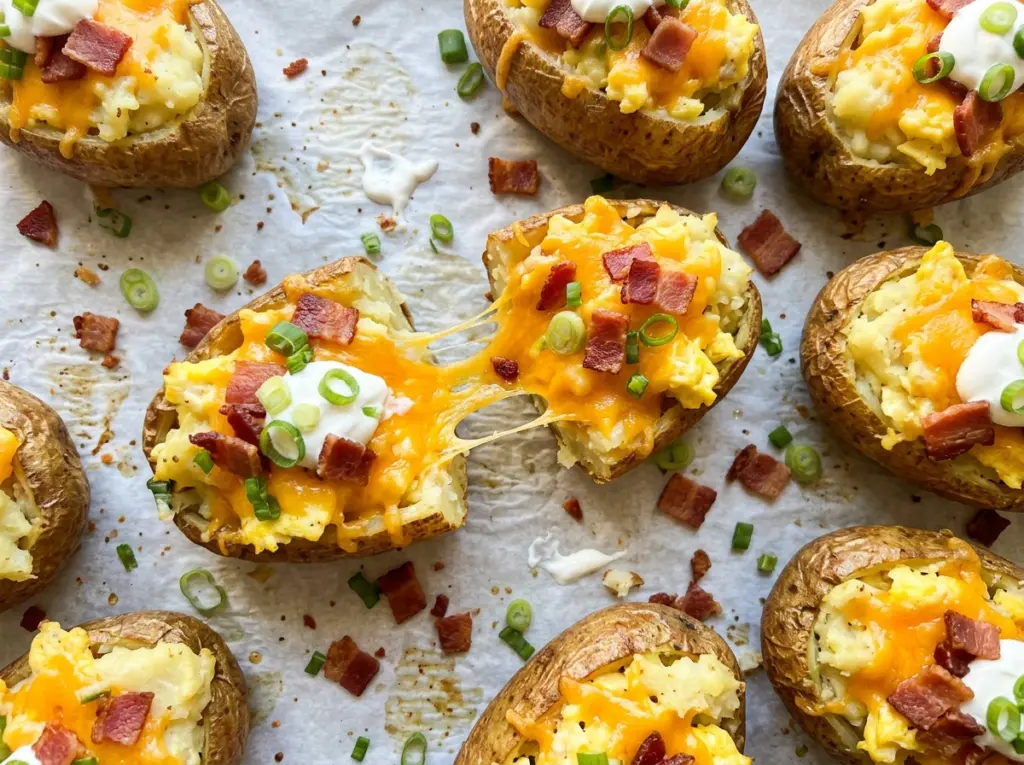
The potato skins come out of the oven crisp at the edges, then turn into sturdy little boats for eggs, bacon, and cheddar. I like this version when breakfast needs to feel substantial without turning into a skillet full of loose pieces. Each potato half gets its own scoop of creamy filling, and the second trip through the oven melts the cheese right over the top.
Keeping the russet shells intact makes the difference between a loaded potato you can pick up and one that collapses onto the baking sheet. I leave a thin layer of potato against the skin, then mash the scooped-out centers with butter, sour cream, and milk. The filling stays creamy, while the crisp bacon and sharp cheddar give each bite some contrast. These Twice Baked Loaded Breakfast Potatoes come out of the oven hot, cheesy, and ready to serve.
Kitchen Note
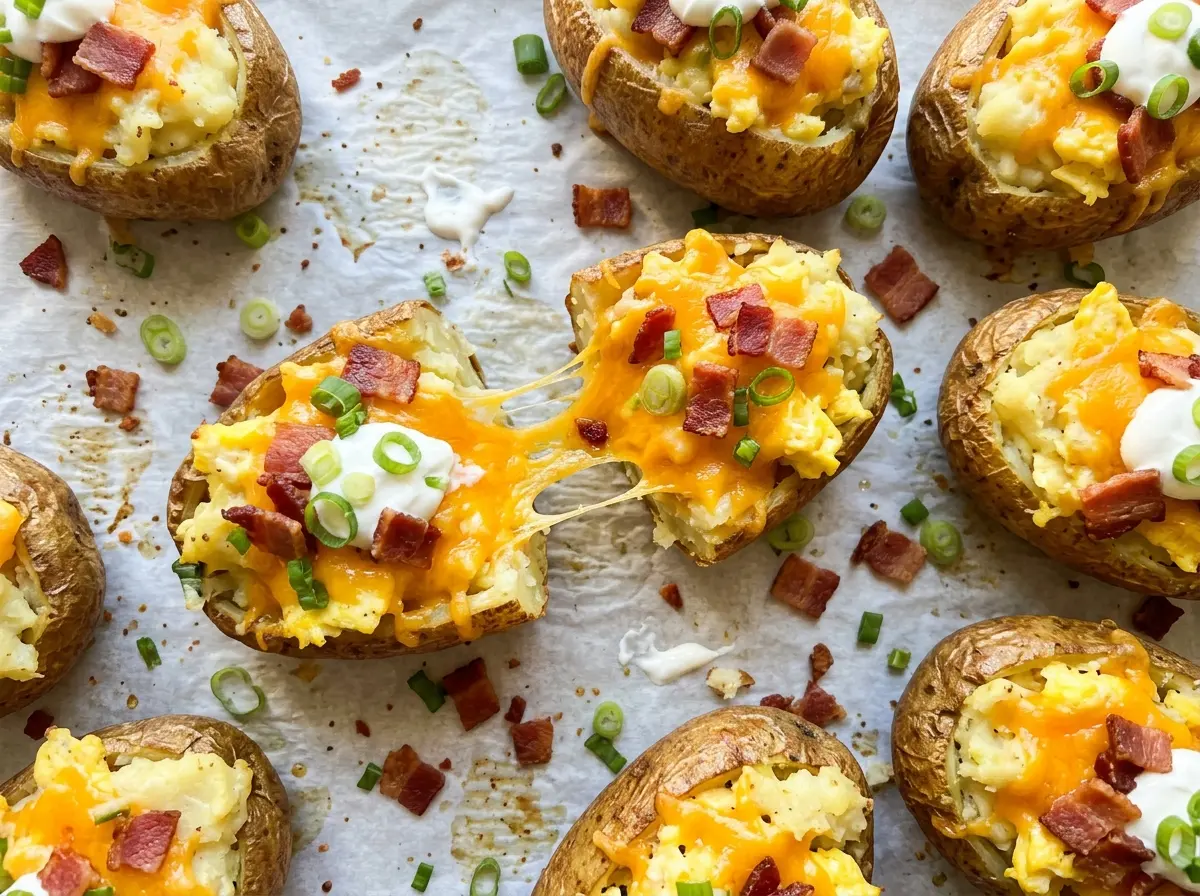
Let the bacon get crisp before it goes back into the oven. I keep half of it inside the filling and save half for the tops, where the pieces stay distinct under the melted cheddar.
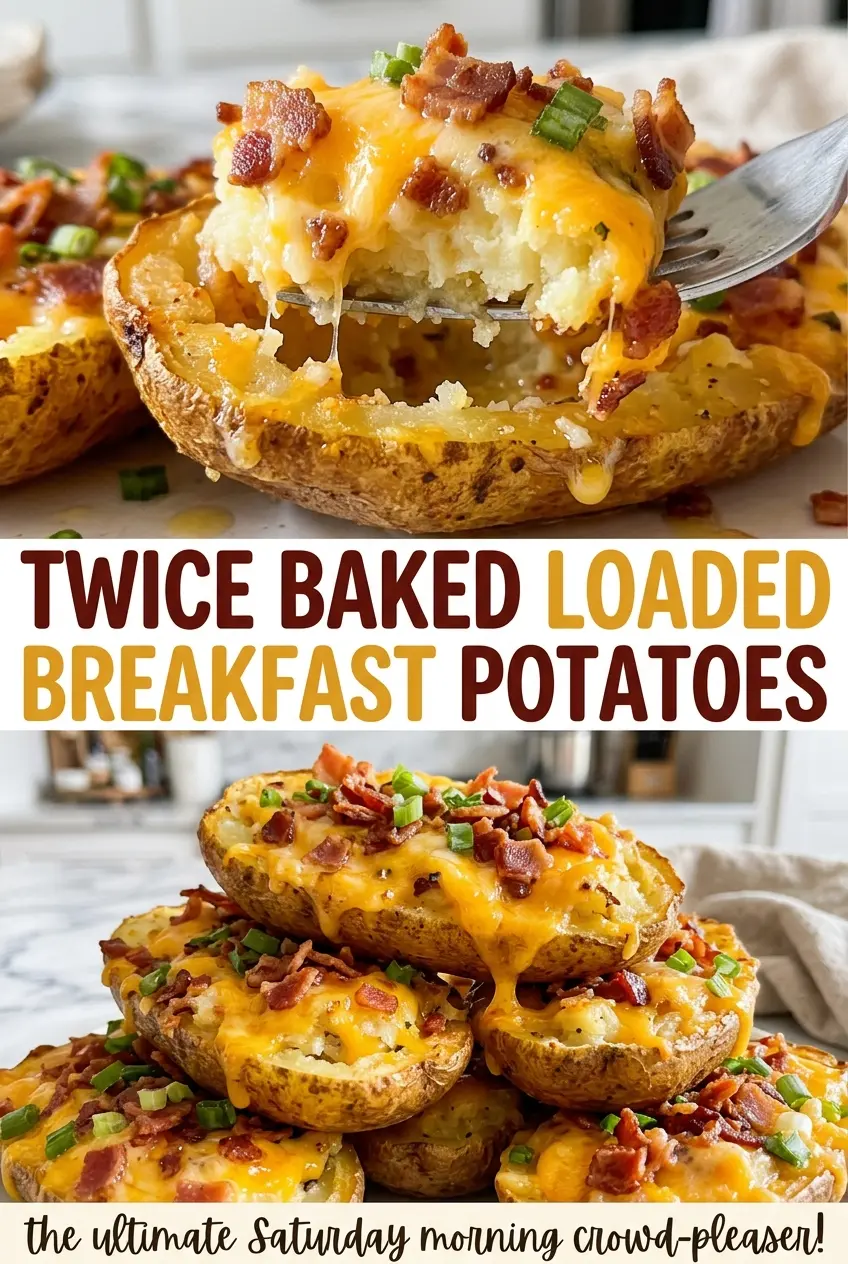
Save these Twice Baked Loaded Breakfast Potatoes for a hearty brunch: crisp bacon, soft scrambled eggs, and sharp cheddar tucked into russet shells.
Why the Potato Shell Has to Hold Its Shape
The filling is generous, so a paper-thin skin won’t do the job. Leave a little potato attached to each shell when you scoop; that layer supports the filling and helps keep the halves from tearing as you move them back to the baking sheet. The goal isn’t to scrape the skin clean. A sturdy shell gives you a crisp outside with enough room for the soft potato, egg, and bacon mixture.
Large russets are useful here for more than their fluffy texture. Their broad halves give the filling space to spread out, and their dry, starchy flesh mashes smoothly with the butter and dairy. Smaller or waxier potatoes won’t give you the same roomy shell or light mash. Treat the potato halves like edible serving dishes, not empty skins, and they’ll hold together through the final bake.
Why Russets, Bacon, and Sharp Cheddar Carry This Breakfast
- Russet potatoes — Their starchy flesh turns fluffy when mashed, while the skins are substantial enough to carry the filling. Pick potatoes that are close in size so they bake at a similar pace. Yukon Golds taste buttery, but their waxier flesh and thinner skins make a softer, less sturdy result.
- Bacon — It brings salty, smoky flavor and leaves drippings that season the scrambled eggs. Any standard bacon works; cook it until crisp so the pieces still have some bite after the second bake. For a meat-free version, the variation below gives you a savory alternative.
- Sour cream, milk, and butter — Together they make the potato centers creamy without masking the potato flavor. Plain sour cream is the right choice here; flavored or sweetened dairy products would pull the filling in the wrong direction. A dairy-free adaptation works, though the mash and topping won’t melt or taste quite like the original.
- Eggs and sharp cheddar — Eggs make the filling feel like breakfast, and sharp cheddar stands up to the bacon instead of disappearing into the potato. Freshly shredded cheddar melts smoothly; pre-shredded cheese is convenient and still works, though its coating can leave the melt a little less silky.
- Scallions — Their fresh, mild onion flavor cuts through the rich filling. Slice them thinly so they scatter over the finished potatoes instead of landing in large, sharp pieces.
From Fluffy Potato Centers to a Hot, Cheesy Filling
Bake the Russets Until a Knife Slides In Easily
Heat the oven to 400°F. Prick the potatoes all over with a fork, rub them with olive oil, and set them on a rimmed baking sheet. Bake for 55–70 minutes, until a knife slides easily into the center; a firm spot means the flesh won’t mash evenly. While they bake, cook the bacon in a skillet over medium heat for 8–10 minutes, turning as needed, until crisp.
Save the Bacon Drippings and Let the Potatoes Cool
Move the bacon to paper towels to drain, leaving about 1 tablespoon of drippings in the skillet. Transfer the potatoes to a cutting board and let them cool for 10 minutes before handling. Reduce the oven to 375°F while they rest. That brief pause makes the hot potatoes easier to cut and scoop without rushing.
Mash the Centers and Scramble the Eggs Gently
Cut each potato in half lengthwise and scoop the flesh into a large bowl, leaving a 1/4-inch-thick shell; return the shells to the baking sheet. Mash the potato with the butter, sour cream, milk, salt, and pepper until creamy, stopping once the lumps are gone. Whisk the eggs, then scramble them in the bacon drippings over medium-low heat for 3–5 minutes, stirring. Take them off the heat when they’re just set with no runny egg, rather than letting them dry out in the skillet.
Fill, Top, and Bake Until the Cheese Melts
Crumble the bacon and fold the eggs, 1/2 cup of cheddar, and half of the bacon into the mashed potatoes. Divide the filling among the shells, then top with the remaining cheddar and bacon. Bake at 375°F for 15–20 minutes, until hot throughout, the cheese is melted, and the center registers 160°F. Rest for 5 minutes, sprinkle with the scallions, and serve.
How to Change the Bacon or Dairy Without Losing the Breakfast Feel
Make a Meat-Free Version with Cremini Mushrooms
Replace the bacon with 8 ounces of finely chopped cremini mushrooms. Brown them in a skillet with a teaspoon of olive oil, then scramble the eggs in the same skillet; the mushrooms add savory depth, though you won’t get bacon’s smoky flavor or drippings.
Make the Filling Dairy-Free
Swap in dairy-free butter, plain dairy-free sour cream, unsweetened oat milk, and dairy-free cheddar in place of their dairy counterparts. The potato mash will still be creamy, but the cheese may melt less evenly and the flavor will be milder than sharp cheddar.
Storage and Reheating
- Refrigerator: Store leftovers in an airtight container for 3–4 days. The shells soften as they sit, but the filling keeps its creamy texture.
- Freezer: Freeze the cooked potatoes individually, wrapped tightly, for up to 2 months. Thaw in the refrigerator; the potato flesh may be a little softer after freezing.
- Reheating: Warm in a 350°F oven until the center reaches 165°F. The microwave is quicker, but it can heat the egg filling unevenly and soften the skins further.
Questions That Come Up When Making Loaded Breakfast Potatoes
Twice Baked Loaded Breakfast Potatoes
Ingredients
Equipment
Method
- Preheat the oven to 400°F.
- Prick the potatoes all over with a fork, rub them with the olive oil, and set them on a rimmed baking sheet.
- Bake for 55–70 minutes, until a knife slides easily into the center.
- While the potatoes bake, cook the bacon in a skillet over medium heat for 8–10 minutes, turning as needed, until crisp.
- Drain the bacon on paper towels and leave about 1 tablespoon of drippings in the skillet.
- Transfer the potatoes to a cutting board and cool for 10 minutes.
- Reduce the oven temperature to 375°F.
- Cut each potato in half lengthwise and scoop the flesh into a large bowl, leaving a 1/4-inch-thick shell.
- Return the potato shells to the baking sheet.
- Mash the potato flesh with the butter, sour cream, milk, salt, and pepper until creamy.
- Whisk the eggs.
- Scramble the eggs in the bacon drippings over medium-low heat for 3–5 minutes, stirring, until just set with no runny egg.
- Crumble the bacon.
- Fold the eggs, 1/2 cup of the cheddar, and half of the bacon into the mashed potatoes.
- Divide the filling among the potato shells.
- Top with the remaining 1/2 cup cheddar and bacon.
- Bake at 375°F for 15–20 minutes, until hot throughout, the cheese is melted, and the center registers 160°F.
- Rest for 5 minutes.
- Sprinkle with the scallions and serve.