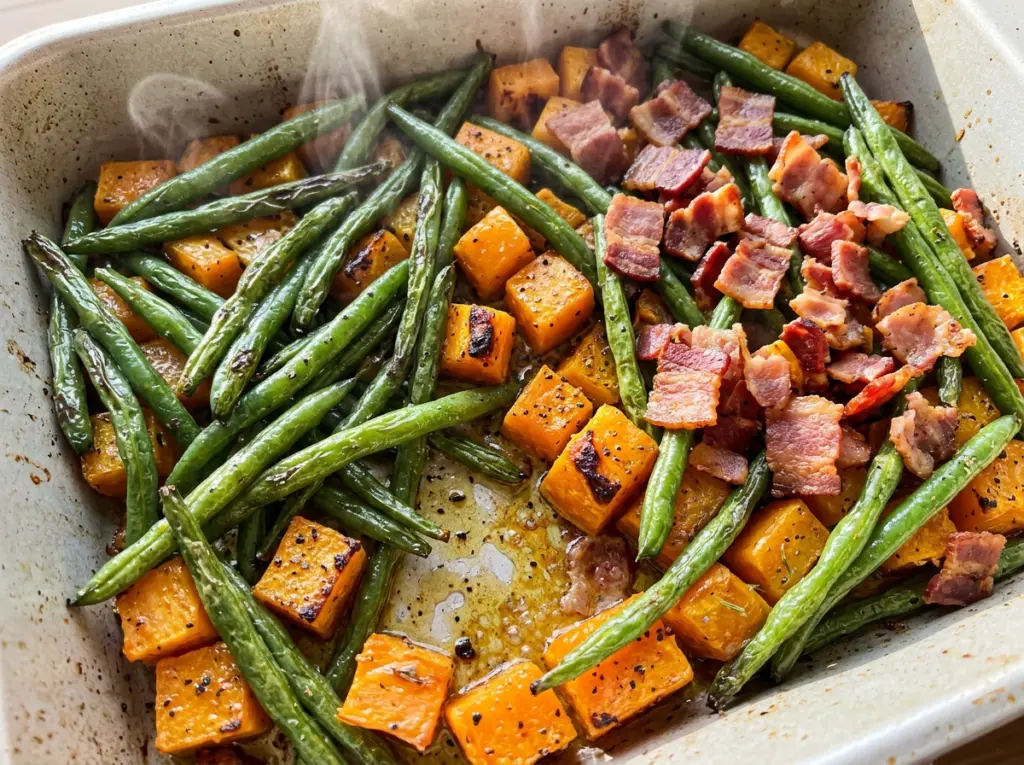
The squash comes out with browned corners and a tender center, while the green beans keep enough bite to hold their shape. That balance is what makes Roasted Green Beans and Butternut Squash with Bacon a satisfying side instead of a tray of vegetables that all taste and feel the same. The bacon cooks separately in a skillet, so it gets crisp before it meets the vegetables.
I use two rimmed baking sheets so the vegetables have room to roast rather than steam. The squash gets a head start, and the green beans join later; each one gets the time it needs without asking the beans to wait around in a hot oven. Finished with the crumbled bacon, the pan has tender squash, browned green beans, and a salty crunch in every serving.
Kitchen Note
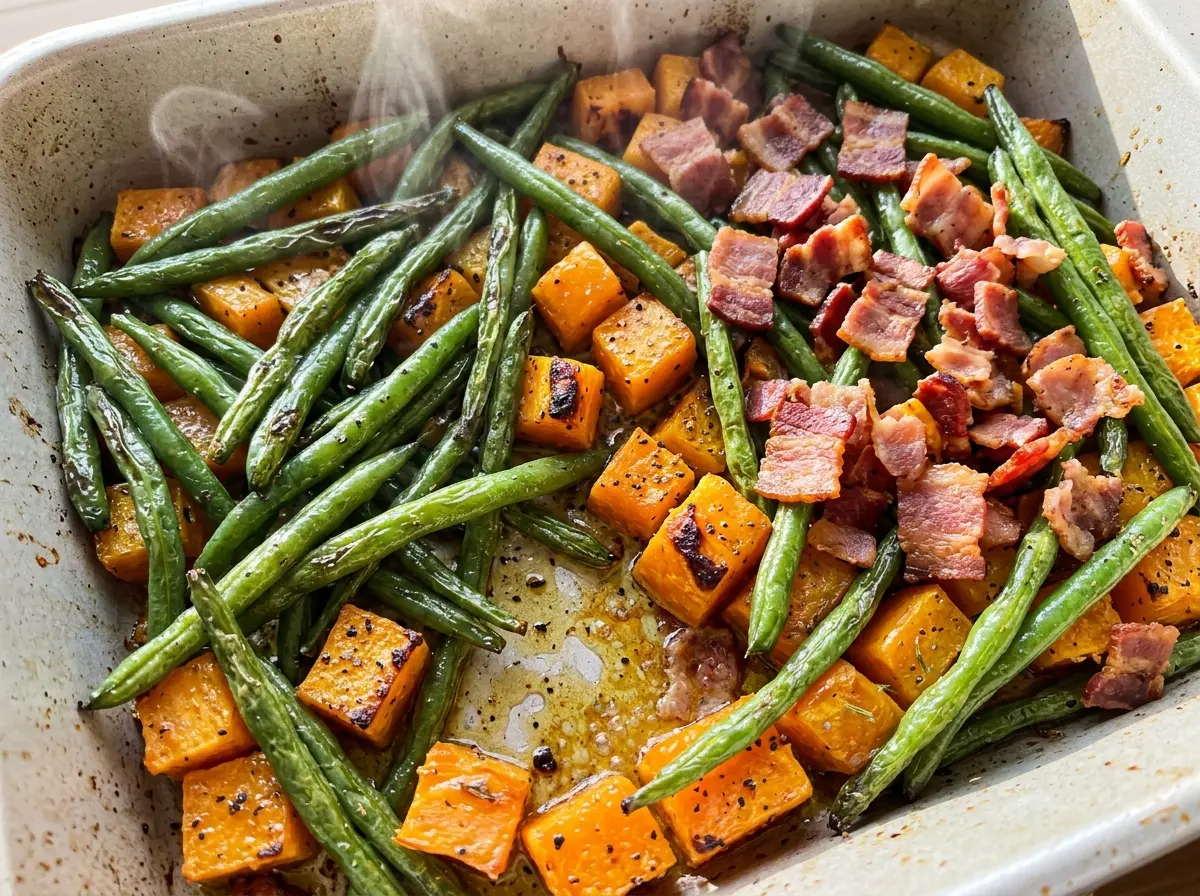
Let the bacon cool before crumbling it. Warm bacon breaks unevenly and is harder to scatter over the vegetables in crisp little pieces.
Save these roasted green beans and butternut squash with bacon for a side dish with tender squash, browned beans, and a crisp bacon finish.
Why the Squash Gets a Head Start in the Oven
Butternut squash is firm and dense, so it needs more time to turn fork-tender than trimmed green beans need to soften. Put both on the pans at once and the beans are likely to lose their fresh bite before the squash is ready. Giving the squash the first stretch of roasting time solves that timing mismatch without changing the oven temperature or cooking the vegetables in separate batches.
The one-inch cubes matter, too. Pieces that are close in size finish at roughly the same pace, so you’re less likely to have a pan with some squash still firm and other pieces collapsing at the edges. Once the green beans go in, toss them with the squash so the oil and seasoning are distributed across both. Keep the vegetables spread out; crowded pieces trap steam, which works against the browned spots that make this dish especially good. The staggered start is a small bit of timing that gives both vegetables their own chance to roast properly.
What the Squash, Beans, and Bacon Each Bring to the Pan
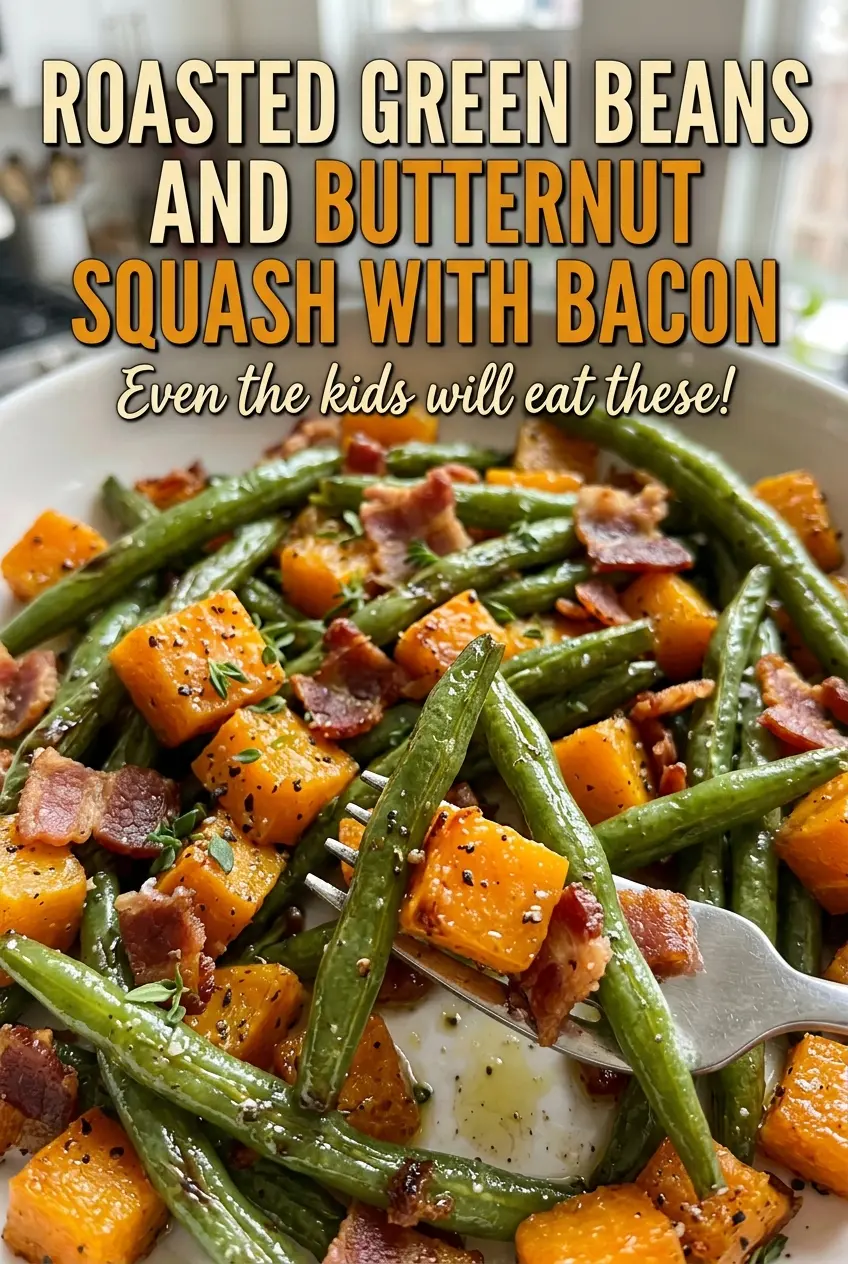
- Butternut squash — Its firm flesh softens while the edges brown, bringing a gentle sweetness to the savory bacon. Choose a squash that feels firm and heavy; peeled, seeded, precut cubes are convenient when they’re close to one-inch pieces. Sweet potato is a practical swap: peel it, cut it into one-inch cubes, and judge tenderness with a fork before moving on, since the exact time can vary.
- Fresh green beans — Fresh beans roast with browned spots while staying pleasantly firm. Look for beans that feel crisp rather than limp, and trim the ends before tossing them with oil. If you need a substitute, use fresh asparagus cut into short pieces and check it earlier; asparagus softens faster and won’t have quite the same snap.
- Bacon — The bacon brings salt and savory depth, and its crisp texture contrasts with the soft squash. Any familiar sliced bacon works; you don’t need a specialty cut. Turkey bacon can stand in, cooked in the skillet according to its package directions, though it will give you a leaner, less rich finish.
- Olive oil — The oil helps the vegetables roast and carries the salt and pepper over their surfaces. A standard olive oil is plenty for this high-heat side. Avocado oil is an easy one-for-one substitute if that’s what you keep on hand.
Roast the Squash First, Then Let the Beans Catch Up
Set Up Both Baking Sheets
Heat the oven to 425°F with racks in the upper and lower thirds. Line two 18×13-inch rimmed baking sheets with parchment paper. Using both pans gives the vegetables room to sit in a single layer, which helps them roast instead of steam. Have the pans ready before you start seasoning the squash.
Cook the Bacon Until Crisp
Set a 12-inch skillet over medium heat and cook the bacon for 8 to 10 minutes, turning it as needed. Look for crisp slices rather than pale, bendy centers. Transfer the bacon to a paper towel-lined plate. When it has cooled, crumble it and keep it aside for the finish.
Give the Squash Its First Roast
Toss the squash with 1 tablespoon of olive oil, 1/2 teaspoon of kosher salt, and 1/4 teaspoon of black pepper. Spread it in a single layer across the prepared sheets, keeping pieces from piling up. Roast for 18 minutes, switching the pans’ rack positions halfway through. The squash won’t be fully tender yet; it’s getting the head start it needs.
Add the Green Beans
Toss the green beans with the remaining 1 tablespoon of olive oil, 1/2 teaspoon of kosher salt, and 1/4 teaspoon of black pepper. Divide them between the baking sheets and toss them with the squash. Roast for 12 to 15 minutes, switching the pans’ rack positions halfway through. The squash should be fork-tender, and the beans should be tender with browned spots; if the beans are still pale, give them a little more time in the oven.
Toss in the Bacon
Take the pans from the oven when the vegetables have reached those texture cues. Sprinkle the crumbled bacon over the vegetables and toss to combine. A gentle toss is enough to distribute the bacon without breaking up the tender squash. Serve the vegetables while they’re warm.
Two Easy Ways to Change This Vegetable-Bacon Side
Make It Vegetarian by Leaving Out the Bacon
Omit the bacon and roast the squash and green beans with the same olive oil, salt, and pepper. The vegetables will still brown and turn tender, but the finished dish will be less smoky and savory. This keeps the side vegetarian without adding another ingredient or changing the roasting sequence.
Trade the Squash for Sweet Potato
Peel sweet potatoes and cut them into one-inch cubes to replace the butternut squash. Roast them first just as you would the squash, but use fork tenderness—not the clock alone—to decide when they’re ready for the beans. The result is a slightly earthier, sweeter pan, and the pieces may need a little more or less time depending on their size.
Storage and Reheating
- Refrigerator: Refrigerate leftovers within 2 hours and keep them in an airtight container for 3 to 4 days. The beans and squash soften a little as they sit.
- Freezer: Freezing is safe, but the vegetables thaw softer and the bacon loses its crispness. For best quality, freeze in an airtight container for up to 2 months and thaw overnight in the refrigerator.
- Reheating: Spread leftovers on a baking sheet and warm at 375°F for about 8 to 10 minutes, until hot throughout. Avoid crowding the pan; a deep pile warms unevenly and turns the vegetables softer.
Questions That Come Up While the Pans Roast
Roasted Green Beans and Butternut Squash with Bacon
Ingredients
Equipment
Method
- Heat the oven to 425°F with racks in the upper and lower thirds.
- Line two 18x13-inch rimmed baking sheets with parchment paper.
- Cook the bacon in a 12-inch skillet over medium heat for 8 to 10 minutes, turning as needed, until crisp.
- Transfer the bacon to a paper towel-lined plate, then crumble when cool.
- Toss the squash with 1 tablespoon olive oil, 1/2 teaspoon salt, and 1/4 teaspoon pepper.
- Spread the squash in a single layer across the baking sheets.
- Roast the squash for 18 minutes, switching the pans’ rack positions halfway through.
- Toss the green beans with the remaining 1 tablespoon olive oil, 1/2 teaspoon salt, and 1/4 teaspoon pepper.
- Divide the green beans between the baking sheets and toss with the squash.
- Roast for 12 to 15 minutes, switching the pans’ rack positions halfway through, until the squash is fork-tender and the beans are tender with browned spots.
- Sprinkle the crumbled bacon over the vegetables and toss to combine.


